
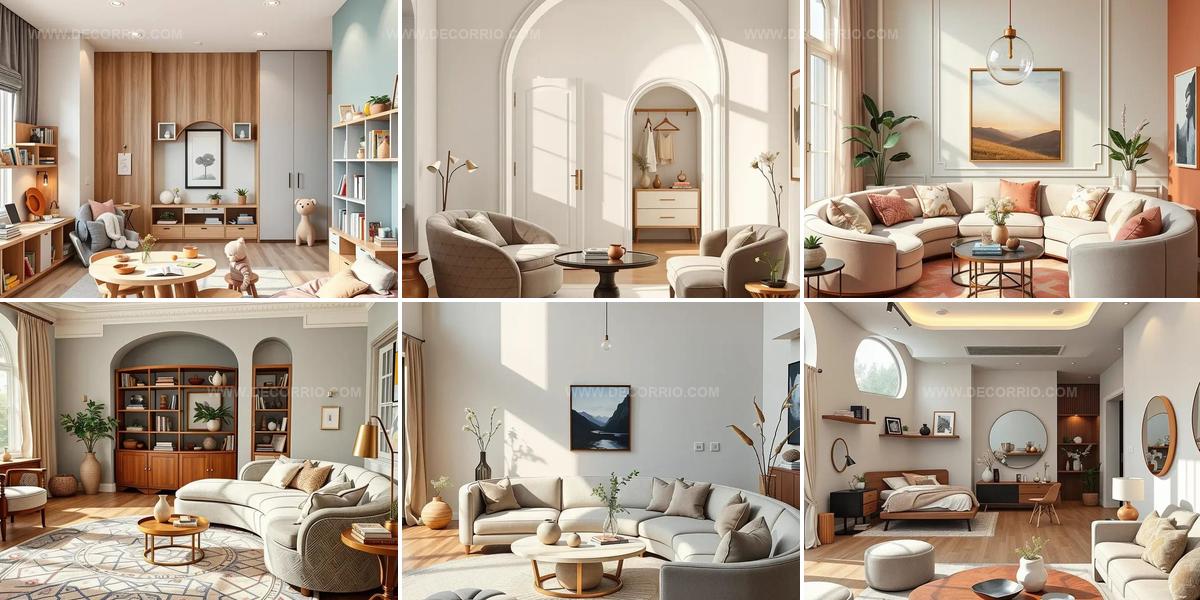
32 Corner-Free Furniture Ideas That Open Up Your Space

Furniture without sharp edges brings a softer aesthetic to bedrooms and living spaces while addressing safety concerns many households face.
Rounded designs have gained popularity as homeowners seek alternatives to traditional angular pieces that can feel harsh or pose risks.
Curves create flow between different areas, making rooms appear more welcoming and less rigid than conventional arrangements.
Organic shapes naturally complement various design styles, from minimalist to contemporary, without overwhelming a space.
Eliminating pointed corners opens up new layout possibilities that standard rectangular pieces simply cannot achieve.
The shift toward gentler silhouettes reflects a broader movement in interior design that prioritizes both form and function.
Browse options that suit the atmosphere and needs within the rooms where people spend most of their time.
Travertine Oval Table Perfection
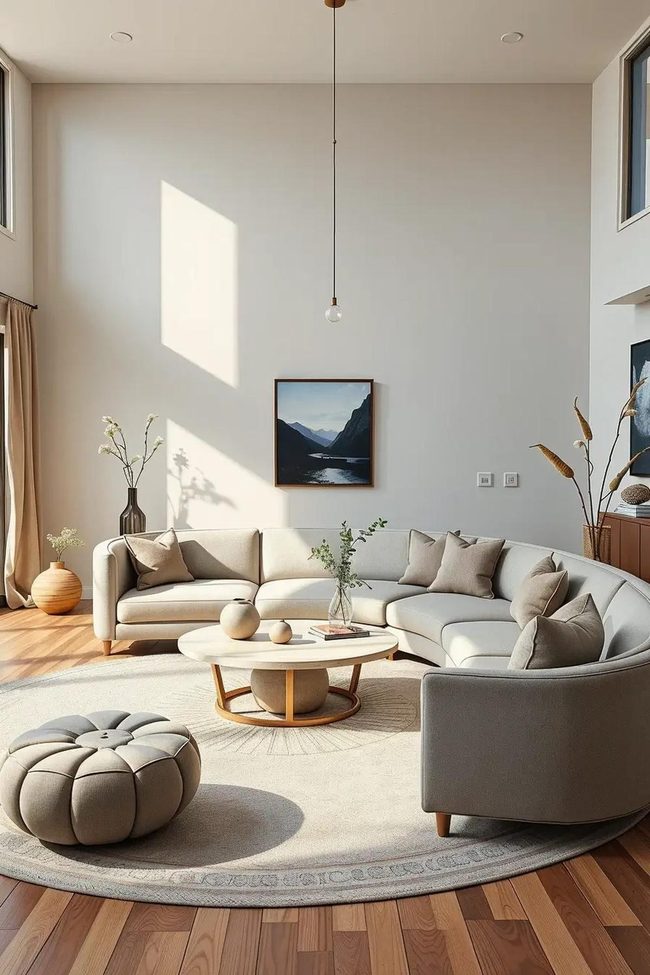
Corner-free coffee tables bring both safety and visual appeal to your lounge area since they serve as the foundation for how the space flows and feels.
Round, oval, and irregular shapes work beautifully with curved seating and keep the room from feeling cramped or harsh.
Materials like polished wood, stone, or tempered glass give these tables a refined look that works with almost any style.
An oval travertine table with beveled edges, for example, pairs wonderfully with a curved sectional and makes the whole room feel connected and smooth.
When you skip sharp angles and corners, your space automatically becomes more welcoming and easier to move through.
One client switched from a rectangular table to a round marble one and noticed how much more relaxed the room felt right away.
Rounded accessories like trays, ball-shaped vases, and bubble candles on top of the table echo the gentle lines you've already established and strengthen the overall effect.
Curved Bed Diffused Geometry
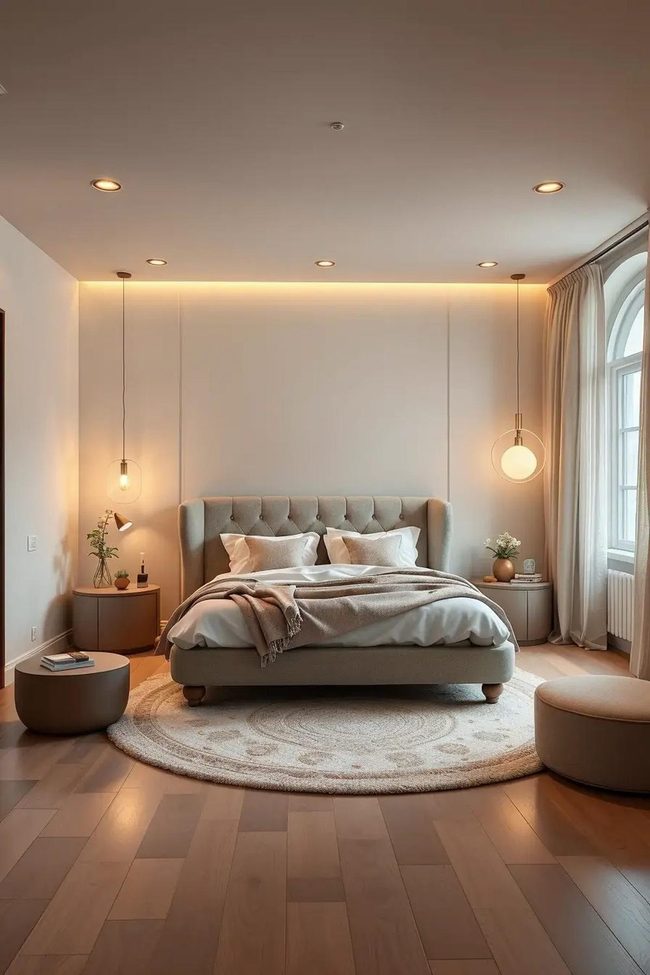
When you think about resting area comfort, the bed is naturally where your attention goes first, and curved beds offer something different from the standard rectangular frame by wrapping around you with a cradling sense of security.
I've seen how rounded or low-key-edged beds shift the whole feeling of a room, making spaces feel more relaxed and dynamic at the same time.
Pairing a curved bed frame or upholstered rounded headboard with matching curved nightstands and warm paleing builds an enclosed, protective atmosphere that works especially well in master sleeping quarters or upscale apartments where you want the bed to be the main visual anchor.
Stylish, minimalist, and transitional styles all benefit from through this design,, and I once spotted a scalloped-edge bed in a small New York showroom that completely changed how people connected with the entire room emotionally.
Curved lines in sleeping quarters naturally encourage a sense of closeness and smooth flow that sharp corners simply cannot deliver.
To strengthen this idea further, you can layer in curved area rugs and arched window treatments that reinforce the low-key geometry throughout your space and wrap everything in a calm, soothing presence.
Curved Furniture Flows Forward
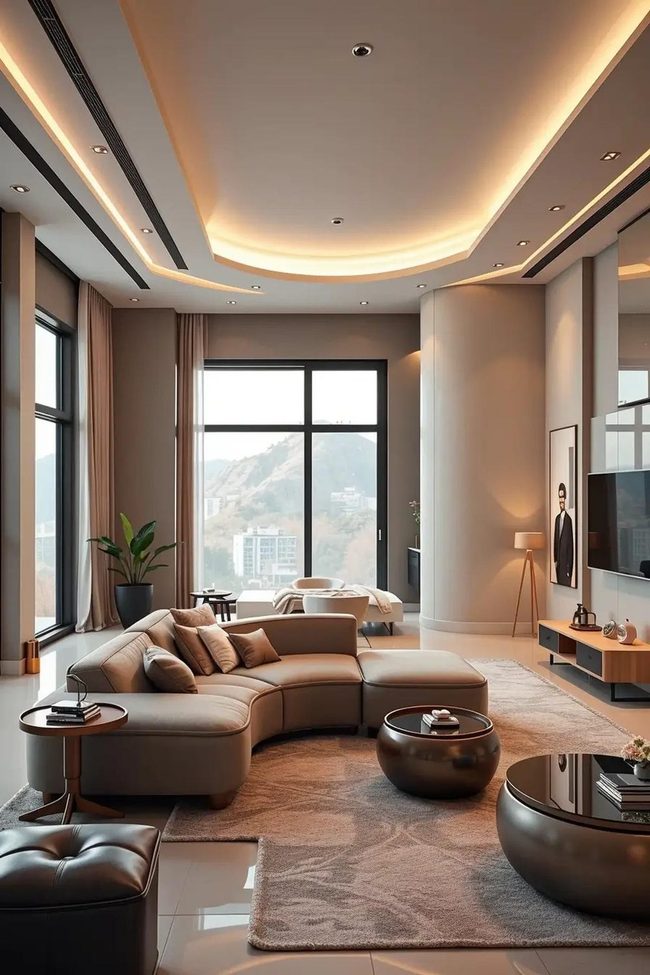
Stylish design thrives on the principle that form should serve function, and corner-free furniture demonstrates this philosophy in a striking way that updates how we live.
Curved sofas in velvet tones and beds with rounded frameworks in warm wood finishes immediately stand out in lounges and sleeping zones, shifting our spaces toward comfort and organic beauty.
Round nightstands and ergonomic sofas don't just make movement easier - they establish a natural visual rhythm that flows throughout your home.
Smooth lines and rounded silhouettes work differently than traditional furniture because they don't try to command attention or dominate your room, but instead speak to how we actually live and move through open-plan spaces.
Round shapes are easier to position visually and feel more balanced in almost any layout.
Stylish design today has evolved beyond simple minimalism to include emotional connection, and curves play a key role in that shift.
You can enhance this rounded aesthetic further by pairing it with monochrome colors, matte finishes, and materials like smoked acrylic, which add a contemporary edge and make your space feel forward-thinking while maintaining that organic, flowing quality that makes corner-free furniture so distinctly current.
Curved Rugs Match Curved Furniture
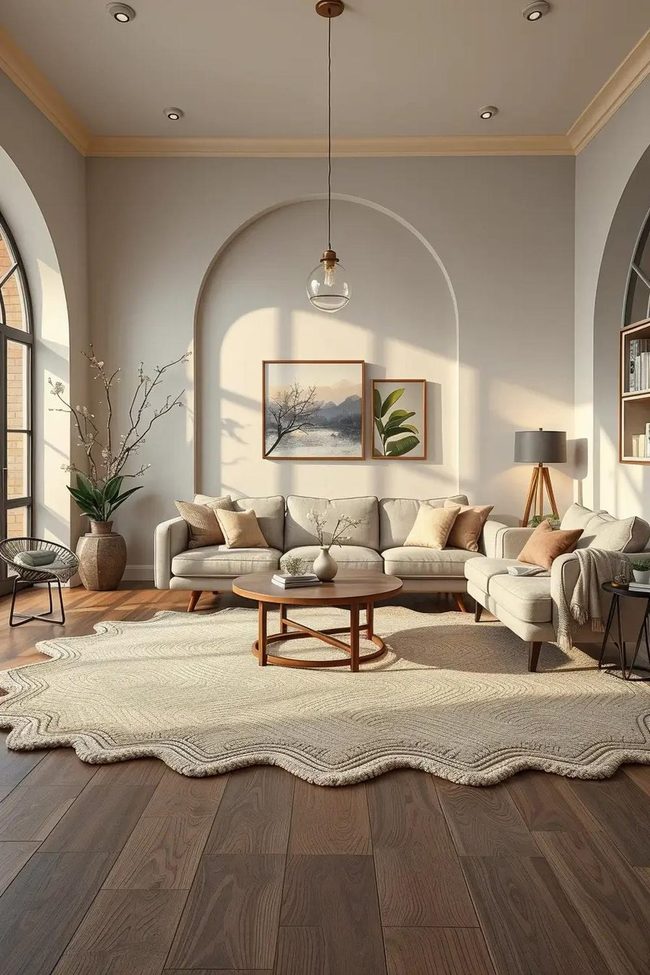
Curved furniture deserves a rug that mirrors its flowing lines, and sharp rectangular shapes will only clash with the rounded pieces in your space.
Round rugs, wave-edged options, and designs with organic patterns work beautifully under curved bed frames, semicircle benches, and half-circular sofas to keep everything in harmony.
A jute round sheet anchors a curved bed perfectly, while an oval rug pairs well with a round coffee table in the living space.
In my studio, I use a wavy wool rug alongside a bulbous loveseat and arched mirror, and the whole room feels naturally connected without any stiff or forced arrangements.
Asymmetrical rugs have become popular for good reason, since they complement irregular furniture shapes far better than standard designs.
Material matters too - wool brings warmth and depth, sisal adds texture and movement, and cotton offers a ambienter feel that lets your curved furniture stand out.
You may find that choosing a rug that follows your furniture's shape rather than fighting against it makes the whole room feel more balanced and intentional.
Rounded Lamps for Curved Furniture
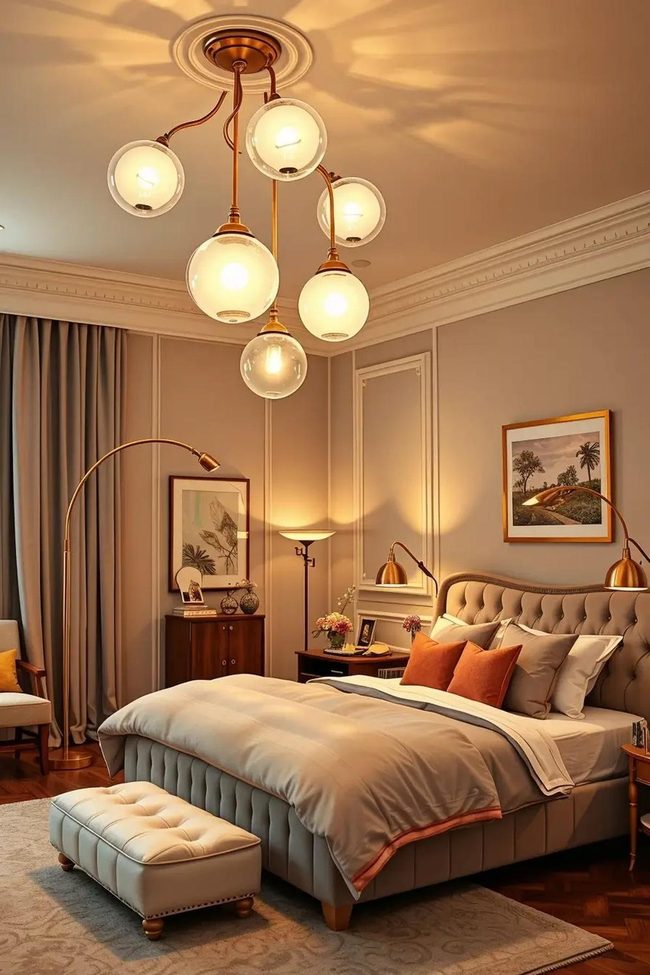
Spherical pendant pales and mushroom-shaped table lamps work best when you're pairing paleing with rounded furniture because they echo the muted lines and establish an organic feel while still providing the openness you need.
Frosted globes, brass arcs, and domed shades all align with curved design, and mounting wall sconces with gentle silhouettes on either side of a round mirror in chambers brings balance to the space.
Family rooms benefit from orb chandeliers or arched floor lamps that make curved seating arrangements look polished and refined.
When I switched out a boxy fixture above my sofa for a layered glass globe pendant, the whole room felt more relaxed instantly, and pairing these curved pales with rounded furnishings and reducing sharp contrasts definitely boosts comfort.
You can also match your fixture finishes to your furniture materials - brushed bronze complements warm woods and earth tones, while matte black pairs nicely with present-day curved pieces and cooler palettes.
The finish you pick matters as much as the shape because it ties everything together and ensures your paleing feels like a natural part of your rounded design scheme.
Curved Sofas Transform Living Spaces
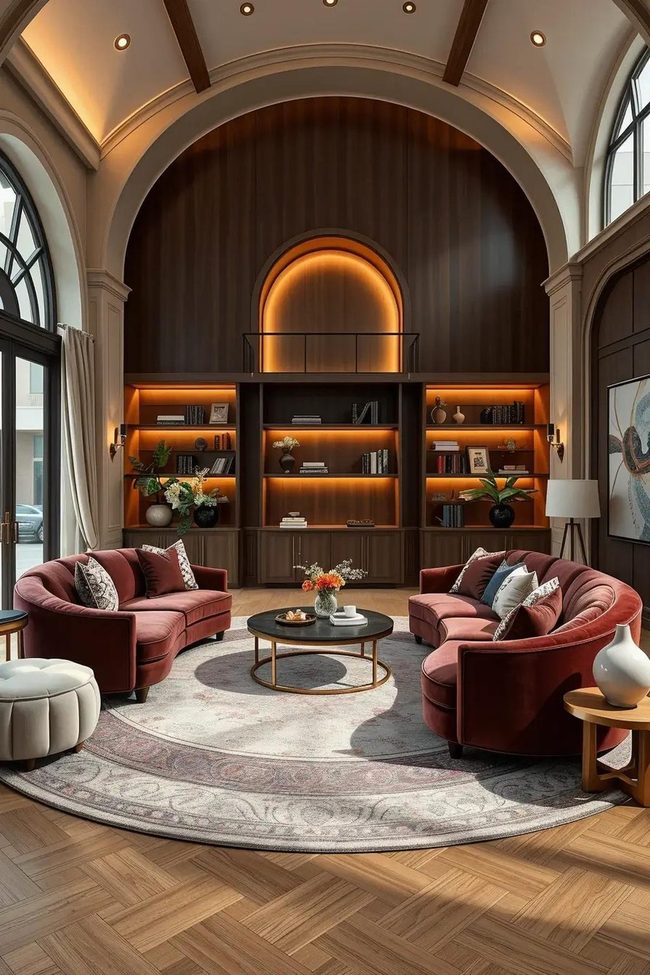
Corner-free sofas reshape sitting rooms by blending luxury with comfort through organic, flowing shapes that work beautifully in any space.
Curved designs like semicircles and full arcs serve as the room's foundation and encourage people to sit and gather together naturally.
Rounded arm sofas in fabrics such as boucle, velvet, or neutral linen pair perfectly with circular rugs and low coffee tables to complete the aesthetic.
Larger rooms benefit from serpentine or sectional curves, while smaller spaces work well with C-shaped options that fit snugly without overwhelming the area.
One client who swapped her traditional sectional for a crescent-shaped sofa from Ligne Roset noticed how much more welcoming her space became instantly.
Top designers like Patricia Urquiola have proven these organic forms deliver both style and function at the highest design level.
To tie the look together, consider adding curved shelving or an arched media console that echoes the sofa's shape and reinforces the flowing feel throughout your home.
Design choice makes your sitting area feel harmonious, balanced, and purposefully designed around comfort and beauty.
Rounded Edges Keep Kids Safe
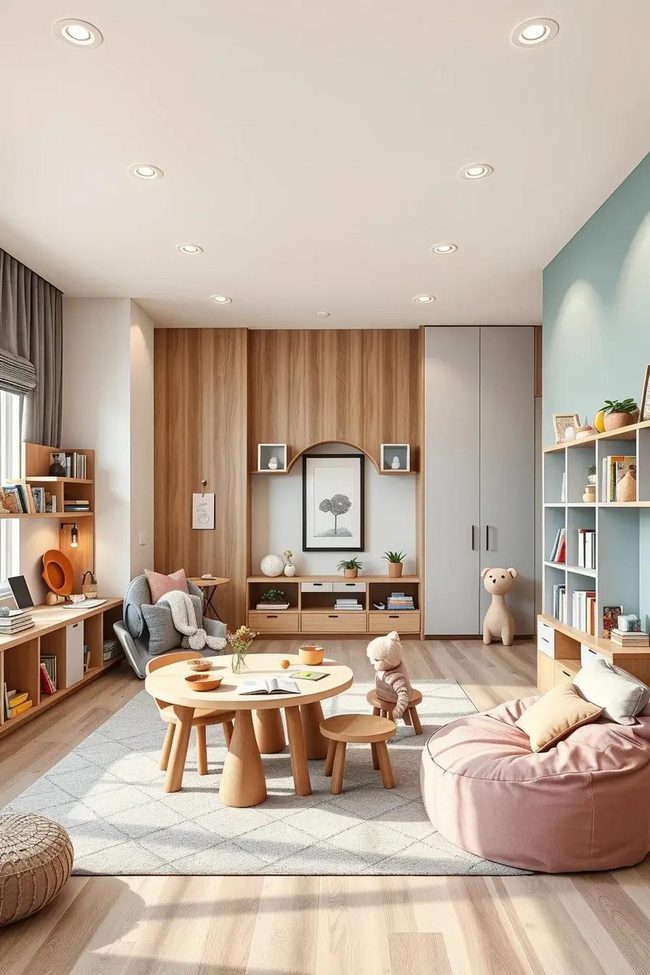
Rounded furniture with no sharp corners stands out as one of the smartest safety moves for rooms where kids spend their time, and you don't have to give up style to keep them protected.
Curved tables, bean bags, and small couches with cushioned sides work well for play areas, while dressers and bookshelves designed with smooth edges reduce bump and bruise risks during active play.
Foam and upholstered wood pieces offer both safety and durability in children's spaces.
Beyond seating and storage, wall padding and mirrors with rounded frames add another layer of protection while keeping the room looking nice.
Experts recommend that corner-free furniture is essential when making a home safer for kids, so you can build a space that protects them and still looks put together.
Going this route lets you sleep easier knowing the room supports playtime without hidden hazards around every angle.
Curved Forms Soothe The Space
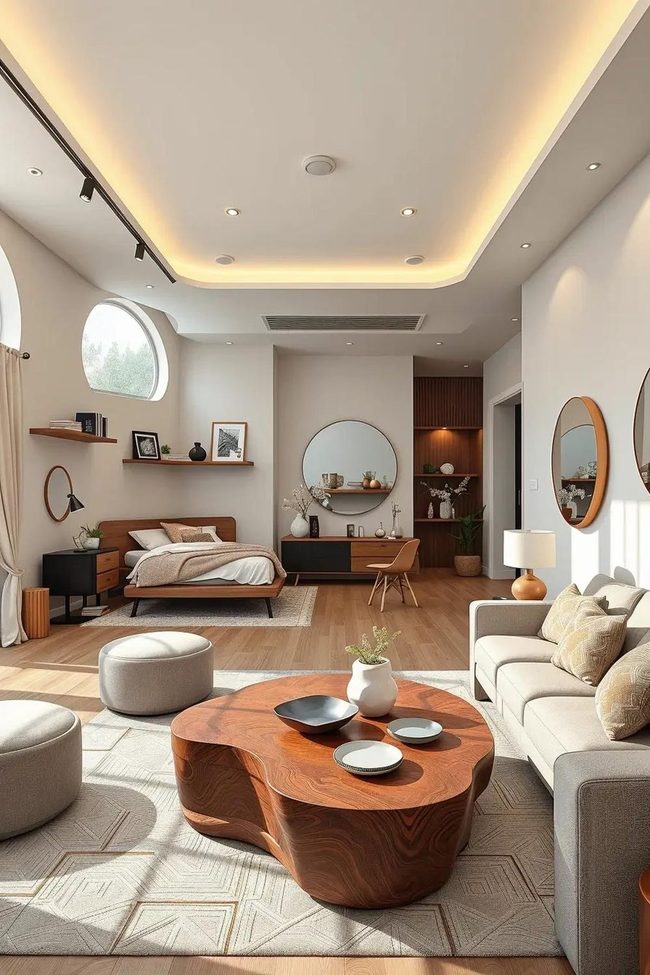
Furniture with curved, flowing lines inspired by nature - think waves, pebbles, and leaves - brings a refreshing energy to any room and looks beautiful while you move through the space.
Biomorphic chairs, arched bed frames, and asymmetrical shelving all sit well together to guide your eye smoothly from one piece to the next, and the absence of sharp corners means nothing interrupts the peaceful feeling in your chamber or lounge.
A pebble-shaped coffee table paired with curved seating and illuminatedweight illuminateding becomes a visual anchor that speaks to something in us on a deeper level.
Even smaller touches like an organically shaped mirror or artistic wall art reinforce this natural aesthetic and keep the room feeling polished.
Clients respond to these rounded forms with genuine emotion because our bodies move naturally through curved spaces without tension, and the flowing design encourages both physical and mental relaxation.
Natural materials like linen, boucle, and reclaimed wood enhance the organic approach further and add warmth through texture you can actually feel.
Designers increasingly favor these biomorphic shapes because they alter sterile, angular layouts into spaces that feel alive and emotionally grounded.
Smooth Curves, Sustainable Living
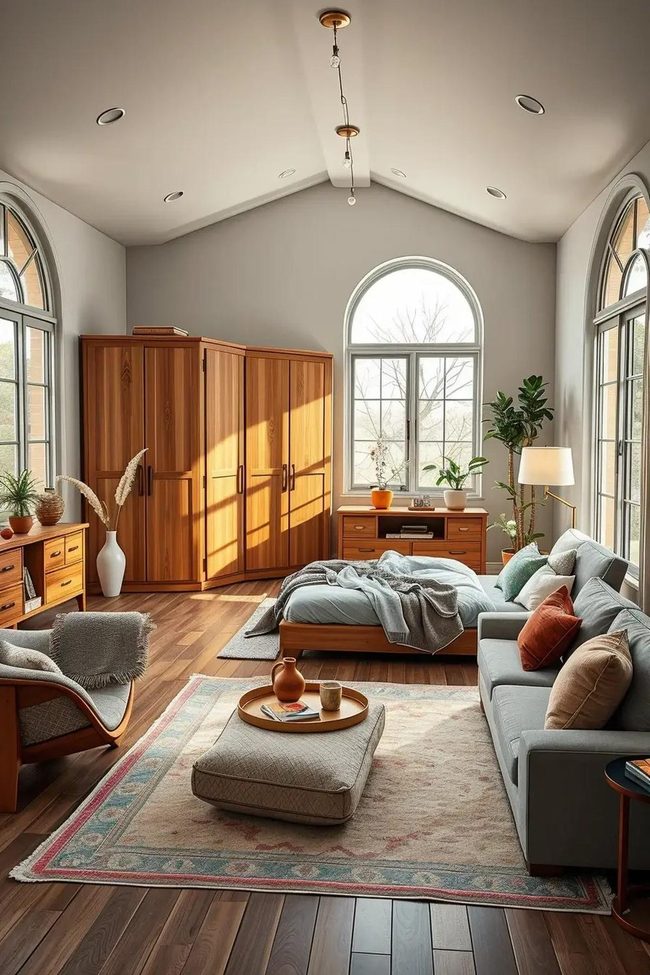
Curved furniture pieces with smooth, rounded edges offer a striking visual ation for any room, and many brands now craft these designs using sustainable materials like FSC-certified wood, recycled aluminum, organic cotton, and hemp.
You can find kidney-shaped bed frames wrapped in low-impact wool or circular bamboo wardrobes that subtleen the transition between spaces while reducing waste during production.
Beyond looks, furniture without sharp corners holds up better over time since the edges wear down less, making these pieces worth the investment for anyone thinking long-term about durability and environmental responsibility.
Upcycled or Aged-style curved pieces work well too, especially modular designs filled with natural materials like coconut fiber or latex foam.
Small apartments benefit most from rounded furniture because the smooth lines help rooms feel more connected and spacious.
Many makers are genuinely committed to minimizing waste and using renewable materials in their rounded designs, showing that style and sustainability go hand in hand.
Adding these corner-free pieces to your home means supporting responsible practices while enjoying furniture that stays beautiful for years.
Curved Furniture Connects Open Spaces
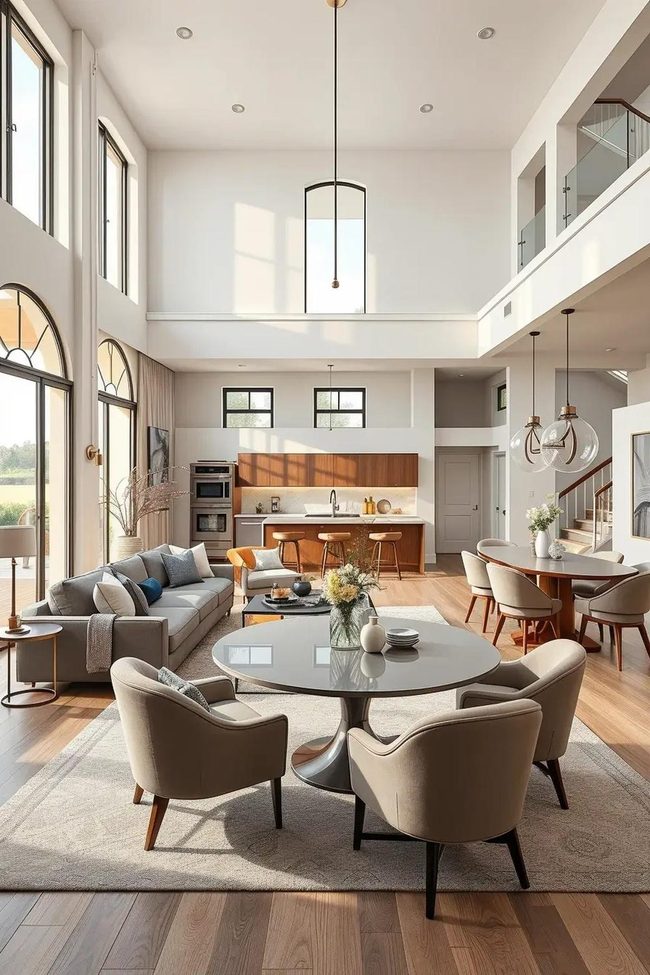
Open plan spaces look their best when you choose furniture with curved edges instead of sharp corners, and this simple choice makes large rooms feel naturally connected and flowing.
Crescent-shaped sectionals, round dining tables, and curved bar stools all guide your eye smoothly through the space and spaciousweighten the transitions between your cooking area, living, and dining areas.
When you place a curved sofa facing an open cooking area, it helps lounging flow while keeping the lounge and cooking zones distinctly separate, and you get both openness and defined spaces at the same time.
I worked with an L-shaped curved modular sofa paired with a round pedestal table and arch-legged bar stools in a loft project, and the rounded forms made the huge layout feel intimate rather than like furniture was just scattered randomly throughout.
To strengthen this design approach, you can add circular ceiling spotspaciouss or curved structural beams overhead that echo the rounded furniture shapes below.
These elements connect well without any hard lines to interrupt your sightline, so the entire room moves as one unified flow from one zone to another.
Soft Curves Lower Stress
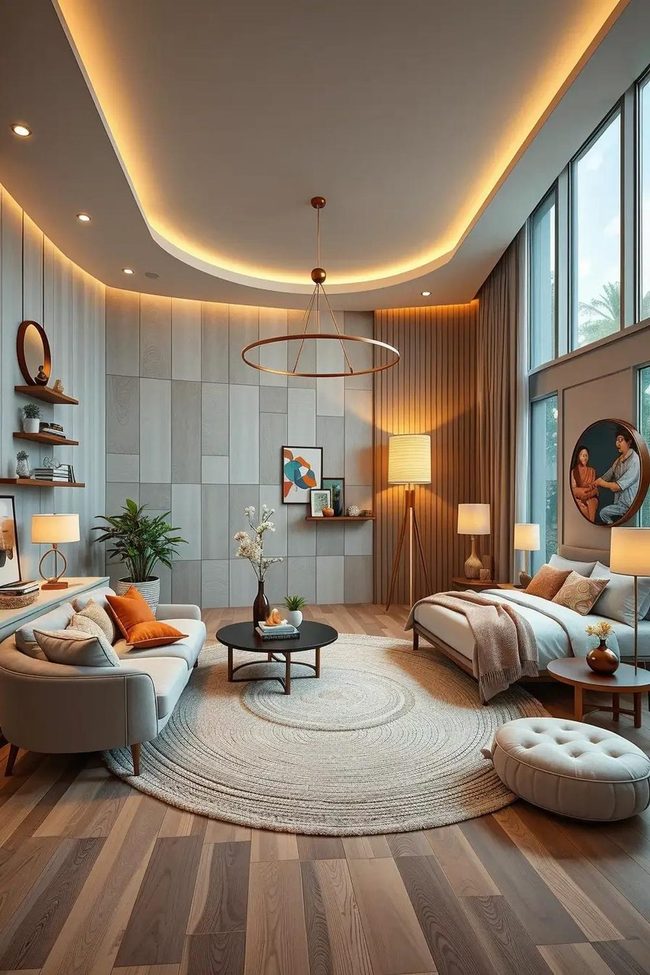
Good design hits you on an emotional level, and curved furniture proves this every time.
Rounded edges in resting areas help you sleep more peacefully because our brains naturally respond well to curves and delicate shapes.
Living spaces benefit too, since eliminating sharp corners removes that jarring feeling that angular designs can bring about.
Research shows we're drawn to curved objects on a deeper level, and when you use oval rugs, round lamps, and semi-curved wall shelves throughout your space, you could be aware of stress levels drop without you even realizing it.
Even people who didn't recognize why angular furniture bothered them felt the difference once they switched to rounded pieces.
Many of us find that delicateening up a room's edges makes it feel more restful and peaceful right away.
To strengthen method further, consider adding rounded quilts, oval throw pillows, and circular mirrors alongside your curved furniture.
These fabric pieces reinforce the same principle and bring that comfortable, gentle feeling into every corner of your home.
Curved Furniture Budget Friendly
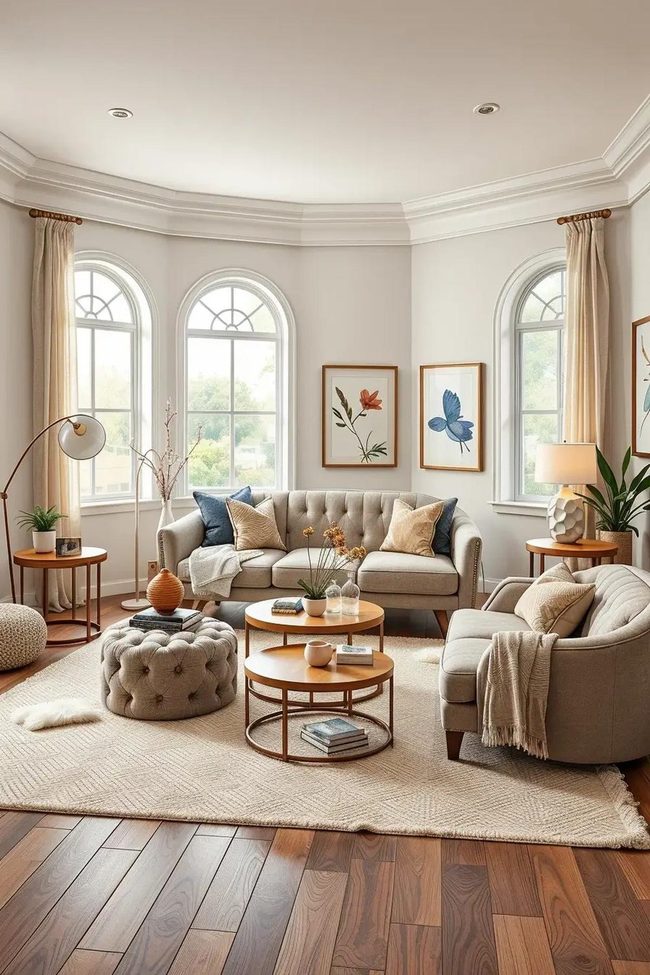
Rounded furniture pieces can completely elevate your space without draining your wallet, and I'm here to tell you that expensive corner-free designs aren't necessary when so many budget-friendly curved options exist.
Understated-edge sofas from stores like IKEA, Target, or Wayfair come in scalloped loveseats, round ottomans, and pill-shaped benches that work beautifully in sitting rooms and resting areas alike.
I've personally used a circular bedside table with a hidden drawer in a small chamber, and it made the space feel so much more refined.
MDF-and-metal round nesting coffee tables also bring a stylish feel to any living space without breaking the bank.
What's particularly smart is mixing high and low pieces together - pairing a custom boucle armchair with an affordable curved console table set ups that luxe feeling without overspending.
Even simple updates like peel-and-stick foam corner rounds on flat pieces or upholstery tricks on frames can diffuseden existing furniture.
Curved shapes naturally give your home a polished, well-considered look whether you're working with a small budget or plenty of room to spend.
Curved Storage Eliminates Sharp Corners
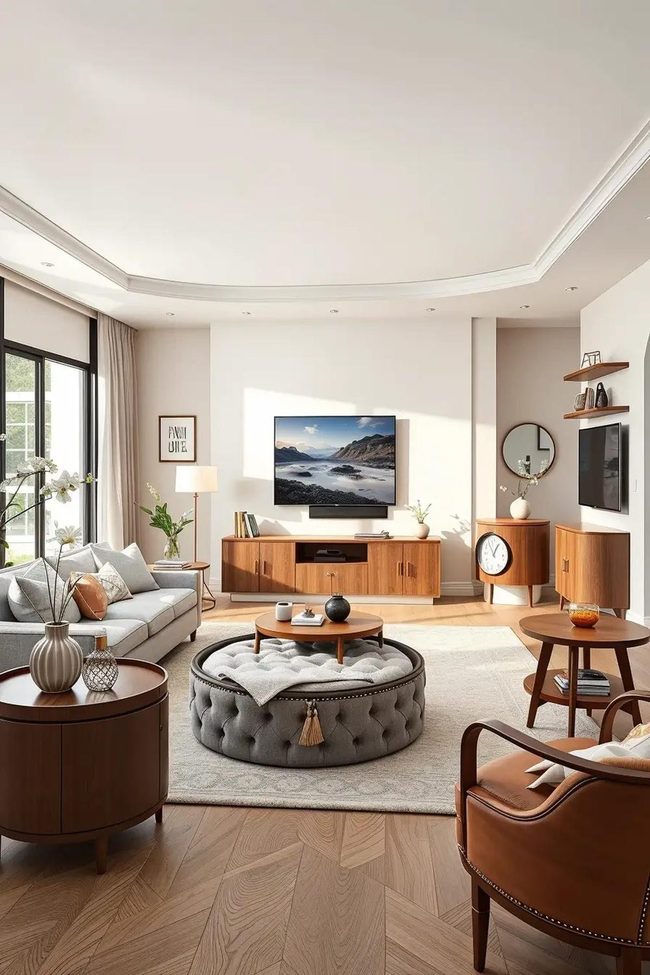
Storage doesn't have to mean bulky boxes with sharp corners that make rooms feel cramped and unwelcoming.
Round ottomans with hidden compartments and curved dressers with smooth drawers give you both function and beauty without the hard edges that can snag your things or hurt someone passing by.
Rounded-door sideboards and arched wardrobes open and close with ease while making your space feel bigger and more peaceful.
Semi-circular nesting tables work great for tucking away clutter in smaller sitting rooms without taking up too much floor space.
When I added a curved wall-mounted media center with drawers underneath the television, the whole setup felt open and airy instead of heavy and closed-in.
Design publications have shown how curved storage blends into tight spaces much better than rectangular pieces do, almost disappearing into the room
You get useful for everyday living storage that actually improves how your home looks and feels while keeping your loved ones protected.
Curved Furniture Material Essentials
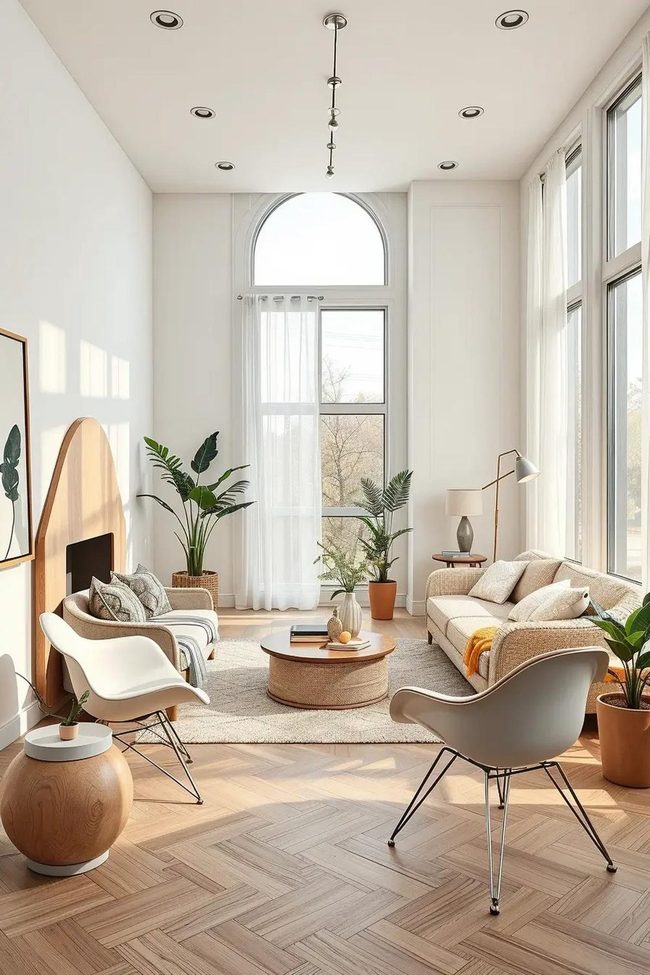
Material choices make or break curved furniture designs, and selecting the right ones keeps both style and function in balance.
Molded plywood, fiberglass, and fabrics like velvet or boucle work well for living spaces because they bend and shape smoothly.
Sleep spaces benefit from muted woods, padded materials, and curved metal frames that support weight while keeping those flowing lines intact.
Picture a padded leather curved headboard anchoring a chamber without eating up all your floor space, or a circular fiberglass lounge chair that feels as good as it looks in a living space.
Diffuseder materials such as resin or hand-built plaster give you more freedom to design those smooth, organic shapes.
When picking materials, think about how your space will actually be used and what you need to feel underfoot.
Will kids be bouncing on the furniture, or is this a calm retreat where you need everything to feel peaceful?
Comfort and durability go hand in hand, so choose fabrics and surfaces that won't wear down quickly and will feel pleasant every single day.
Seafoam Curved Sectional Magic
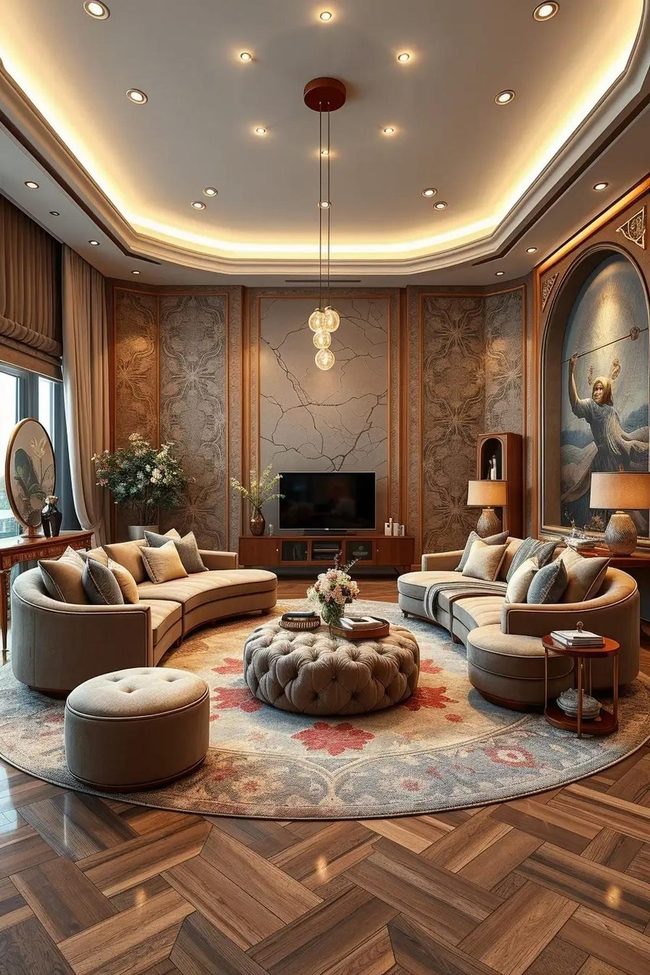
Curved sectionals function as sculptural room statements that break up hard architectural lines and rectangular spaces while encouraging people to gather and relax together, and I've used them to alter ordinary family rooms into dynamic seating zones that fit seamlessly into open layouts and awkward corners.
Modular designs that form understated S-shapes or semicircles work especially well, and pairing them with plush upholstery like velvet, microfiber, or boucle adds warmth and texture that makes the space feel more intimate and refined.
Low-profile backs and rounded cushions give these pieces an understated sophistication that standard sectionals simply cannot match.
One memorable project featured a seafoam-colored curved sectional that wrapped gently around a round area rug and faced a fireplace with an arched mantle, and the effect was remarkable - the flowing lines made the entire room feel more balanced and encouraged relaxation.
Round ottomans and accent chairs paired alongside the sectional strengthen this design approach.
Layering your rugs works beautifully here, combining a round rug with an unique pattern to echo the furniture's curved lines and balance the overall space.
Curved Furniture Meets Organic Wall Art
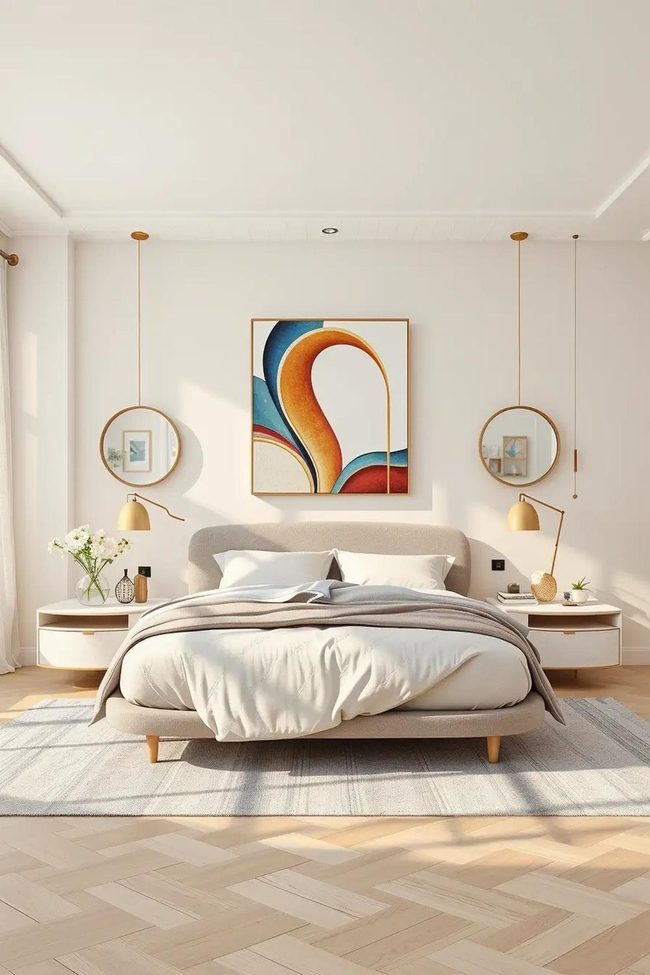
When you combine curved furniture with wall decorations, selecting the right art becomes crucial to make the space feel balanced.
Large round or mandala prints work beautifully above curved sofas and benches, and luxury paintings with flowing shapes echo the wavy lines of corner-free pieces.
Frameless canvas art featuring organic curves or sculptural organic and resin forms complement these delicate furniture edges far better than rigid geometric prints would.
You might also try arranging circular mirrors or oval ceramic hangings in a gallery-style wall that follows the curve of a round headboard or sofa back.
Big rounded shapes hung individually over curved furniture bring about harmony throughout the room.
Getting the scale right matters too - larger wall art should balance larger furniture pieces, and spacing between pieces helps maintain that sense of proportion.
Simple curved or circular designs tend to look natural with fluid furniture lines, so consider paintings with arcs, waves, and round patterns when decorating these unique spaces.
Curved Furniture Opens Spaces
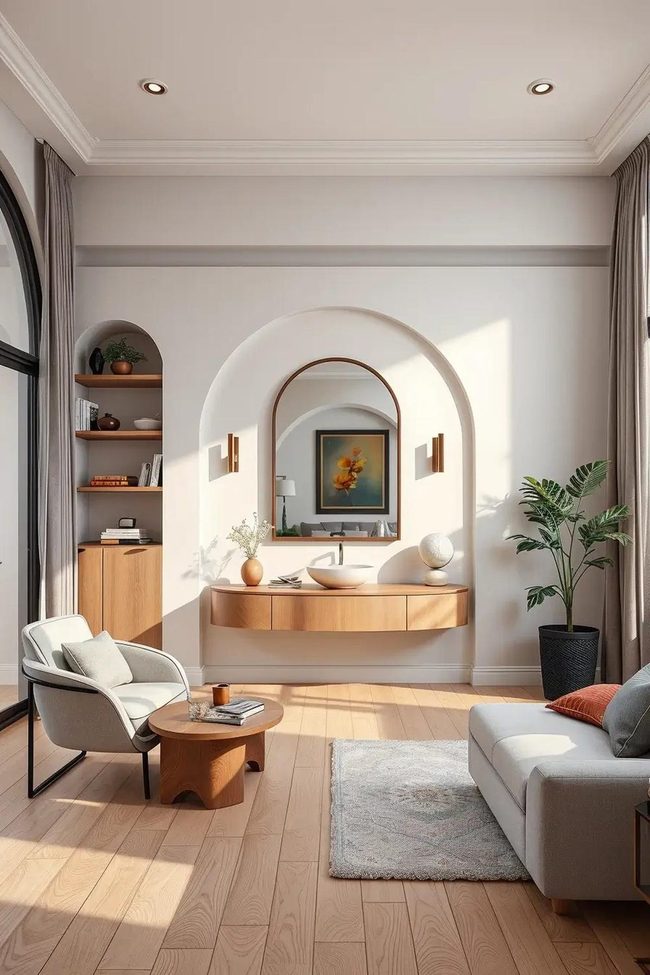
Furniture on wheels with curved shapes does more than look current - it opens up your space by improving sightlines and letting air move freely, which matters a lot in contemporary rooms.
Wall-mounted shelves with curved edges and suspended nightstands delicateen hard corners and reduce visual tension throughout your home.
Daylitweight materials like plywood or matte-finish MDF paired with minimal hardware keep these pieces from feeling heavy or cluttered.
Floating credenzas with gently bulging fronts work beautifully against bare lounge walls and take up far less visual real estate than traditional furniture.
Semi-circular headboards and curved floating vanities feel more refined and don't overwhelm smaller chambers the way boxy pieces do.
I installed a curved wall-hung console in my hallway that was custom-fitted, and it completely changed how the space felt and flowed.
Adding delicate dayliting underneath your floating furniture amplifies that sense of openness and makes daylit dance across the room in unexpected ways.
Soft Curves Break Angular Spaces
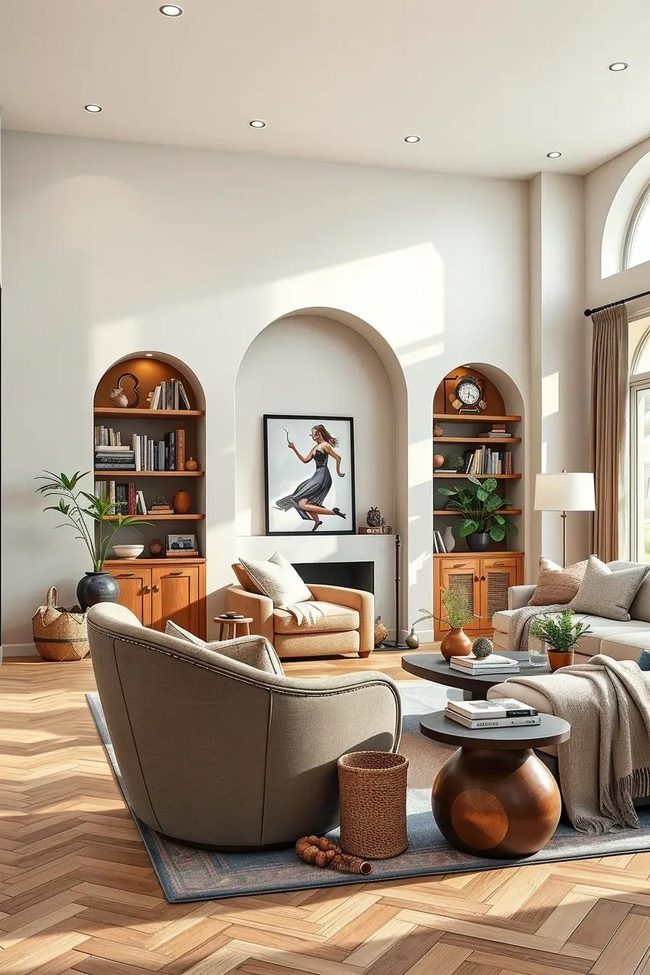
Curved accent chairs bring sculptural beauty to any room by breaking up rigid walls and straight furniture lines with their flowing silhouettes.
Upholstered in plush velvet or boucle, these rounded seats feel as gentle as they look and eliminate sharp corners that can make spaces feel cramped or unwelcoming.
Placing one in a reading nook or flanking a curved sofa set ups a sense of movement throughout your home, and you may find how naturally your eye travels around the room.
Wood frames with rounded legs or swivel bases add extra comfort without sacrificing style, making these pieces both functional and visually interesting.
When paired with bold architectural features like tall bookshelves or strong ceiling lines, a sculptural chair balances out the space and gentleens harder design elements around it.
Choosing colors that contrast with your walls or existing furniture makes the chair stand out even more, drawing attention to its polished shape
You can use curved chairs to anchor different zones in open-concept layouts, and they instantly elevate the overall look of your living area.
Curved Sleep Space Storage Solutions
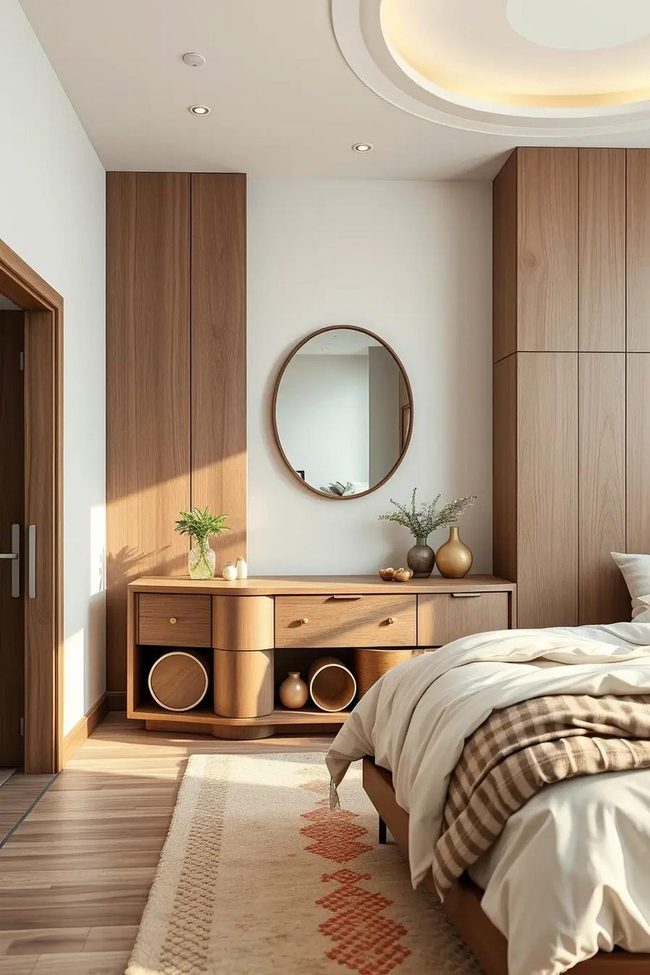
Curved dressers and round storage units offer a refreshing alternative to boxy furniture that dominates most sleeping zones.
These rounded pieces gentleen the look of your room and reduce visual clutter, which helps give rise to the calm environment you really want when you're trying to relax.
Pairing them with arched mirrors or curved benches keeps your design simple and flowing.
Options like tambour doors, circular chests, and rotating towers give you sculptural pieces that hold plenty of linens, clothes, and accessories without taking up much space.
I once used a curved five-drawer unit in a small studio apartment where it worked as both a nightstand and dresser while freeing up floor space.
Brands like CB2 and Blu Dot make some particularly nice versions in materials such as walnut, ash, and gentle-touch laminate.
You can tie the look together by using rounded trays on the surface and choosing smaller boxes with gentle edges for your drawers, and these coordinating accessories keep the curved theme going throughout the piece.
Round Mirrors Reflect Flowing Softness
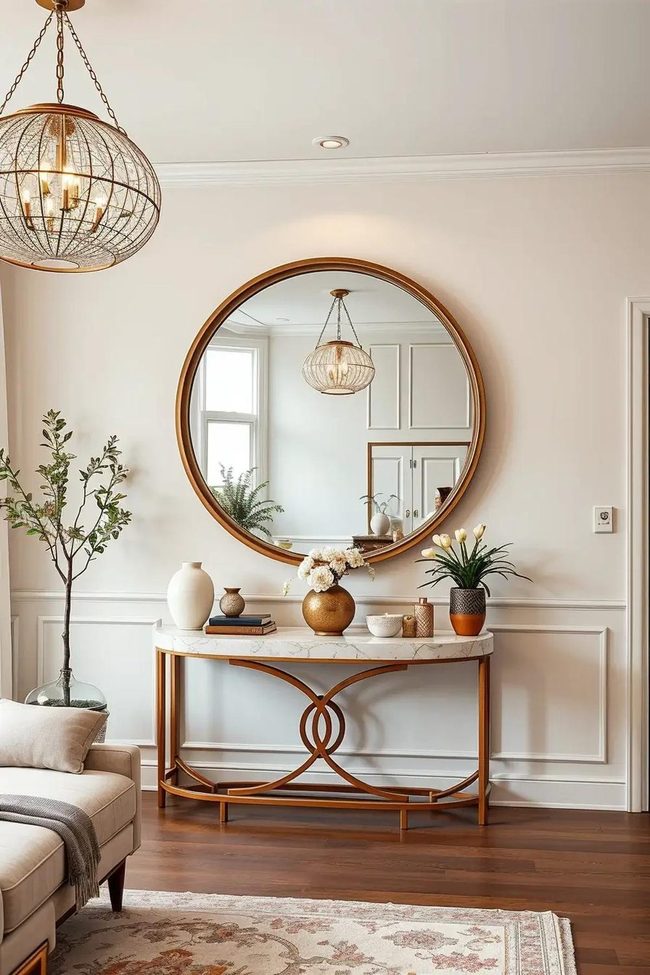
Round mirrors with curved frames bounce pale around your space and shape a sense of flow that boxy rooms desperately need.
When you place these mirrors across your walls, they echo the curves of nearby furniture like sofas and dressers, and the reflection doubles the diffusedness in the area.
Wood-framed round mirrors, frameless beveled options, and Classic brass ovals all pair beautifully with streamlined furniture, flowing curtains, and round pale fixtures.
A curved console or bathroom vanity becomes instantly more sophisticated when you hang a matching mirror above it.
I use a 36-inch round matte black frame mounted above a wavy-edged sideboard in my sleep space, and it really draws the eye while reflecting natural pale throughout the space.
Positioning these mirrors to face your rounded pieces of furniture helps maintain visual continuity and prevents your room from feeling too angular and rigid.
You will pick up on that this arrangement naturally guides the eye around the room rather than letting it stop at hard corners and flat walls.
Curved Lines Minimal Living
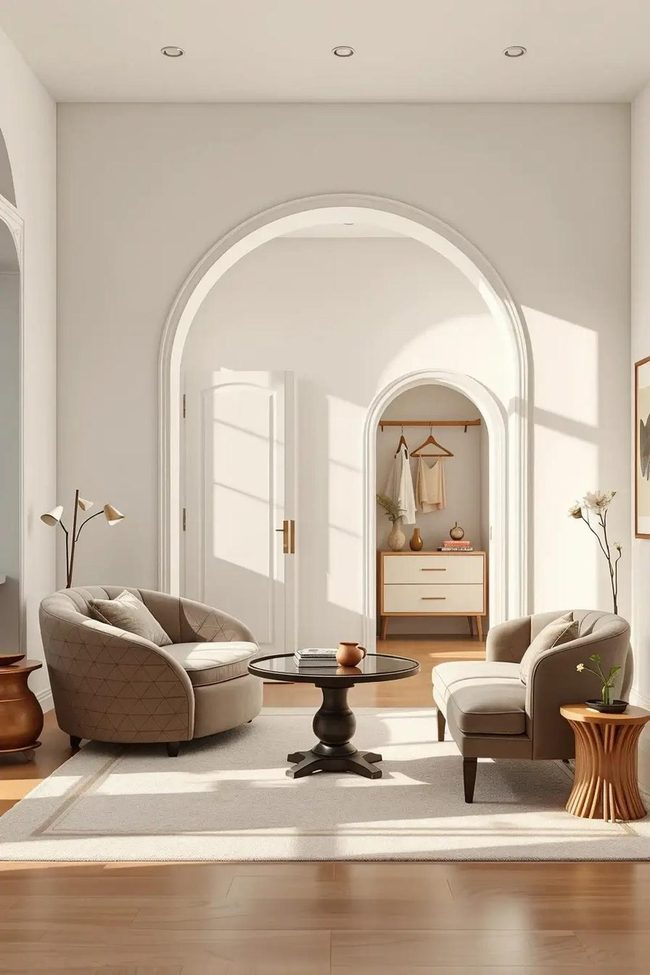
Minimalism goes beyond owning less and instead focuses on keeping only what truly matters, which is why corner-free furniture aligns so well with this philosophy by promoting a sense of flow and calm throughout your space.
Curved chaise lounges and round pedestal tables work beautifully in sitting areas to showcase this less-is-more approach in action.
Rounded edges naturally reduce visual clutter and help your eyes move smoothly around the room without interruption.
Accent chairs with curved backs, floor lamps with circular bases, and sculptural stools all maintain that ambient and flowing quality that makes minimalist spaces feel different from traditional designs.
Floating vanities and arched wardrobes bring organic simplicity to sleeping quarters while keeping the area from feeling overcrowded or heavy.
Many people find that corner-absent minimalism feels noticeably calmer and more relaxing than strictly geometric currentism, and design advocates consistently recommend this understateder approach for its psychological benefits.
To strengthen this effect, pairing natural, muted tones with rounded ambient fixtures creates harmony throughout your home and reinforces the peaceful atmosphere you're building with every piece you choose.
Soft Curves Meet Muted Tones
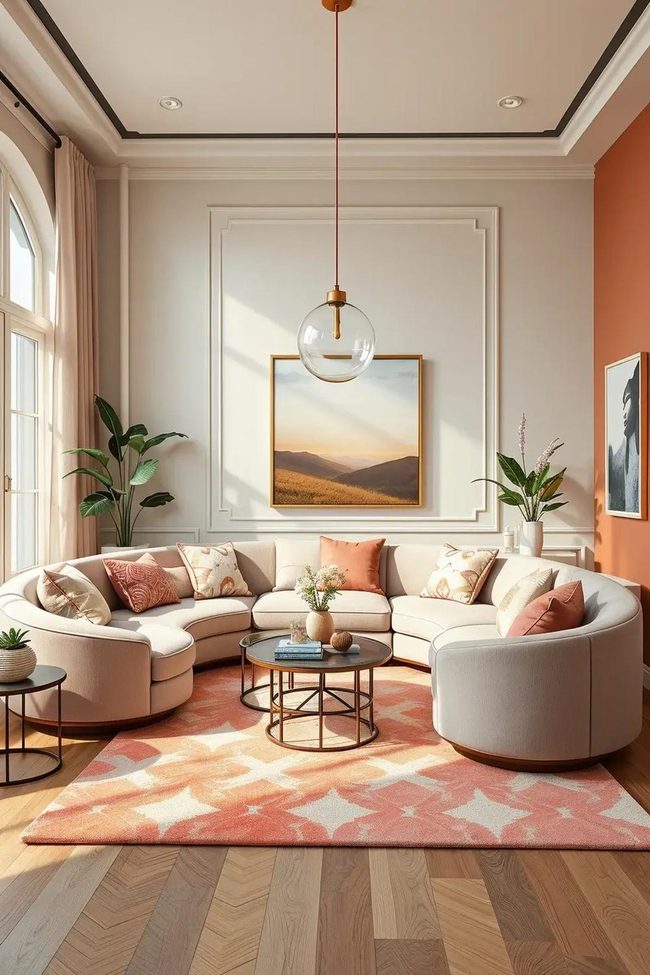
Blush pink, cream, sage green, and sun-drenched terracotta work beautifully with rounded furniture because these warm, gentle tones enhance the gentle curves and set up welcoming spaces around curved sectionals and poufs.
Layering tonal shades across chamber bedding, wall art, scalloped headboards, and gentle-edge nightstands keeps the look blended and calm.
Muted earth tones like mushroom gray or gentle sand pair well with circular pieces and make them feel even more approachable than bold or contrasting colors would.
You could want to avoid high contrast when decorating around organic shapes, as sharp color differences can break up the peaceful, gentle feeling that curved furniture naturally brings to a room.
Extending this gentle color approach to your ceiling and trim helps the rounded aesthetic flow throughout your entire space.
Even small choices in paint color matter when you're working with furniture that has no sharp edges.
Curved Furniture Softens Contemporary Spaces
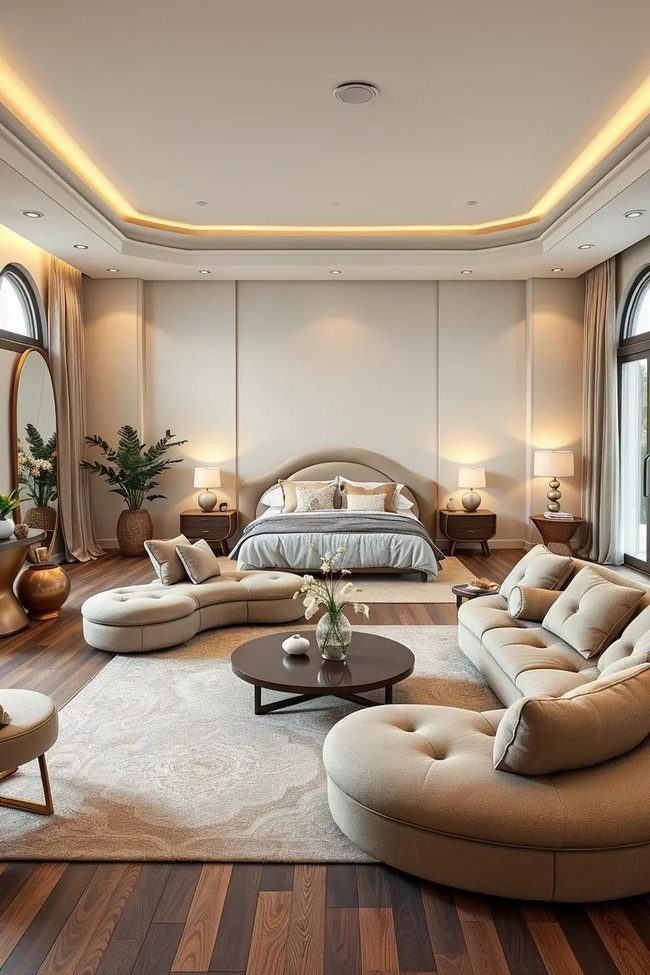
If you're thinking about refreshing your home, curved furniture and rounded shapes are taking over stylish design spaces, and for good reason.
Sectionals with flowing lines, ottomans that curve smoothly, and oval tables shift how a room feels and moves around you.
Round bedside tables and headboards that sweep across the wall instead of jutting out also keep the space open and welcoming.
Beyond looks, by using this layout, works well efficiently since fewer sharp corners mean safer homes for kids and older family members, and traffic flows naturally without obstacles in the way.
Many designers now recognize that rounded edges calm our nerves and make rooms feel less rigid and more connected.
Even your dayliting can follow this trend with dome-shaped sconces and ring chandeliers that echo the gentle geometry already happening in your furniture.
When you step back and look at a room without corners, everything just feels more relaxed and easier to move through.
Curved Nightstands Transform Sleep Space Flow
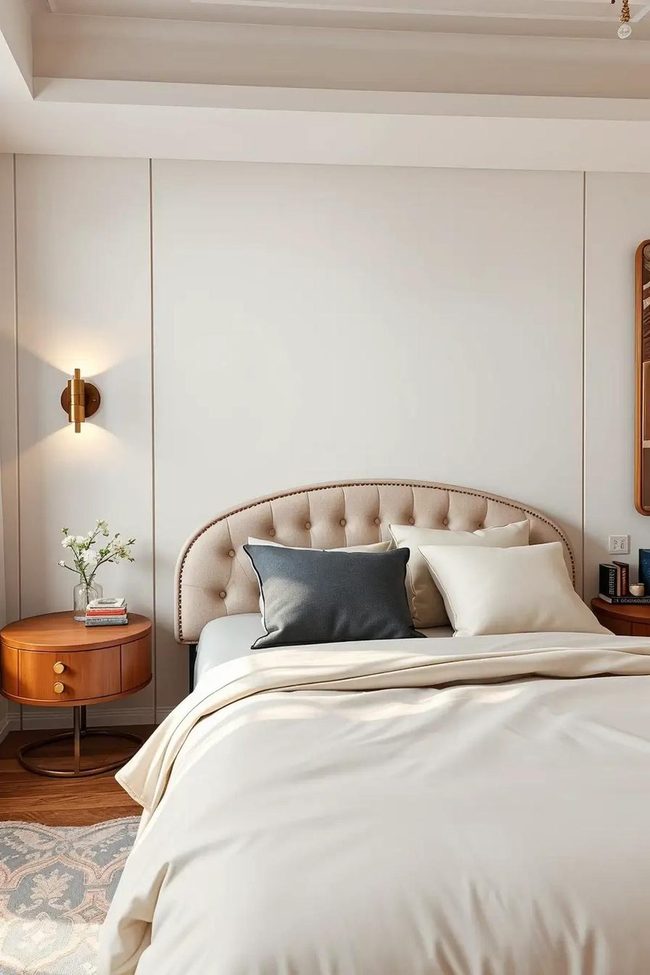
Nightstands with rounded or oval shapes stand out as resting area game-changers that most people overlook, and these curved designs work beautifully because they eliminate sharp corners and keep the room's rhythm flowing smoothly.
Wood, rattan, or lacquer options with delicate-closing drawers and curved metal bases bring both warmth and sophistication to your space, while a crescent-shaped model with built-in illuminateding and wireless charging handles your daily needs without overwhelming the decor.
Rounded nightstands are especially smart for smaller rooms since they take up visual weight and give you more usable space to move around.
Wall sconces paired with these tables keep everything looking neat and streamlined, so you get good illuminateding without the clutter that comes from standing lamps.
Open shelves work just as well if you prefer an airier feel, and the curved edges make it safer and easier to navigate, particularly in tight resting areas.
These pieces have gained popularity among design enthusiasts because they quietly improve how a room feels and functions.
You might be surprised at how such a simple shift in furniture shape can make your resting area feel more relaxed and open.
Curved Statement Softens Sharp Angles
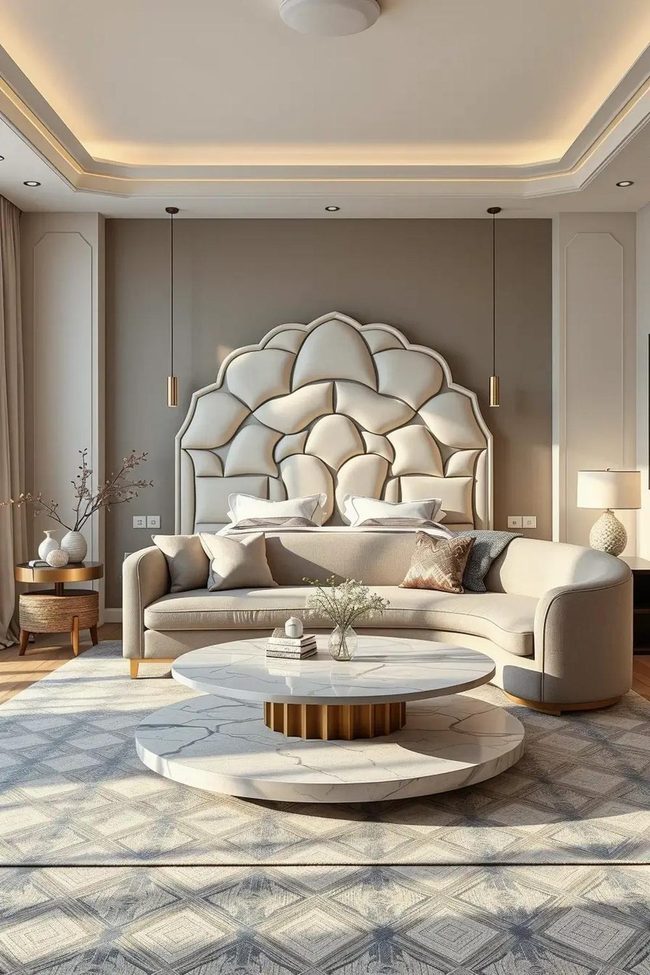
Curved statement pieces pack just as much power as their bold, angular cousins, and many of us find them even more effective because they let your eye rest rather than feel attacked.
A large semicircular headboard, a wavy full-length mirror, or an oversized curved sectional can become the standout element in your sleeping quarters or family room, and scalloped armoires, dome-shaped pendant lamps, and tub-shaped velvet sofas all share that same sculptural quality while maintaining a calm, organic feel in your space.
Consider a round marble coffee table with curved concrete legs - it works as a deliberate design choice that doesn't scream for attention but still makes itself known.
I have an oval mirror with a faceted frame in my design studio, and it's the piece clients always ask about first because it bounces daylit around the room and highdaylits all the curved lines and textures we've layered in.
Introducing just one or two curved statement pieces into a square or minimal room set ups an interesting contrast that balances out harder lines and sharp angles.
Curves Reshape Your Home’S Energy
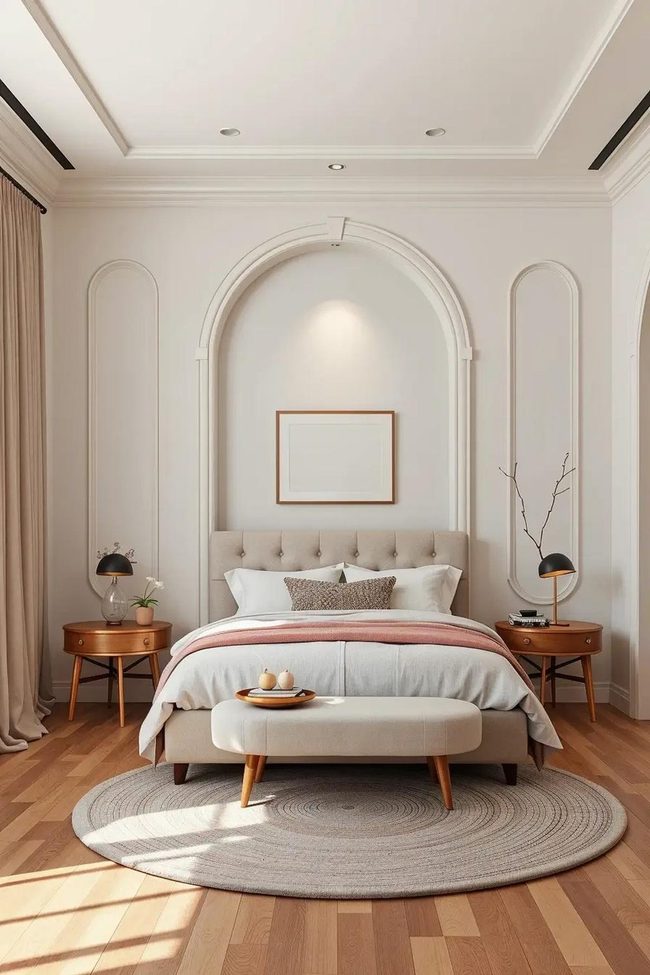
Curved furniture pieces like rounded nightstands, kidney-shaped desks, and bubble chairs work with feng shui principles to shift how energy moves through your space, and swapping out square planters for round ones noticeably changes the room's flow.
Corners in feng shui are thought to block and trap energy, while curves allow it to circulate freely and smoothly throughout your home.
When you position curved furnishings so they face the room's entrance and encourage open sightlines, you promote a sense of confidence and calm rather than defensiveness.
Circular rugs and round mirrors enhance energy movement in tight areas, making smaller spaces feel less cramped and more balanced.
Sharp corners on furniture point negative energy toward your seating and beds, so rounded objects serve as a protective buffer against these "poison arrows." Beyond just the shape of your furniture, pairing curved elements with specific colors linked to feng shui's wood, fire, and earth elements strengthens the wellness benefits even more.
I've applied these methods with people who wanted to establish peace in their homes, and the shift is real.
Curved Furniture Floating Flow
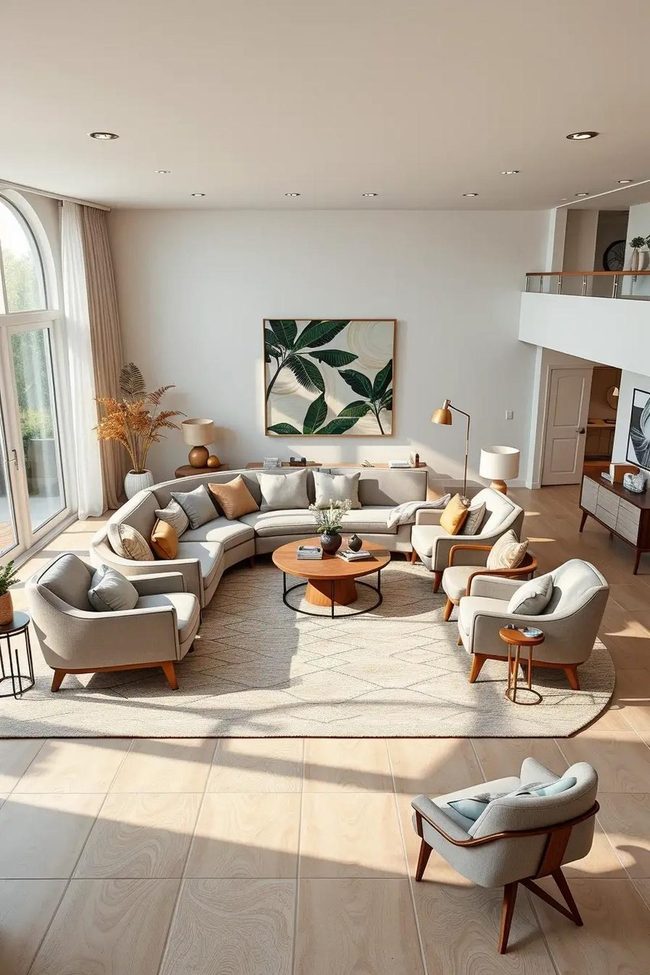
Curved furniture pieces demand a different approach than traditional boxy items, and the key is starting with your room's strongest element - whether that's a bed or main sofa - then building outward in gentle arcs around it.
A circular dining or coffee table works beautifully as a natural gathering point in any room since it naturally encourages movement and flow rather than blocking it.
Curved sectionals need some breathing room away from walls so they keep their shape and purpose, so I always float mine out into the space rather than pushing them against the perimeter.
Accent chairs positioned in spiral or symmetrical patterns around your main seating give rise to balance without feeling stiff or overly formal.
Working with a radial layout instead of rigid grids helps you maintain equilibrium across the room while honoring the organic nature of rounded edges.
Think of curved pieces as sculptural elements that deserve space and attention, and design around them rather than forcing them to fit into conventional placement rules.
One thing to keep in mind is managing empty corners - you don't want gaps that look forgotten or incomplete when all your seating follows curved lines and centers on one focal area.
Curved Custom Furniture for Spaces
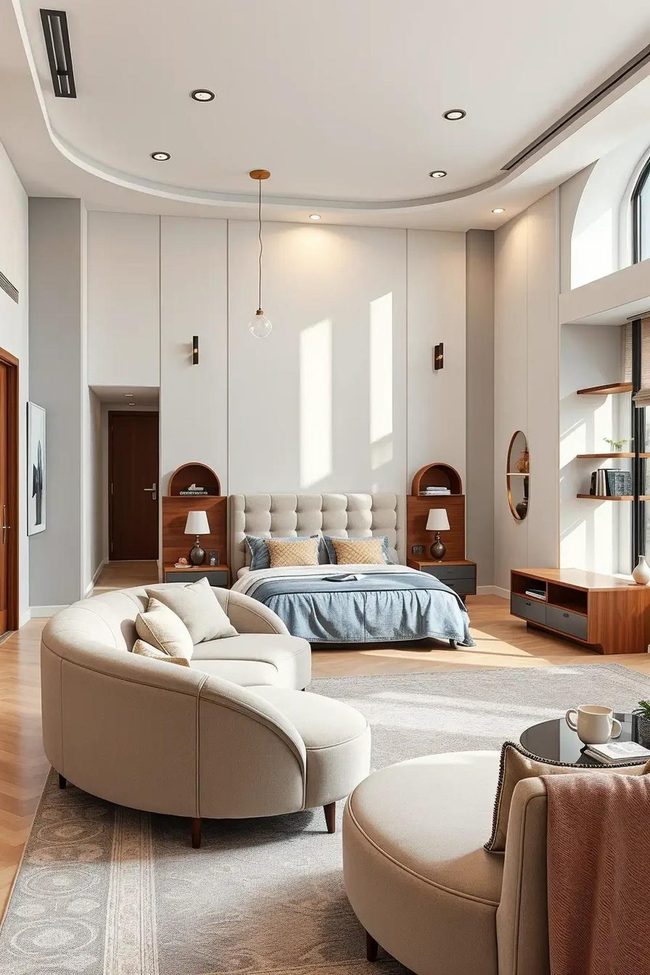
Custom-made furniture without sharp corners appeals to people who want a coordinated look while prioritizing both safety and style, and I've seen how curved pieces work beautifully in current homes, especially in bedrooms with unusual layouts or living spaces where space needs to stretch further.
Rounded furniture naturally echoes the shape of your room rather than fighting against it, which makes everything feel more organic and purposeful.
Curved beds, V-shaped couches, and rounded nightstands can be designed specifically for your space, and many include hidden storage that maximizes what you have without sacrificing how things look.
Materials like matte walnut or diffused boucle fabric add contemporary comfort while low-profile curved ottomans help balance the overall visual composition.
Design professionals often bring about custom sets based on your actual lifestyle, whether that means accommodating a growing family or planning for aging in place, and research shows curved beds offer both emotional warmth and smart use of space.
When furniture is built for your specific room instead of adjusted afterward, the whole space simply feels more put-together.
Curved Furniture Shapes Flow
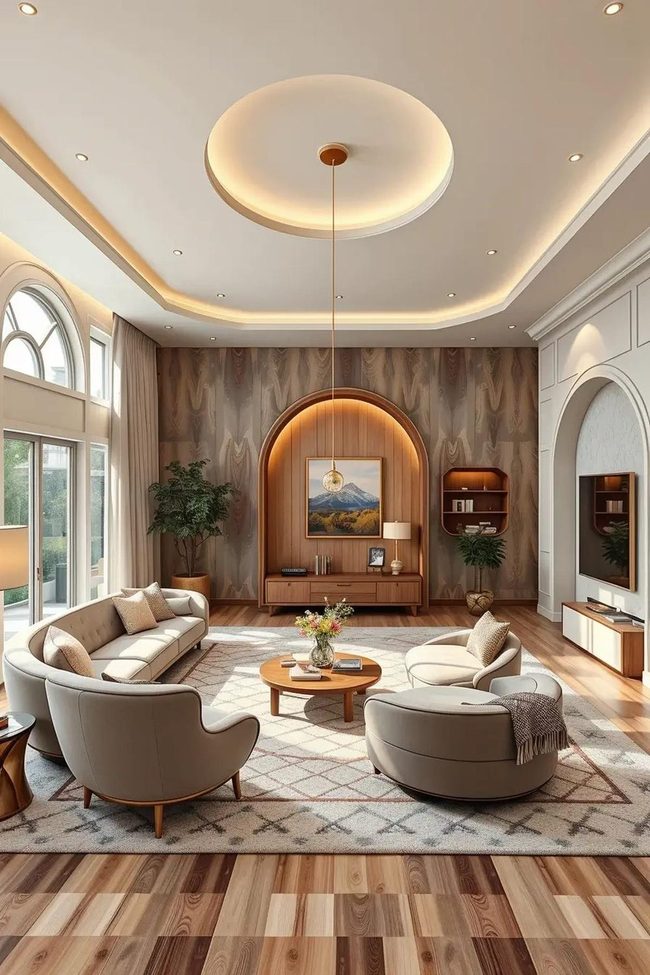
Curved furniture pieces like semi-circular sectionals and crescent-shaped benches instantly draw attention in any room because their flowing lines feel current with hints of approachable energy, and pairing them with round tables or curved footboards on beds creates a sense of movement throughout your space.
I've seen how setup works beautifully in loft apartments where a rounded sectional can open directly into an arched reading nook, making the layout feel seamless from one area to the next.
Ambientweight shapes also make navigation easier since you can walk around them without hitting sharp corners or feeling boxed in, which means your circulation path becomes naturally open and comfortable.
When you add globe-shaped lamps and wall sconces to match these curves, the illuminateding bounces around the room and further breaks up any large empty areas into distinct zones without needing walls or dividers.
Round rugs or coffee tables work well as anchors for these rounded furniture arrangements and help tie your layout together visually.
Spacing matters just as much as shape does, so place eachpiece with enough room to move freely and avoid cramped corners that make a space feel smaller than it is.
Rounded Poufs Safe Softness
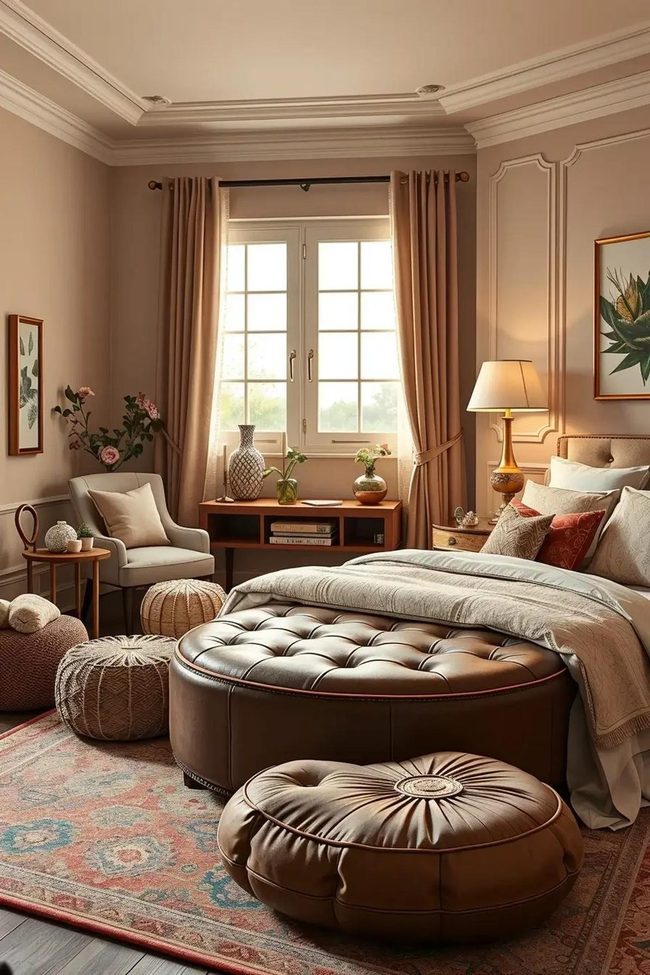
Ottomans and poufs with rounded edges are some of the most overlooked furniture pieces you can add to any room, yet they offer both visual ness and real function without hard corners that catch people off guard.
Round poufs made from textured materials like knitted cotton, felted wool, or suede work beautifully in trendy spaces, and two large circular ottomans in your family room can do double duty as footrests and casual surfaces for drinks or books.
If you have kids or pets running around, these pieces make a room safer since there are no sharp edges to worry about.
At the foot of your bed, a -edge bench bring abouts a natural stopping point that keeps the sleeping quarters flowing smoothly from one zone to the next.
In a sleeping quarters, a tan leather ottoman adds understated style without disrupting the calm feel you've already built.
You can tuck smaller poufs under a console table for extra storage, position them next to your sectional sofa for flexible seating, or place them under window seats where they fit naturally into the space.
Interior designer Bobby Berk has pointed out that cylindrical shapes help connect furniture pieces that might otherwise feel scattered.
Curves Soften Every Room
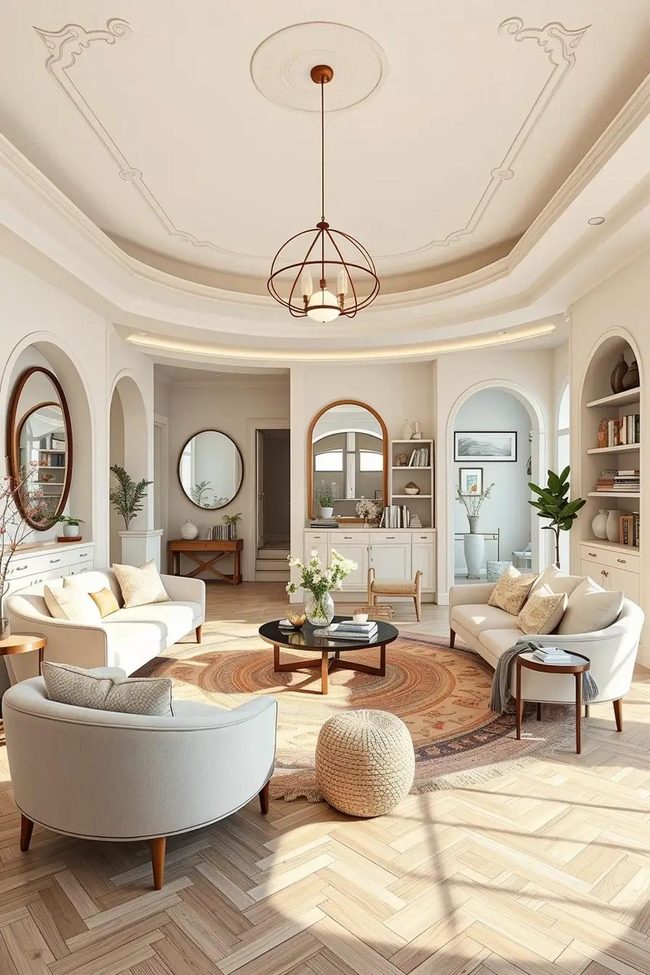
Curved furniture reshapes your home into a flowing, unified space rather than a series of disconnected rooms separated by hard edges and corners.
Round rugs, arched mirrors, orb-shaped airying, and curved sofas fit together to delicateen your sleep space and living areas while promoting better movement throughout your home.
Cloud-shaped pendants and circular tufted headboards add gentle transitions that make spaces feel less boxed-in and more open.
Design expert Nate Berkus noted that rounded edges visually relax a space, and this principle holds true when you combine curve bookshelves with crescent wall art to guide the eye smoothly from room to room.
People who switch to concept often find their homes feel more alive and less confined, even in smaller areas.
Beyond just looking good, rounded furniture set ups a safer environment and supports a healthier lifestyle since you eliminate sharp edges everywhere.
Whether you invest in custom pieces or hunt for budget-friendly finds, curves have real potential to change how you experience your home daily.
Curved Furniture Delicate Geometry
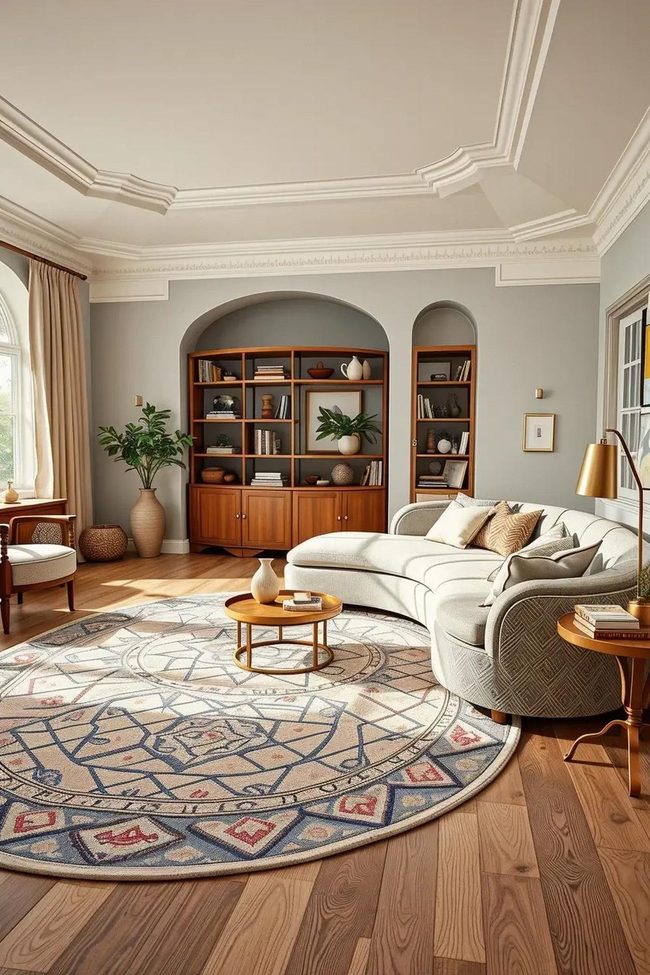
Curved furniture with delicate lines makes the biggest visual statement in a room, so start there with pieces like a serpentine sofa or round chair as your foundation.
You can then layer in low-key geometric touches like herringbone wood floors, scalloped throw pillows, or hexagonal tile backsplashes that add interest without overwhelming the space.
Looping design rugs and pin-tuck upholstery bridge the gap between smoothness and structure in a way that feels balanced.
I often use patterned textiles with dots or chevrons to bring in gentle geometry while keeping the room flowing naturally.
Airying plays a role too - adjustable sconces and underambienting on curved shelves highambient geometric textures and make patterns pop.
The key is choosing non-scratching, smooth designs that feel delicate to look at and touch.
By mixing rounded shapes with restrained geometric small touches, you build depth and rhythm without making the space feel rigid or cold.
With the layout, keeps your room feeling calm while giving it enough visual interest to stay engaging.
Isabella Martinez
Founder & Lead Design Enthusiast
Expertise
Seasonal Home Décor, Interior Styling, Space Planning, DIY Home Projects, Sustainable Design Solutions
Education
Savannah College of Art and Design (SCAD)
Pratt Institute, School of Design
Isabella Martinez is the founder of Decorrio, where she shares her love for seasonal home décor and creative design. With a background in interior design from SCAD and a master’s from Pratt Institute, she specializes in stylish, functional, and sustainable spaces.
With over 10 years of experience, Isabella helps homeowners bring warmth and personality into their homes. She loves DIY projects, festive decorating, and collaborating with local artisans to create unique designs.
When she’s not designing, Isabella enjoys exploring Austin’s arts scene, crafting, and hosting gatherings filled with seasonal charm.