
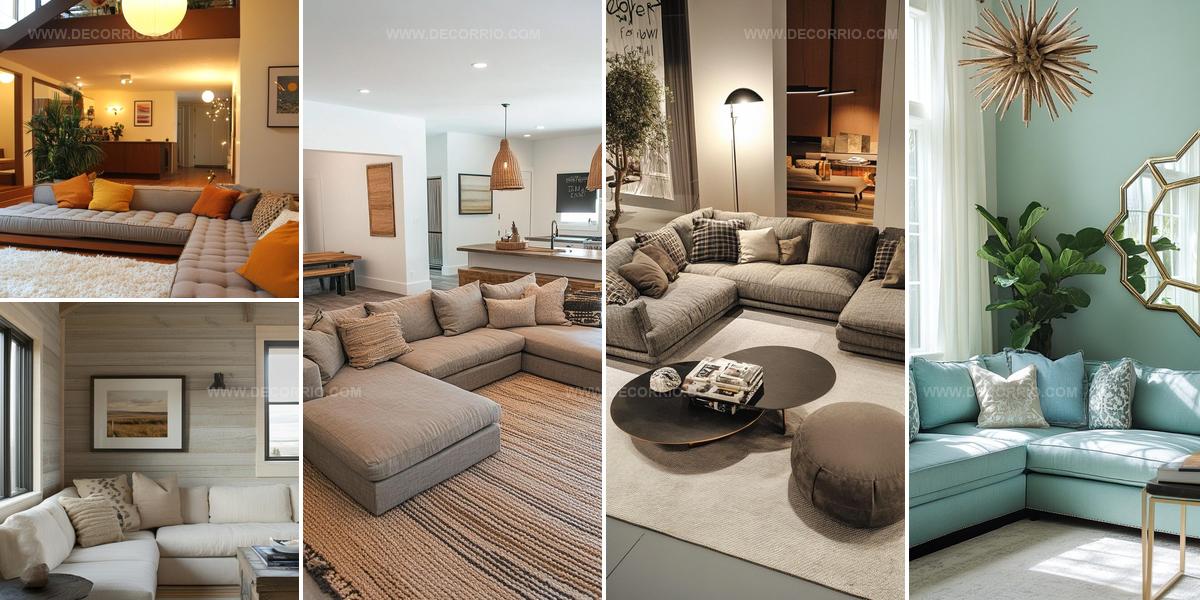
12 Spacious Large Sectional Sofa Ideas for Your Living Room

A large sectional sofa serves as the anchor piece that defines how family and friends gather in your living space.
This versatile furniture choice offers countless ways to configure seating arrangements while maximizing comfort for everyone who enters the room.
Selecting the right style involves considering factors like fabric texture, color palette, and proportions that complement existing décor.
The beauty of sectionals lies in their ability to adapt to various room shapes and sizes without sacrificing functionality.
Different configurations can open up floor plans or create intimate conversation areas depending on what works best for the household.
Positioning options range from classic l-shapes tucked into corners to sprawling u-formations that welcome multiple guests at once.
Angled Sectional Defines Room Flow
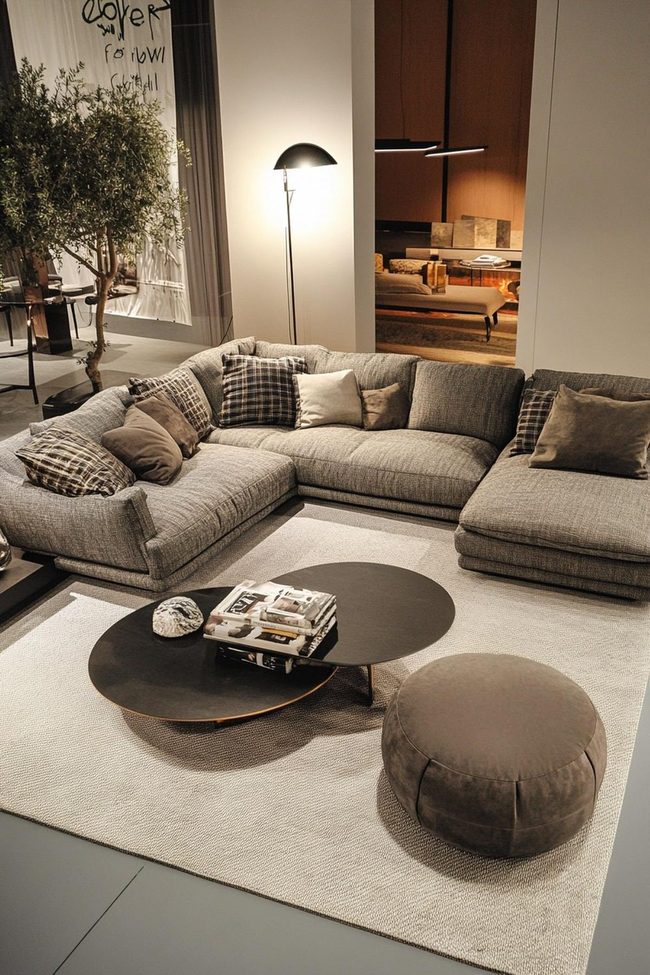
Placing a sectional perpendicular to your TV or dining area creates a sharp visual break between different zones while keeping everything connected and easy to navigate.
You can angle the sectional away from the media center to define your living room seating without cutting off access from the dining space, or position it to naturally guide traffic flow if your entrance opens into that side of the room.
This layout works particularly well in large or awkward spaces where angled walls and corners need a sturdy anchor.
When arranging yours, match the sectional shape to fit your room's unique dimensions and always leave enough walking space around all sides so people can move freely and sit comfortably.
One drawback is that perpendicular placement can sometimes block sightlines and chop up the room into disconnected sections.
Spacing and traffic flow matter here, so take time to plan where everything will go and how people will move through the area.
Choosing a lower profile or slimmer sectional helps keep the space from feeling cramped and maintains an open feel throughout.
L-Shaped Sectional Space Divider
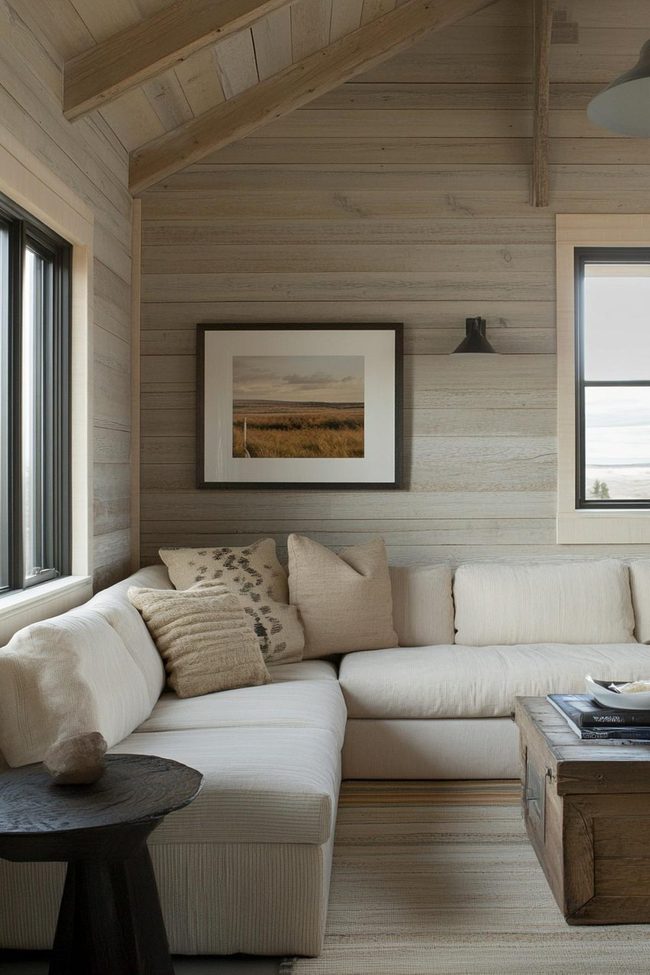
An L-shaped sectional positioned along a wall offers a smart way to organize your space while keeping things open and airy.
Placing it on one wall lets you carve out distinct zones, like defining a living room within a larger family room or media space, without the furniture taking over the whole area.
This arrangement opens up your central zone for other pieces or design elements you want to add.
Long, narrow rooms benefit especially well from since you can center the sectional on one long wall and add two separate areas without clutter.
You could even use two smaller sectionals on opposite walls if you want distinct spots for watching TV and chatting.
Keep the layout balanced so the furniture doesn't overwhelm the rest of your room and maintain that spacious feel.
One thing to watch is that a wall-mounted sectional can sometimes limit your views and how easily you move around, so think about traffic flow.
Moving the sectional slightly away from the walls helps preserve that open, breathable quality that makes a room feel larger and more welcoming.
Sectional Dividing Open Floorplans
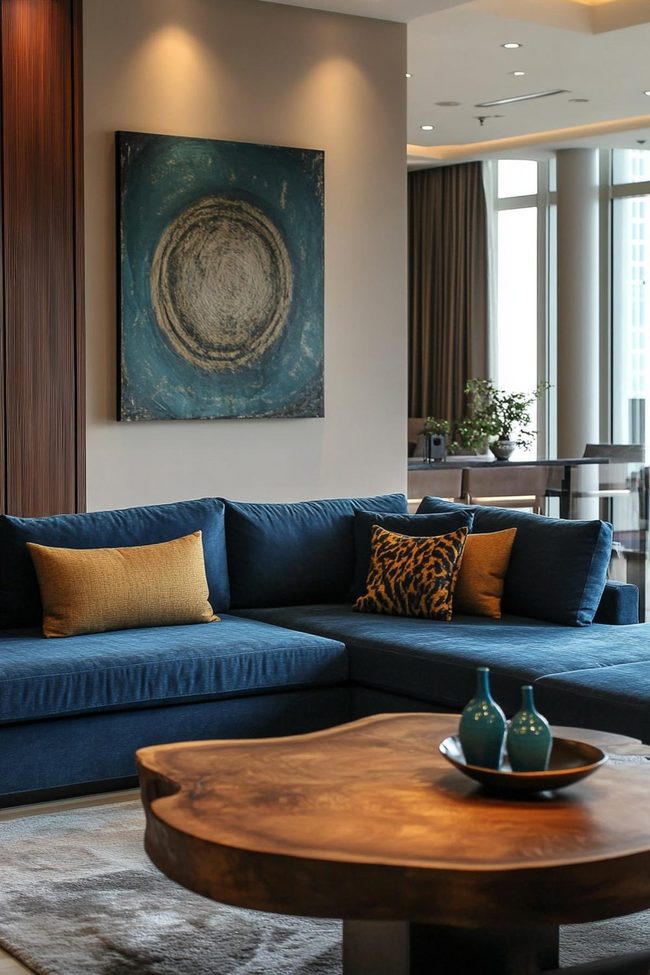
When you have a sprawling open floor plan, an oversized sectional can do double duty by carving out multiple zones in one bold move, picture a deep U-shaped design that separates your living room, dining space, and entryway all at once, or a long, lean sectional that splits a great room into three distinct areas like a media zone, entertaining spot, and office nook.
What makes design choice work is that one continuous piece of furniture creates natural boundaries between spaces while keeping everything visually connected and unified.
Since the same sectional style runs through in all zone, your eye follows it from one area to the next and the whole room feels intentionally organized rather than choppy.
You will want to be thoughtful about sightlines though, making sure sight lines stay clear so different sections don't feel like separate, disconnected islands floating in your space.
Long, thin sectionals work especially well for dividing larger rooms because they take up less visual weight while still defining where one area ends and another begins.
Composition gives you the best of both worlds, distinct spaces that serve different purposes and a unified look that holds the entire room together.
Your large sectional essentially becomes the organizing principle that lets you use every bit of that open layout without it feeling chaotic or overwhelming.
Center-Positioned Sectional Defines Open Space
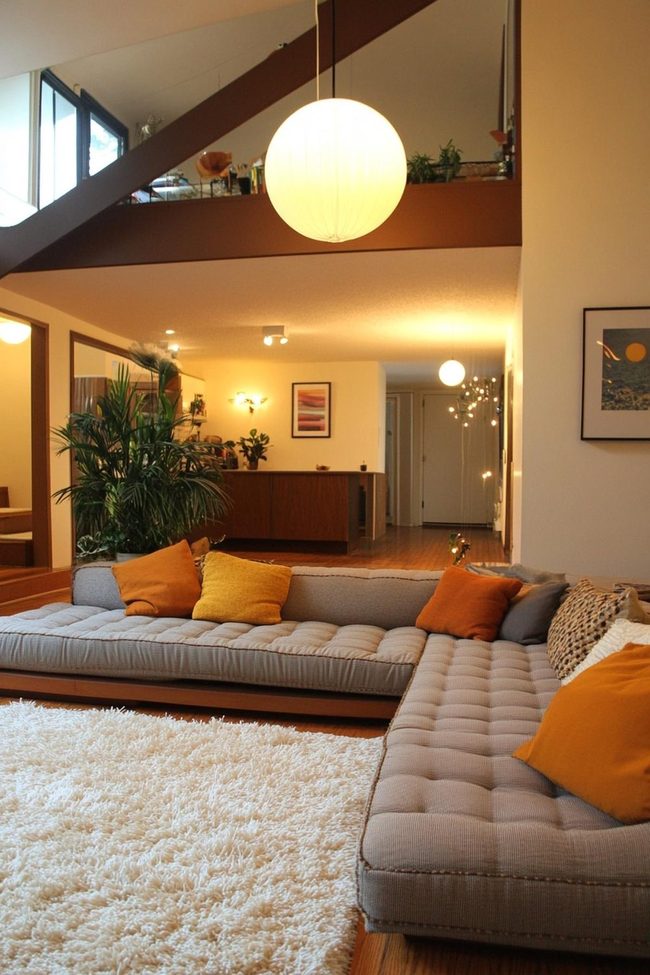
Positioning a large sectional in the middle of your open floor plan creates a striking visual statement that anchors the entire space without relying on walls for support.
Much like dividing a sectional against opposing walls, design choice splits your room into two distinct zones, though it does so while maintaining clear pathways all around the furniture.
You may find that floating a sectional opens up movement between areas and keeps the room feeling spacious rather than segmented or boxed in.
Since nothing backs against the walls, the layout avoids that trapped sensation you get when furniture hugs the perimeter.
This arrangement works best in larger rooms where you have plenty of breathing room on all sides, and it requires the sectional to be proportional to your space so it balances naturally.
Size and style matter more with the setup since the sectional becomes what draws attention in the room.
It's a bold move that rewards you with an open, flowing environment where people can move freely and interact without feeling confined.
Compact Sectional With Separate Accent Seating
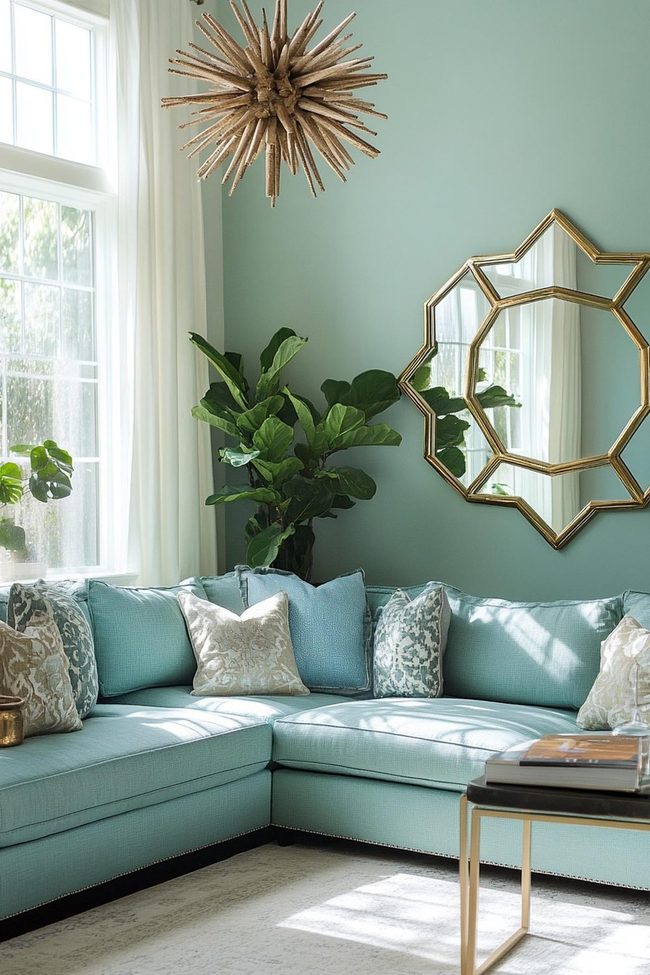
In smaller rooms, a full large sectional can easily dominate the space, so consider using a petite L-shaped version to anchor your TV area while keeping things balanced.
Pairing your smaller sectional with standalone chairs, benches, and chases lets you divide the room into different zones without making it feel cramped.
You can float the sectional in one spot and position accent chairs across the room to form a reading nook or social seating area.
Both sections stay distinct and separated, yet the smaller scale of across piece keeps them from competing with one another.
Through the design, works especially well in attic rooms, studio apartments, and other tight spaces where you need flexible seating without overwhelming the layout.
Mixing sectional and non-sectional pieces together also gives you that layered, collected look that feels current right now.
You get multiple seating arrangements and purposes from one smart setup.
It's a efficient solution that lets every corner of your small room serve a real function.
Conversation-Focused Sectional Layout
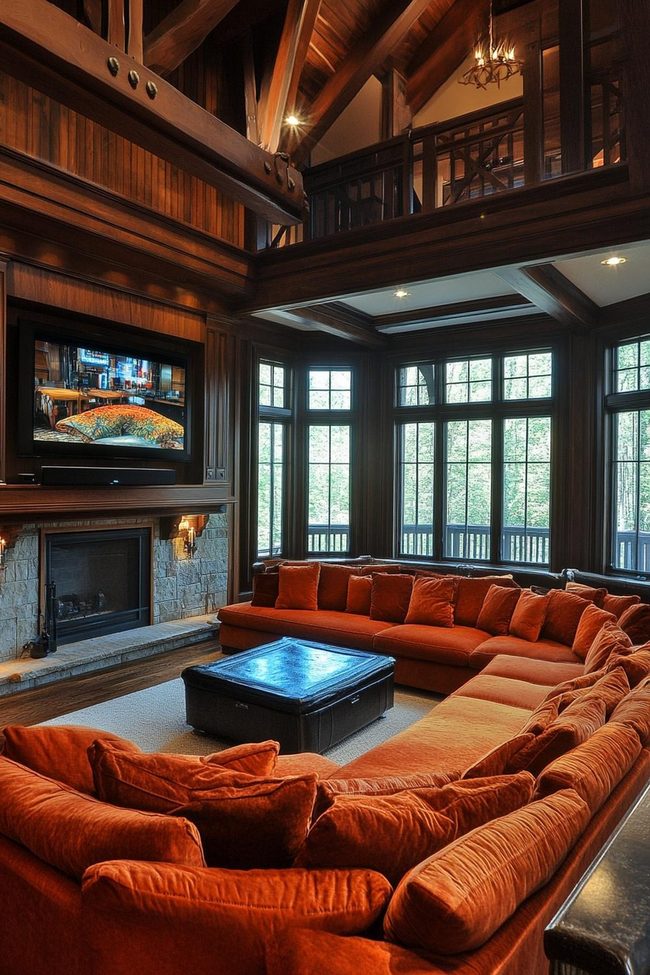
Positioning your sectional to face away from the TV creates a bold statement that puts living at the center of your space instead of letting screens dominate.
The setup defines a clear hangout zone in the middle of your room and keeps the focus on people talking and connecting with throughout other.
You can always add a secondary seating area near the television for those moments when someone wants to watch, and this arrangement actually opens up the floor space in front of your TV for activity zones, game tables, or a bar cart.
Behind the sectional, stylish console tables fill the space that would otherwise sit empty and unused.
Leaving enough room so people in the secondary seating can still see the screen comfortably matters for balance.
Your floorplan gains flexibility and function this way, with different areas serving different purposes depending on what you and your company feel like doing.
Turning your sectional around challenges the typical living room setup and reminds you that furniture really exists to help people gather and spend time together.
Wicker Sectionals For Backyard Zones
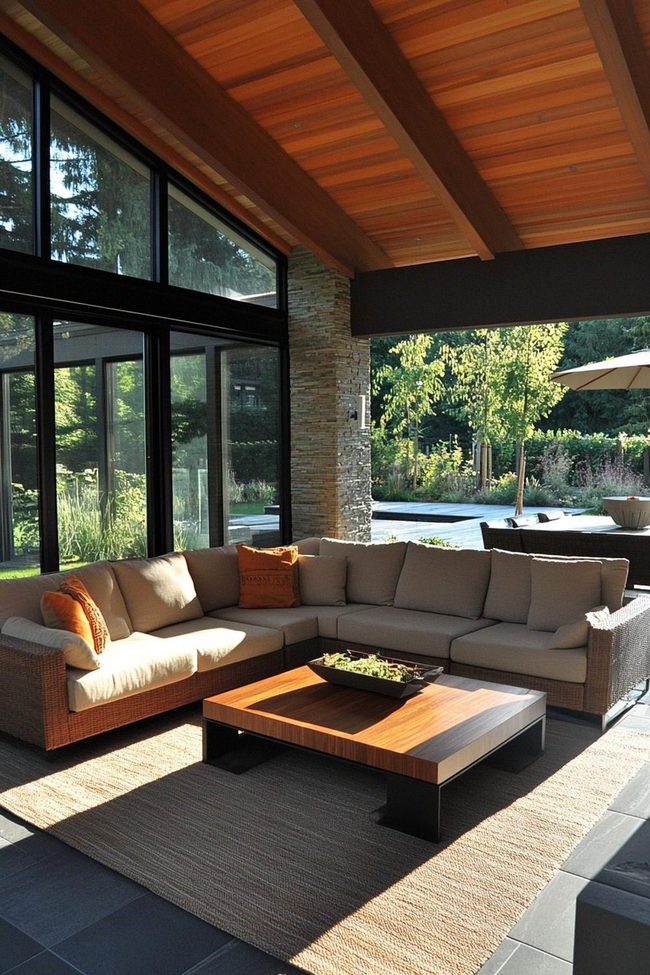
When you place an outdoor sectional around the fire pit, you immediately establish a distinct lounging zone that separates naturally from the dining space and draws people to gather in that area.
Large L-shaped sectionals work wonderfully when you float them across the patio, as they open up both a comfortable seating spot and a central gathering place at the same time.
On an enclosed deck or porch, arranging sectionals perpendicular to in all other helps you carve out separate zones for entry, dining, and relaxation without needing walls or barriers.
Before you settle on a style, prioritize weather-resistant materials such as treated wicker, aluminum frames, or all-weather wicker to ensure the investment holds up through seasons and elements.
The outdoor sectional's shape should align with the yard's natural features and the spaces you already have, so take time to measure and visualize different layouts.
Positioning these pieces thoughtfully across the patio and porch areas elevates how the outdoor rooms function and feel.
You can find that a quality outdoor sectional upgrades the exterior living space significantly and gives the yard the same comfort level as the indoor areas.
Sectional Sofas Define Work Zones
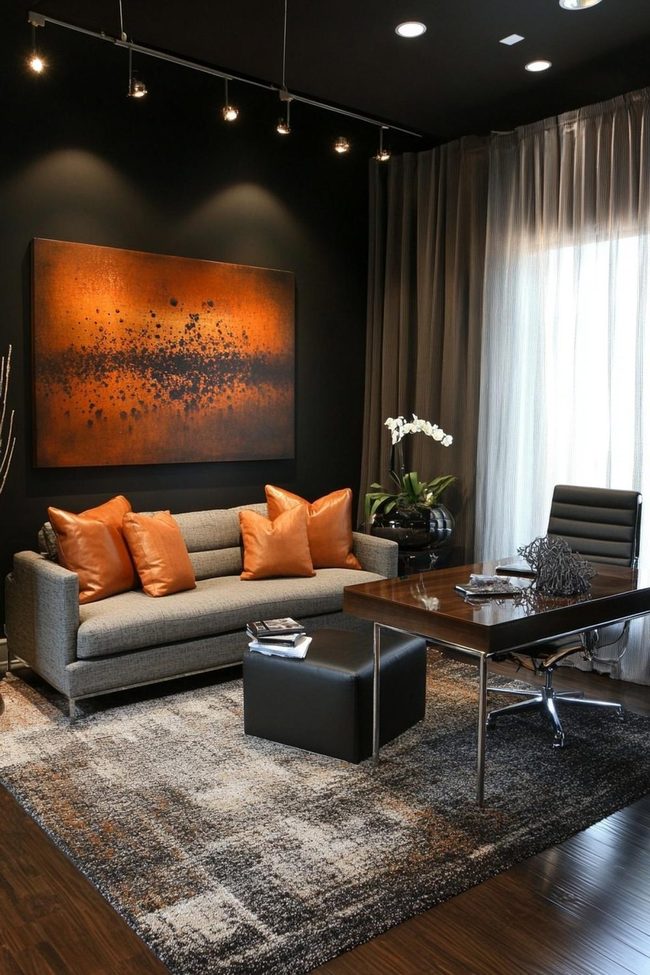
Sectionals work beautifully in home offices when you want to blend work and relaxation in one room, and an L-shaped desk sectional paired with a chaise across from it creates distinct zones while keeping everything open and connected.
In smaller spaces, floating a sofa table behind a two-seater sectional for your workstation and adding accent seating nearby gives you both functionality and a spot for quick check-ins with colleagues or family.
Storage-equipped sectionals with ottomans, drawers, and shelves help you keep office supplies out of sight and maintain a neat workspace.
Measuring your room in a considered manner before choosing a sectional ensures you pick the right shape and scale for your layout and existing architecture.
Sectionals adapt to nearly any room configuration, so whether your space is narrow, wide, or irregularly shaped, you can find an arrangement that works.
Once you settle on the right setup, you can observe how sectionals provide plenty of flexible seating while giving your home a relaxed with a slightly polished character feeling.
The combination of generous seating and smart zone division makes open floorplans feel both functional and welcoming.
If you're thinking about adding a sectional to your home office, consider how different configurations might suit your daily routine and your room's unique shape.
Three-Sided Wraparound Seating Solution
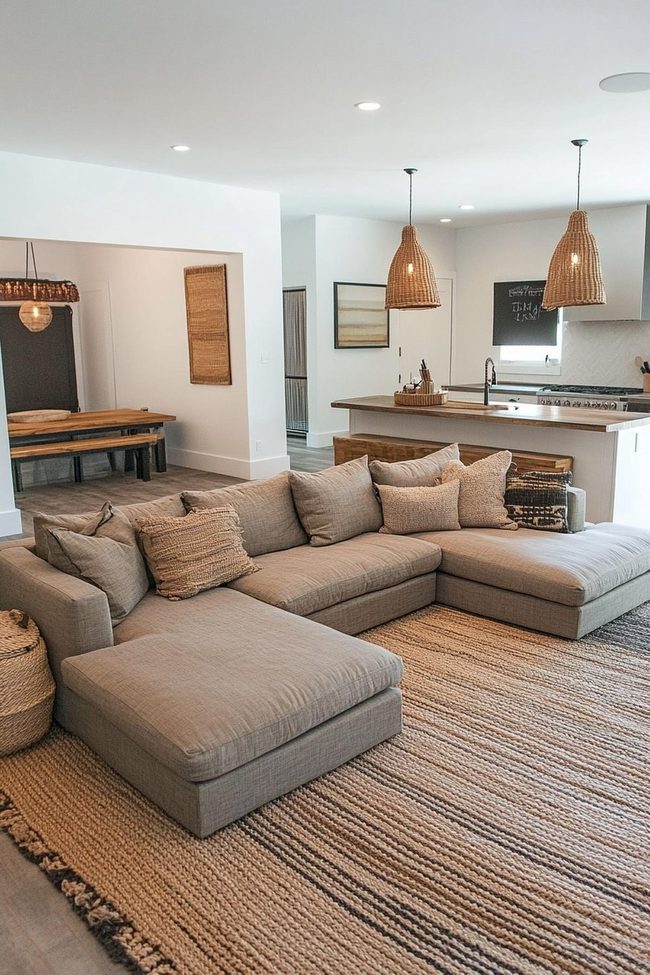
Start by considering a U-shaped sectional if you want to make the biggest visual statement in your living room, since this configuration wraps around three sides and commands attention immediately.
Most people position theirs to face a fireplace or television, leaving one side open so the shape stays visible and the room doesn't feel completely enclosed.
You could appreciate how well it handles multiple jobs at once, it seats plenty of people while naturally dividing an open floor plan into separate zones, like splitting a living area from a dining space without blocking movement between them.
One side of the U works as a buffer from kitchen or entryway traffic, and the open end allows you to walk through to other parts of your home.
If your living space is large and you want a defined seating area that feels distinct from the rest of your home, a U-shaped sectional delivers exactly that kind of setup.
However, if you like rearranging furniture often or prefer rooms that flow in different directions, the fixed nature of this sectional might feel limiting to your lifestyle.
Gray Sectional Entry Anchor
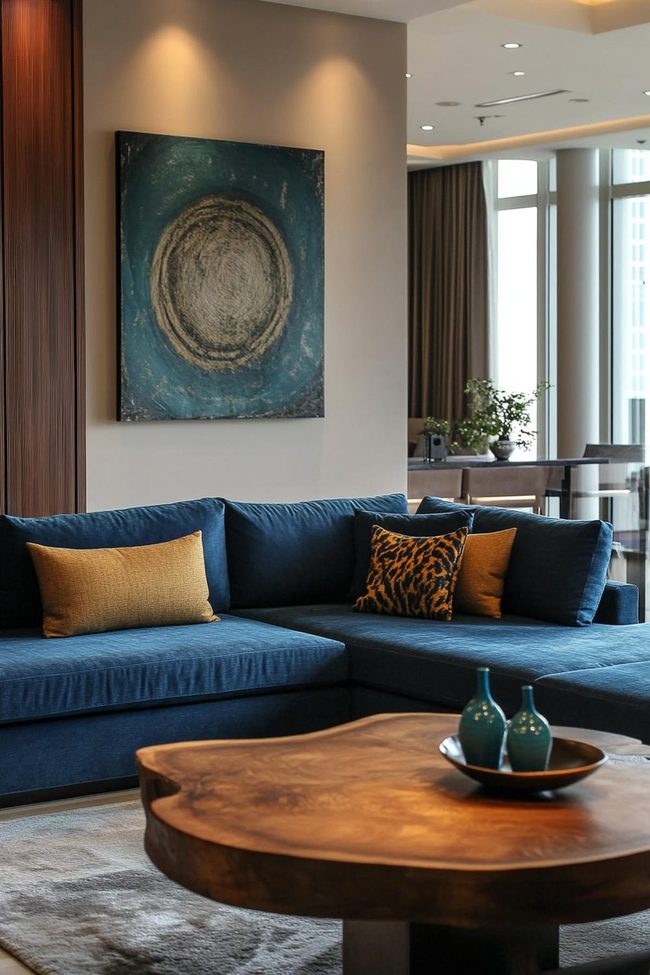
Every sectional sofa positioned just behind your entryway can work beautifully to define the entrance zone without blocking sightlines or making the space feel cramped.
Floating the sectional in this spot creates a natural transition into your living area and keeps different zones visually connected while still marking where the entry ends.
L-shaped or U-shaped sectionals fit especially well in entryway niches and hug the space in a way that looks thoughtfully arranged without closing things off.
You may want to leave enough room to move freely around and behind the sectional so the entry and main living space still feel like one coordinated home.
With the layout, gives you a welcoming boundary that separates your entrance from the rest of the open room without making it feel divided or cramped.
Arranging furniture this way balances function and openness, so visitors naturally understand the flow while you maintain sight lines across all your different areas.
It's a smart way to use a large piece to organize your space and guide people through your home in a way that feels natural and unforced.
Two-Way Sectional Room Divider
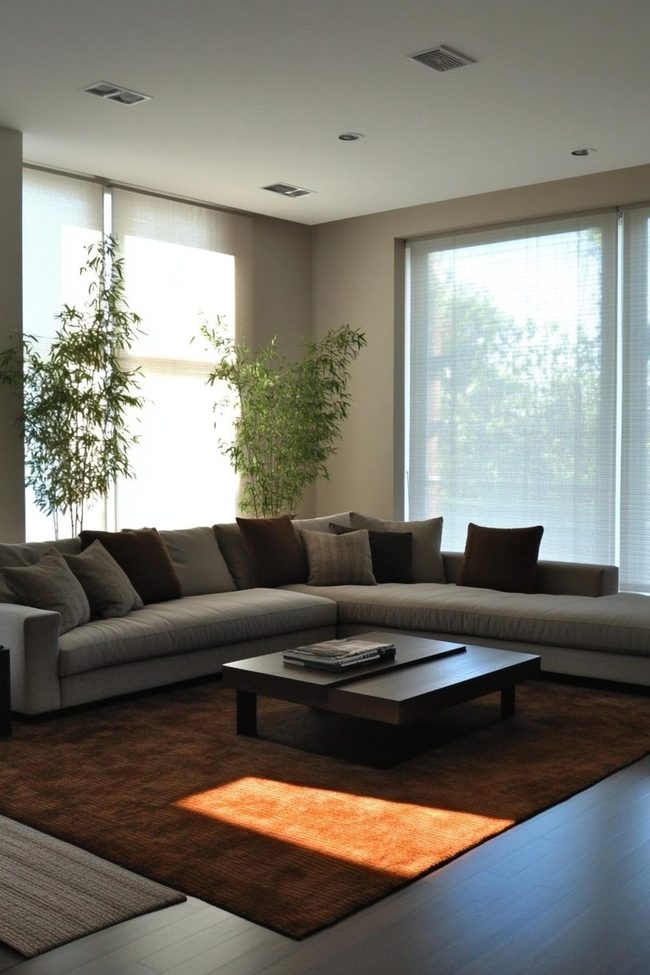
If your living room has plenty of space, a split sectional that faces both directions can divide your area into two separate zones while keeping things connected.
One side can point toward your TV while the other faces a different seating spot, letting you have a dedicated media area and a separate social space at the same time.
Eachhalf of the sectional marks where one zone ends and another begins, and the open center still allows people to move easily between both sides.
You do need to measure your room to make sure you have enough clearance around all sides and that the sectional actually fits your layout.
Larger living rooms work best for the composition since you need room on both ends for the seating areas.
If you have that square footage available, a split sectional is one of the smartest ways to maximize your space and add distinct areas without making the room feel cramped or broken up.
L-Shaped Sectional Blocks Tv Views
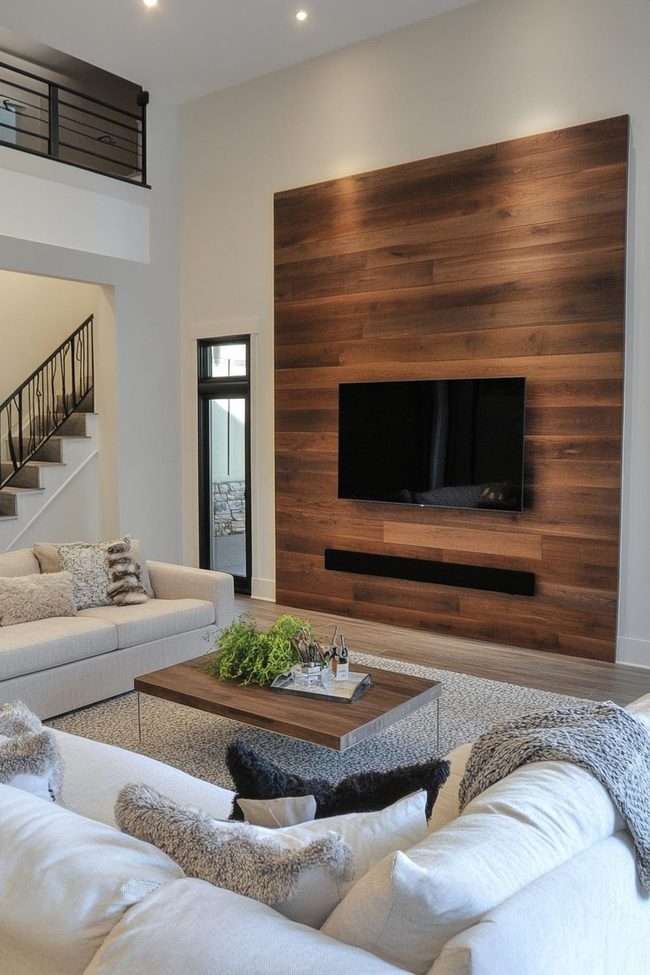
The long sectional positioned squarely toward your TV creates one of the most efficient and visually balanced living room setups you can choose.
Whether you go with an L-shaped design or a straight extended piece, this layout naturally separates your media zone from the rest of an open floor plan and works especially well for defining a living room within a larger great room space.
By placing your sectional to face the television, it acts as a natural room divider between your seating area and adjacent spaces like the dining room or kitchen.
One of the best parts about this arrangement is how well it supports gatherings since multiple people can watch the screen and interact with one another simultaneously.
Your layout also keeps walking paths and entryways clear because the sectional only blocks one direction rather than cutting off access from different angles.
When measuring for the layout, take time to match your sectional's length and shape to your room's actual dimensions and where your media center sits.
Getting these measurements right ensures everyone in your space enjoys a solid viewing angle without strain.
This straightforward approach delivers comfort and function without requiring complicated furniture positioning.
Michael Thompson
Senior Content Editor
Expertise
Content Strategy Development, Editorial Team Leadership, Home Décor Trends & Style Curation, Digital Storytelling for Interior Design, Quality Assurance in Publishing
Education
University of Missouri, Columbia
University of Texas at Austin
Michael Thompson is the senior content editor at Decorrio, bringing over 12 years of experience in journalism and home décor writing. With a journalism degree from the University of Missouri and a master’s in English from UT Austin, he blends storytelling with expert design insights.
At Decorrio, Michael curates inspiring content that helps readers transform their spaces with style and ease. He’s passionate about home organization, DIY projects, and quality design ideas that make everyday living more enjoyable.
Outside of work, Michael enjoys exploring Austin’s culture, tackling home improvement projects, and mentoring aspiring writers.