
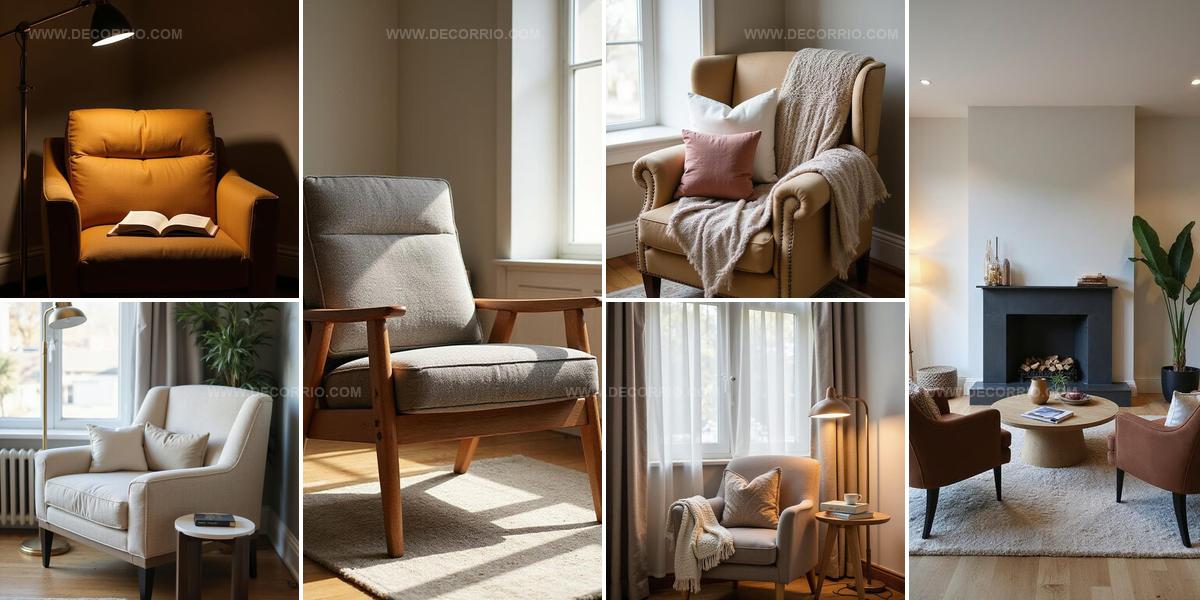
19 Stylish Living Room Chair Decor Ideas That Impress
A well-chosen chair can become the focal point that pulls together an entire space, and living room chair decor makes all the difference between bland seating and statement furniture.
The right accessories, fabrics, and placement strategies help even the most ordinary chair shine with personality.
Whether dealing with a cozy reading nook or an open conversation area, thoughtful styling turns functional pieces into design highlights.
Small changes like throw pillows, blankets, or side tables dramatically shift how a chair contributes to the room's atmosphere.
Color coordination, texture mixing, and proportional balance all play essential roles in making seating arrangements feel intentional rather than random.
Chairs often get overlooked during decorating phases, yet they offer tremendous potential for expressing style without major renovation work.
Start refreshing those neglected seats today and watch how quickly they become conversation starters in a room that feels complete and inviting.
Off-White Linen Chair Slipcovers
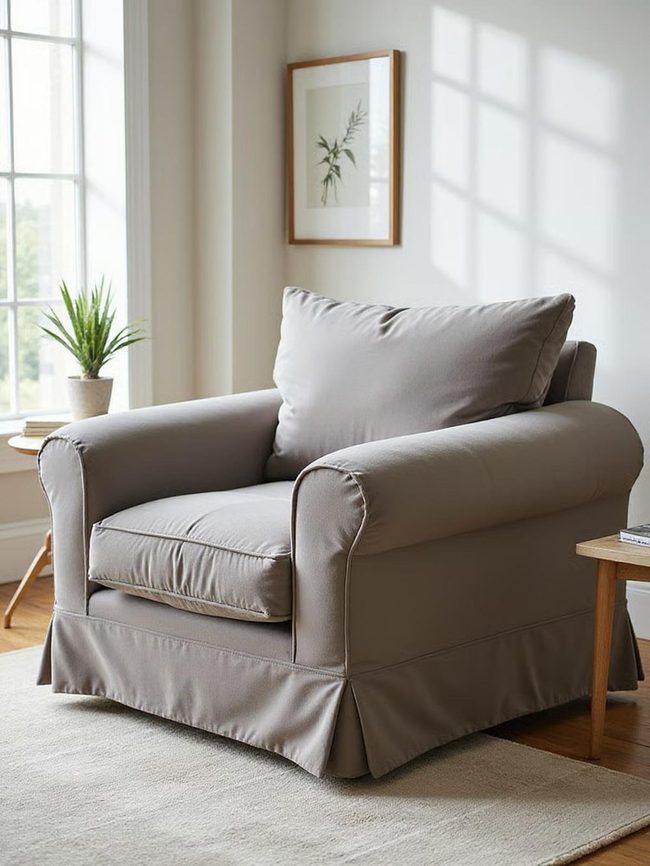
Slipcovers have come a long way from those baggy, floral-chintz disasters you might remember from decades past, and modern versions, especially custom or semi-custom options, work as a brilliant design tool that lets you live sustainably and flexibly.
Heavy, textural linen slipcovers bring a relaxed, coastal vibe to any chair and feel softer throughout time you wash them.
I recently worked with someone who had inherited a pair of traditional armchairs with classic bones but exhausted fabric, so instead of expensive reupholstery, we commissioned two custom-fit slipcovers in gorgeous, weighty, off-white linen and the transformation was instant.
Her chairs looked fresh and modern, perfectly suited to her radiant, airy living space.
Beyond refreshing the overall appearance, what really stands out is that irresistible tactile sensation linen provides under your fingertips.
Why discard a chair with a solid frame just because the fabric is worn or stained when a well-made slipcover can give it a second, third, or even fourth life?
Oversized Canvas Above Seated Space
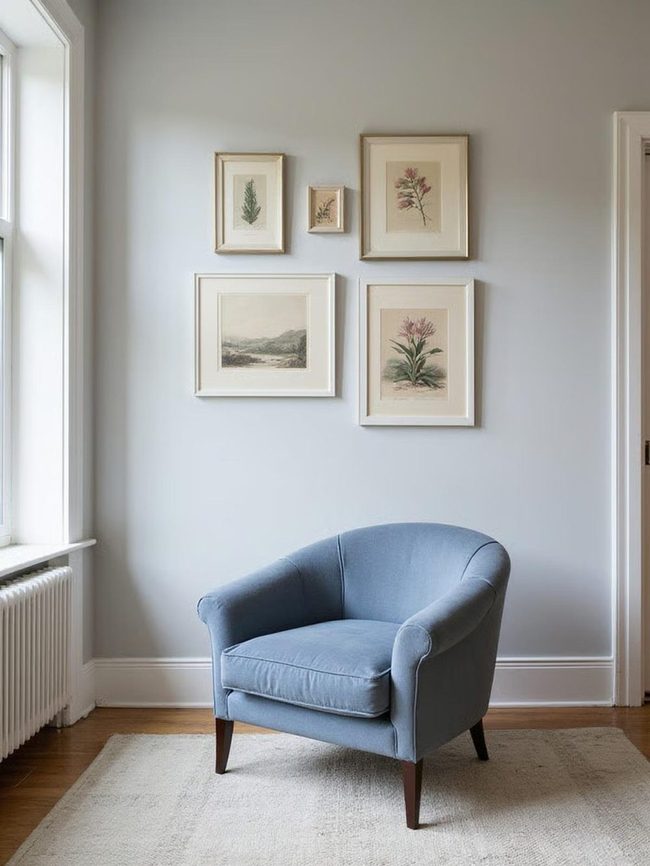
Wall art behind or beside your chair alters the space around it from ordinary to distinctive, and the pieces you select shape how the whole seating area feels and tells a story about your style.
Sizing matters quite a bit when you're hanging art above a chair, aim for artwork that's roughly two-thirds the width of the seat itself, with the frame's bottom edge sitting about 6 to 10 inches above the chair's top so everything reads as one unified piece.
Rather than sticking with a single picture, you might lean a large unframed canvas against the wall for a relaxed studio vibe that feels less formal and more natural.
Building a small gallery wall next to your chair works beautifully too and lets you layer in personal touches.
You don't need the art to match your chair perfectly, but pulling colors or moods from the seat or its pillows helps everything feel connected and balanced.
The right artwork gives your chair context and personality, turning a simple piece of furniture into something with real depth and meaning.
When these elements look unified, your seating becomes more than just a place to sit, it becomes a space that reflects who you are.
Armchair Size Matching Room Scale
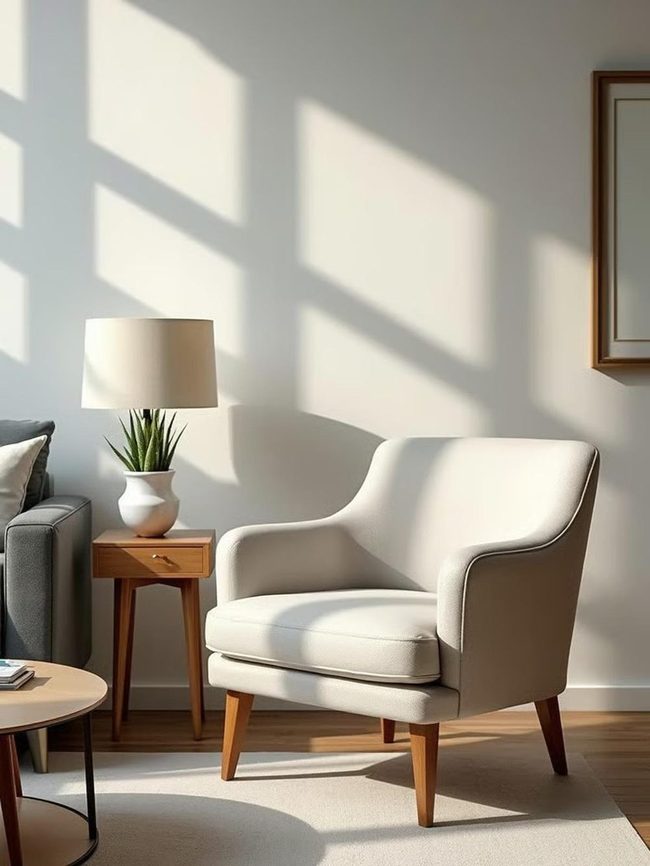
Start by getting the chair's size right in your room, and I mean really right, this is where most people stumble.
A massive, oversized armchair wedged into a small flat will swallow up all your space and leave you feeling cramped, while a tiny, delicate seat floating in a grand open-plan area looks completely out of place and awkward.
Your eyes are the best tool here, so skip the measuring tape and trust what you see instead.
Before you buy, use masking tape to mark out the chair's footprint on your floor and live with that outline for a day or two.
Walk around it, sit near it, and find whether the space feels open or squeezed.
A chair that matches the scale of your room sits naturally in the space without demanding all the attention or hiding away in a corner, and this balance makes everything around it feel calmer and more put-together.
Once the chair has room to breathe, you can focus on making sure it speaks the same design language as the rest of your home.
Oversized Natural Fiber Grounds Space
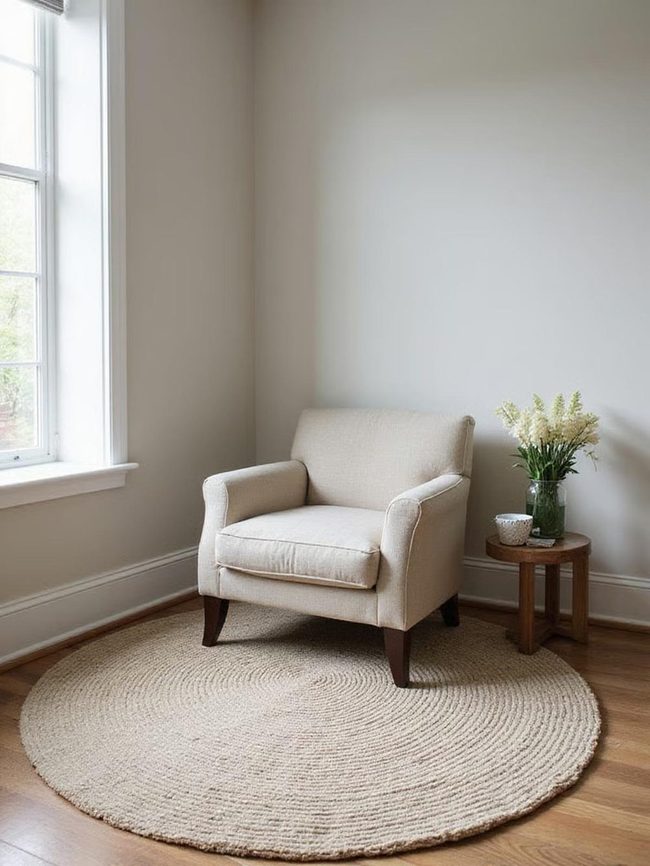
Nothing tanks a room's look quite like a tiny rug that leaves your chair sitting alone in the middle of nowhere, and you've probably seen this mistake in homes everywhere since it makes everything feel disconnected and budget.
A rug sized properly does heavy lifting for your space and grounds your chair right to the floor while carving out a distinct area that feels put together.
Start by placing your rug so the front two legs of your chair land on it, though going bigger works even better and lets you fit both the chair and its side table entirely on the surface.
With the layout, establishes a real zone with clear boundaries.
When you're unsure about sizing, lean toward larger rather than smaller since a generous rug in natural materials like wool, jute, or sisal always reads as more refined and expensive than a skimpy one.
You may see the difference immediately between a chair that appears to float aimlessly and one that actually belongs somewhere.
Moving your eyes upward to the wall rounds out the whole picture and completes how the room feels as a whole.
Layered Textures Define Furniture Stories
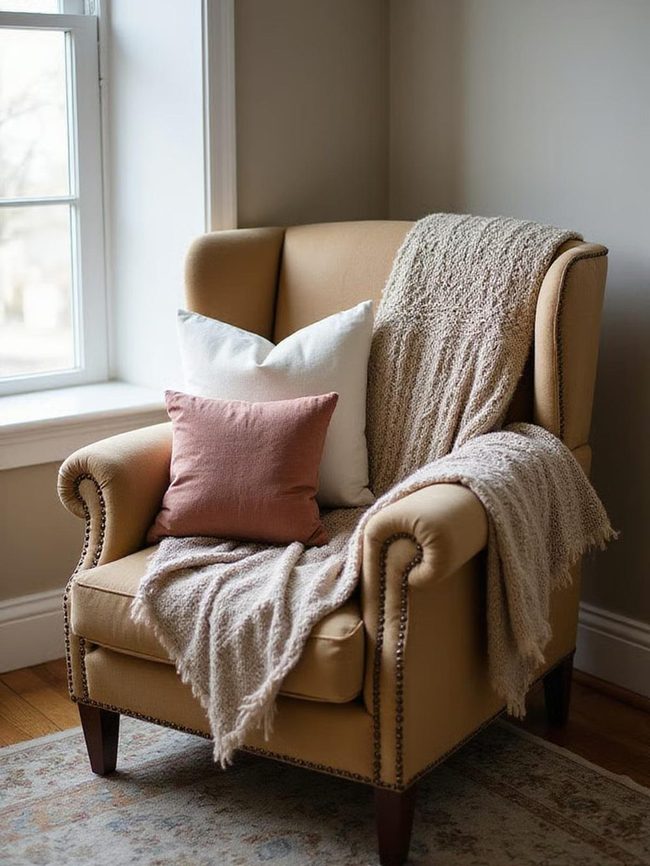
Throw pillows are like jewelry for your furniture, and they're far more important than many people realize because a chair without one looks incomplete, much like wearing an outfit without accessories.
Start by thinking in layers, place a substantial pillow in a rich texture like velvet or raw linen at the back, then add a smaller decorative one in front with a pattern or contrasting feel, and don't forget a lumbar pillow for both style and back support.
What makes the difference between a sad, droopy cushion and one that looks measured is investing in quality inserts filled with real down or down-alternative material, which you will pick up on from that signature designer crease at the top.
A single oversized bouclé pillow can transform a sleek leather armchair into something warmer and more welcoming instantly.
One solid pillow invites you to sit, but adding a throw blanket across the arm creates a sense of genuine comfort and hospitality.
Three-Scale Patterns Green Unity
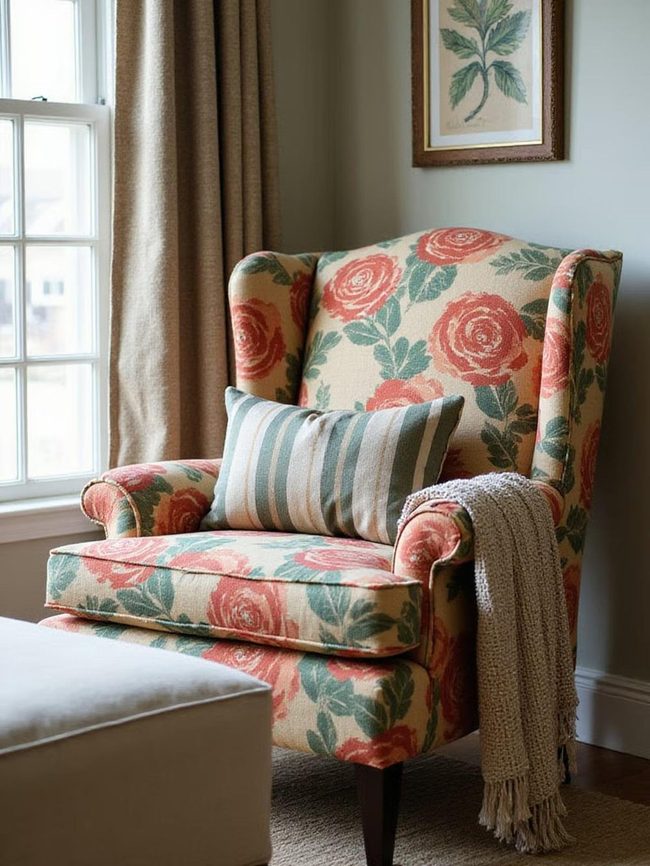
Most people avoid mixing patterns out of fear, so they end up with rooms full of matching solids, which is actually one of the biggest mistakes in design because a space where everything matches has no rhythm, no energy, and no personality at all.
Thinking of your living room like a piece of music helps, you need different instruments and different tempos to build something truly beautiful, and patterns are like the percussion section that gives a room its soul.
Getting this right without creating visual chaos comes down to one simple rule: pick three different pattern scales.
Start with one large-scale pattern like a bold floral or big geometric on your accent chair, add one medium-scale pattern such as stripes or a classic ikat on a pillow, and finish with one small-scale texture like a tightly woven fabric or refined herringbone.
The secret to making all three flow together is choosing a shared color that runs through every one, so if your floral chair has emerald green in it, that same green should show up in your striped pillow.
This shared color acts as your unifying thread and keeps everything feeling connected rather than chaotic and loud.
Deep Chair, Focused Lamp, Perfect Reading
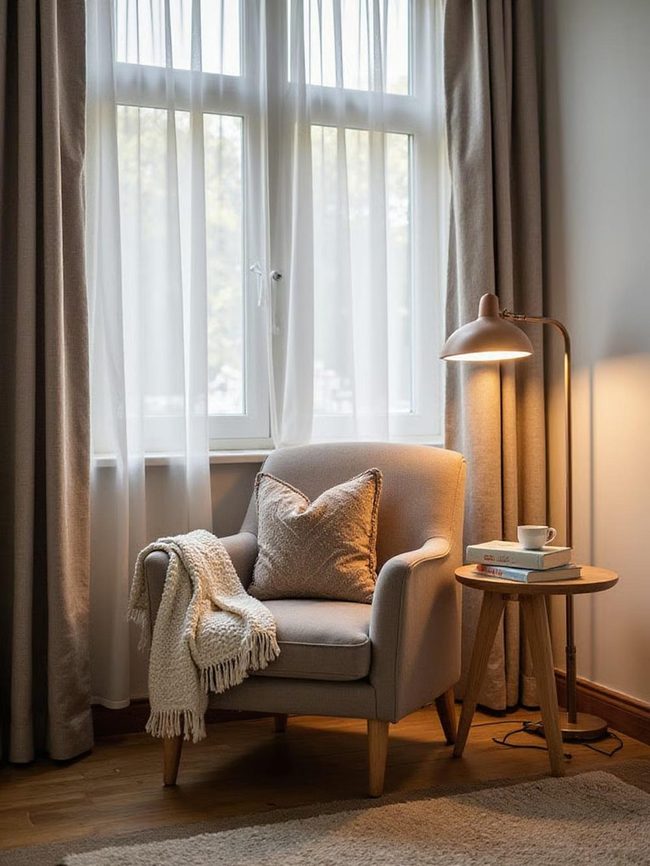
In today's busy world, setting aside a quiet corner for reading matters more than ever, and it goes beyond just placing a chair near a lamp.
Your reading zone becomes a ritual space where you push back against constant distraction and noise.
Positioning this space away from the television and main traffic areas makes all the difference, and natural light nearby works best.
Hunt for a chair deep and cushy enough to settle into for hours without discomfort.
One thing most people skip is proper task lighting, but a beautiful floor lamp or wall-mounted swing-arm lamp is essential for avoiding eye strain and casting a warm, focused glow that lets you escape from everything else around you.
Setting a small table beside your chair for tea or your book completes this personal retreat.
Once you settle into the design, you can experiment with different arrangements and discover what feels right for your reading habits.
Soft Textiles Layer Tactile Comfort
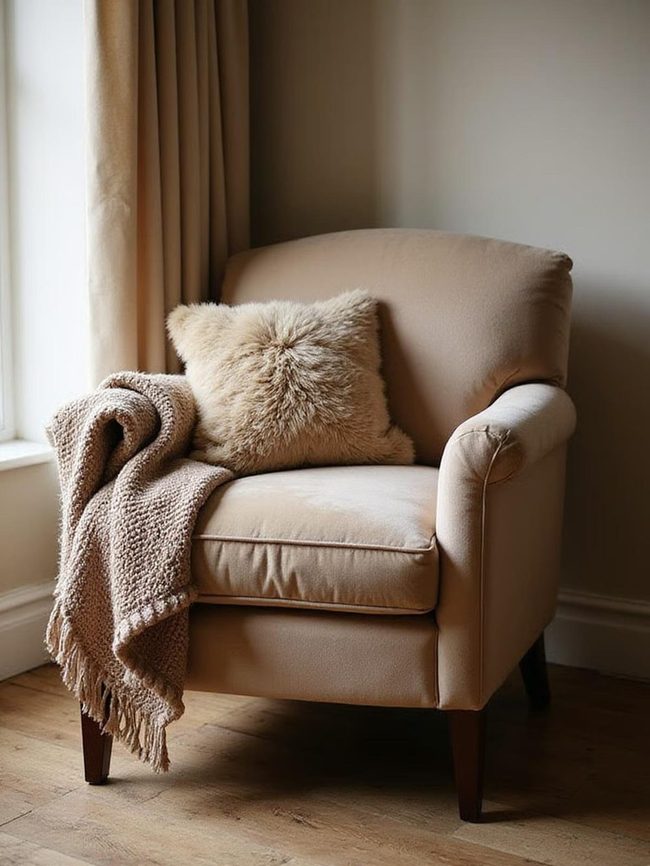
Pairing luxurious delicate textiles throughout your space creates a sensory experience that makes a room feel like home, and our sense of touch plays a surprisingly powerful role in how safe and relaxed we feel in any environment.
Hard edges and cold surfaces alone leave a space incomplete, no matter how beautiful it looks on the surface.
Mixing different materials keeps things interesting and tells a tactile story, drape a faux sheepskin pad across a raw reclaimed wood chair, layer velvet pillows on smooth leather, or spread a chunky knit throw over cool stone floors and large windows to add warmth and grounding right away.
When you run your hand over these varied textures, you connect with the space on a deeper level.
Fabrics that feel good against your skin also nourish your sense of well-being in ways that purely visual elements cannot.
Gentle textiles are where eco-luxury truly lives, balancing what looks good with what actually feels good in your everyday life.
Arranging these touchable elements thoughtfully throughout your home how you experience and move through eachroom.
Emerald Alpaca Throw Transforms Spaces
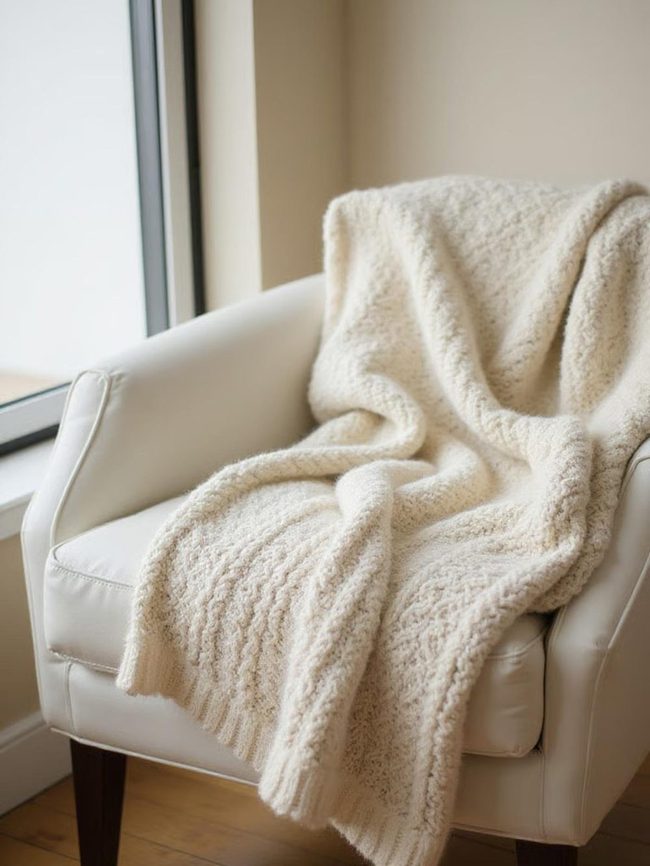
Draping a throw blanket across a chair works faster than almost any other decorating trick to add warmth and style to your space, and it only takes seconds to make a room feel more lived-in and relaxed.
Forget those stiff, perfect rectangles that resemble hotel rooms, instead, let the fabric cascade naturally over one arm and pool onto the seat in an artful diagonal line that shows you didn't overthink things.
What matters most is the material itself, so skip cheap fleece and reach for textures with real character like chunky hand-knitted wool, lightweight Peruvian alpaca, or sustainable linen if you live somewhere warm.
I once watched a deep emerald green alpaca throw completely transform a stark architectural armchair in a contemporary London home, suddenly making it the room's most desirable spot just by diffusedening all those hard lines.
You could spot how the right throw blanket instantly changes a chair's whole personality without requiring any commitment or complicated installation.
Sometimes a slipcover can go even further when you want a more dramatic reinvention of a piece, but a beautiful throw is often all you need to shift how a room feels.
Velvet Chair Fabric Lighting Test
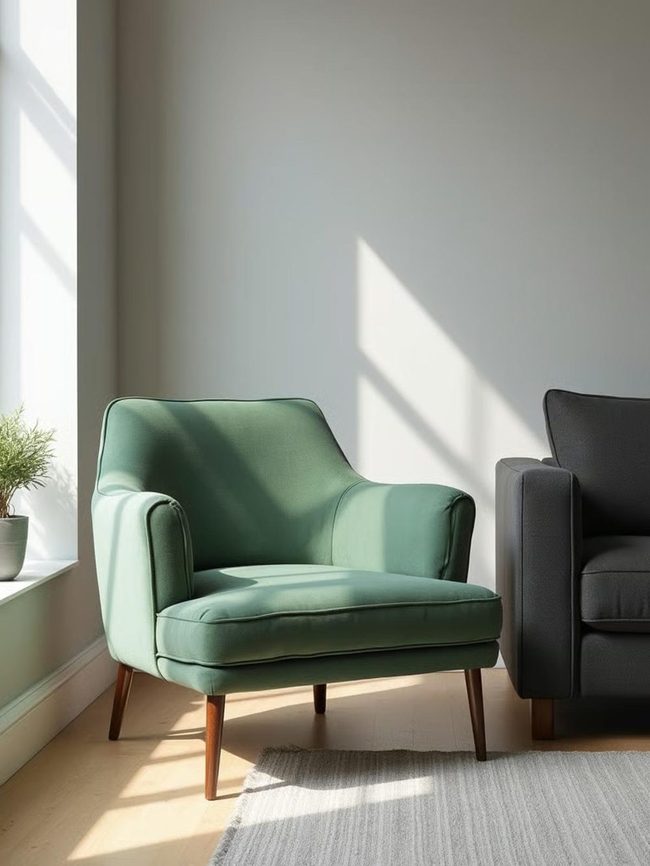
Before you settle on upholstery for that chair, stop by a showroom and hold fabric swatches under those sunlit lights, but don't make your final decision there because what looks polished in a store often appears cheap and wrong once you get it home.
Lighting shifts everything, and I learned this the hard way when a client brought home a "greige" velvet that seemed perfect under fluorescent bulbs only to discover it had a sickly yellow-green tone that clashed with her cool grey walls and made the whole chair look perpetually ill.
Instead, gather as many fabric samples as you can and tape them directly to the wall where your chair will actually sit, then observe how they look in morning light, at midday, and again in the evening when your lamps are on.
You're not hunting for an exact match but rather searching for a fabric that harmonizes with what you already have and feels like it belongs in your space, whether that's a calm solid or a bold tropical print.
Real harmony means the upholstery adds something, either a expressive rhythm or a peaceful note, without screaming that it's new and out of place.
Two-Pillow Velvet And Linen Combo
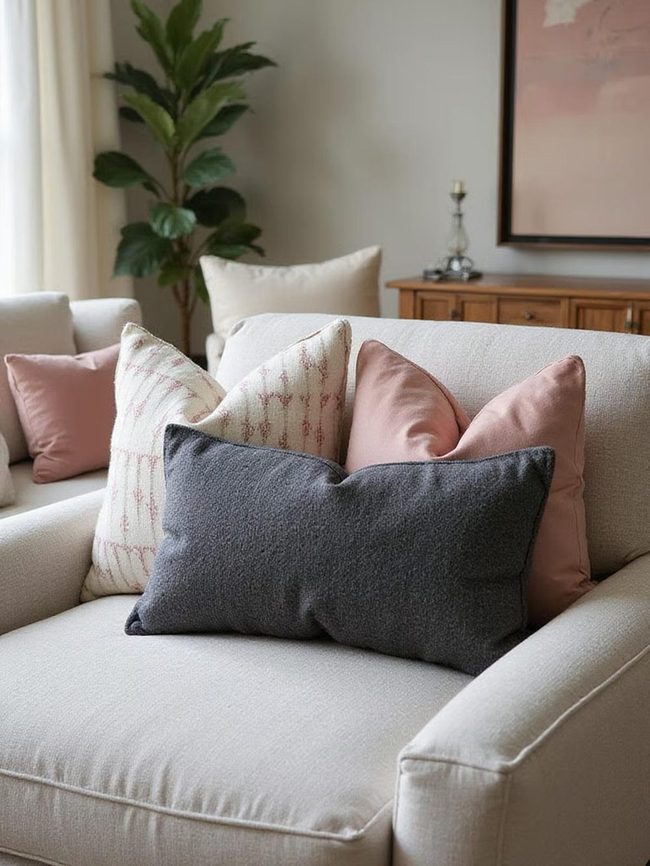
Pillows need the right balance to work well, and getting this part right makes a huge difference in how your chair looks.
Piling on too many pillows creates clutter, while a single small pillow sits there looking lonely, so most accent chairs work best with just two pillows arranged thoughtfully.
Start with a 20-inch square pillow positioned in the corner and angled slightly, then layer a rectangular lumbar pillow in front of it for shape contrast and real comfort.
Mixing different textures between the two makes everything feel more polished, try pairing a solid velvet square with a patterned linen rectangle.
This straightforward strategy keeps things simple and never fails to make your chair look professionally done.
Once your chair feels complete, you can position it in your room and see how the whole space comes together.
Angled Chairs Transform Furniture Flow
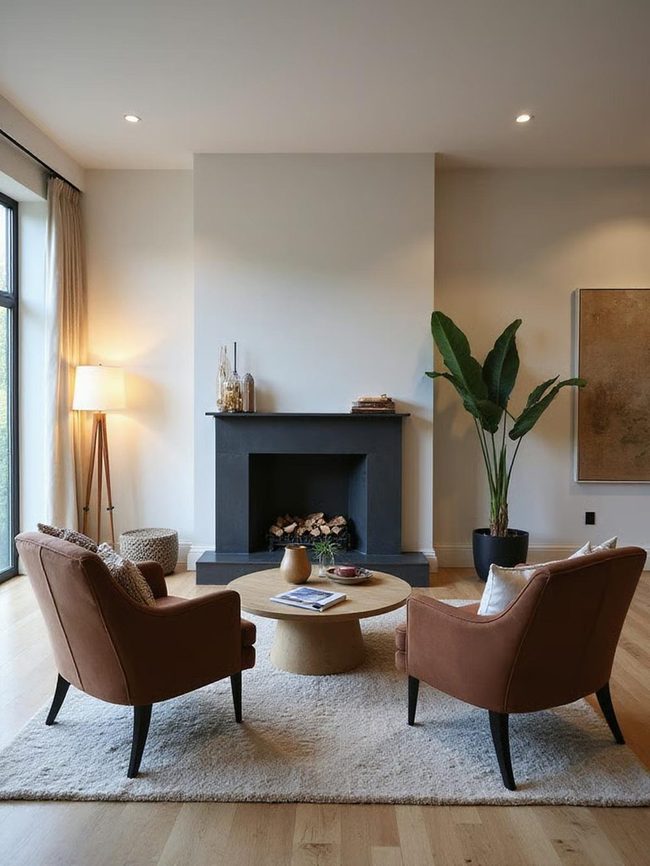
Turning your chairs at angles instead of keeping them rigid against walls instantly makes your room feel alive and relaxed rather than stiff and formal.
Angled seating breaks up those flat, boring lines and shows that your space is meant for living, not just looking at.
Even a 30-degree turn toward the center of the room refreshes how the entire arrangement feels.
When you position a chair toward your sofa, it forms a natural triangle that pulls people together and makes the space feel warmer and more connected.
The arrangement also guides people naturally around your seating rather than cutting through the middle of it.
Moving furniture away from walls takes just moments, yet the difference in how open and sophisticated your room becomes is remarkable.
Try rotating a single chair and you may see how much more dynamic the whole area feels.
Small adjustments like these cost nothing but change everything about how your home invites you to actually use it.
Wooden Side Table Complements Modern Chair
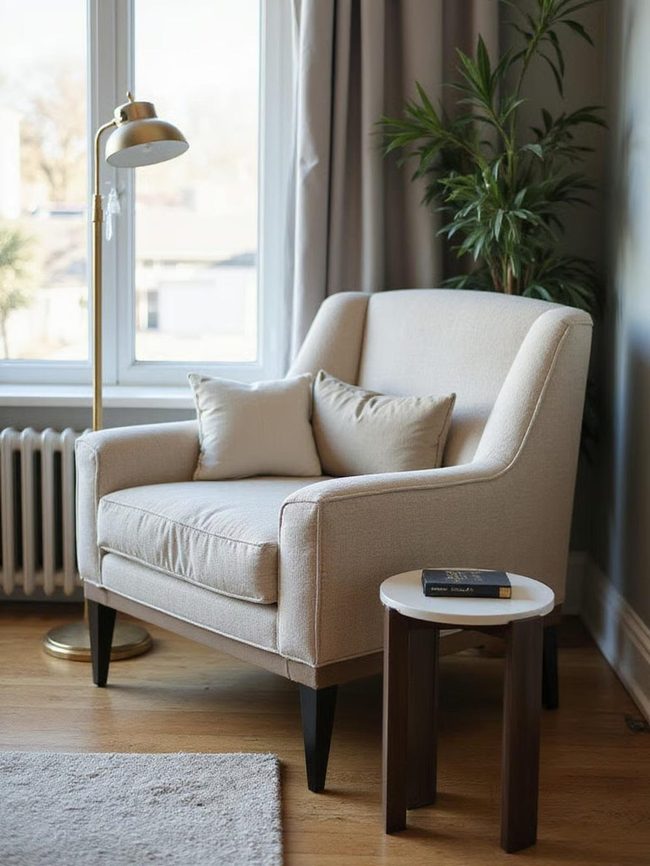
Placing a side table next to chair isn't just about looks, it's about making space actually work for you, since a chair without one feels as bare as a bed without a nightstand.
You need somewhere to set coffee, rest book, or balance glass of wine, and that functional surface seating from a beautiful object into a spot you can genuinely live in.
Getting the height right matters most, and you are able to want the table to sit at or just below chair's arm level so reaching is easy and natural.
Here's where you can have real fun: skip the matching set idea and use this as another chance to show personality through contrast.
Pair an upholstered chair with a rustic wood table, or combine a modern chair with an organic stone base and see how well they work together.
For smaller rooms, consider a C-table that slides under chair to save floor space while still giving you that handy surface within reach.
Once you've got surface in place, the next step is finding the right lighting to make that table actually usable.
Kiln-Dried Hardwood Frames Last Decades
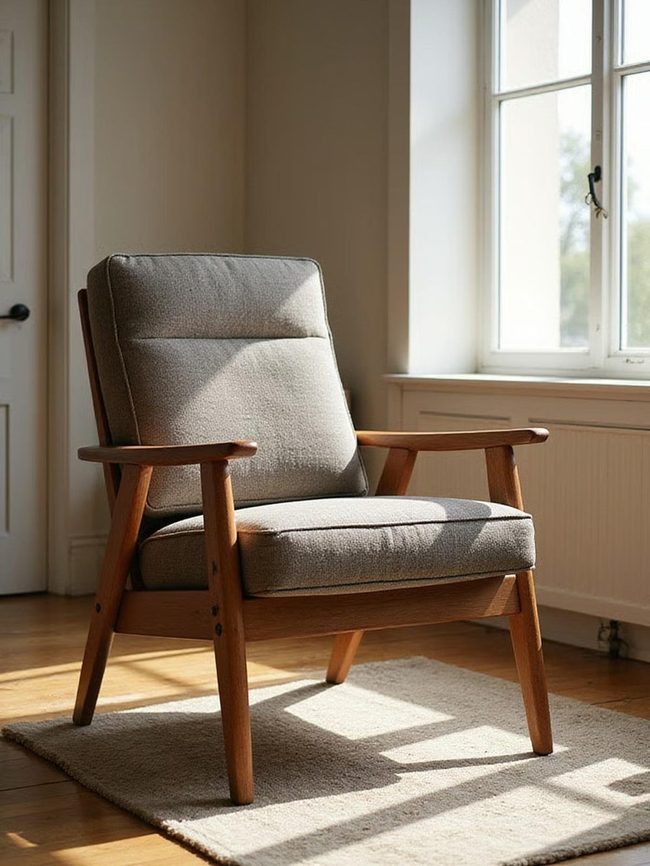
Choosing furniture that lasts matters more than you might think, and skipping out on quality chairs often means throwing money away on pieces that fall apart within a year or two.
Cheap chairs made with particle board and weak joints end up in landfills, which wastes both your wallet and the planet's resources.
When shopping, skip the price tag obsession and focus on what's actually holding the chair together instead.
Ask the salesperson directly if the frame uses kiln-dried hardwood, since this process stops wood from warping and splitting over time, and if they look confused by the question, that's your sign to shop elsewhere.
Do the wiggle test by grabbing the arms and shaking the chair hard to check for wobbles or creaks, because a solid frame stays quiet and rock-steady while a flimsy one falls apart before long.
Real quality in a chair means it supports you physically and emotionally for decades, becoming something you genuinely love rather than just tolerate.
One beautiful, well-made piece that serves you for thirty years beats buying thirty cheap chairs that throughout last a year.
Sculptural Armchair Anchors Modern Space
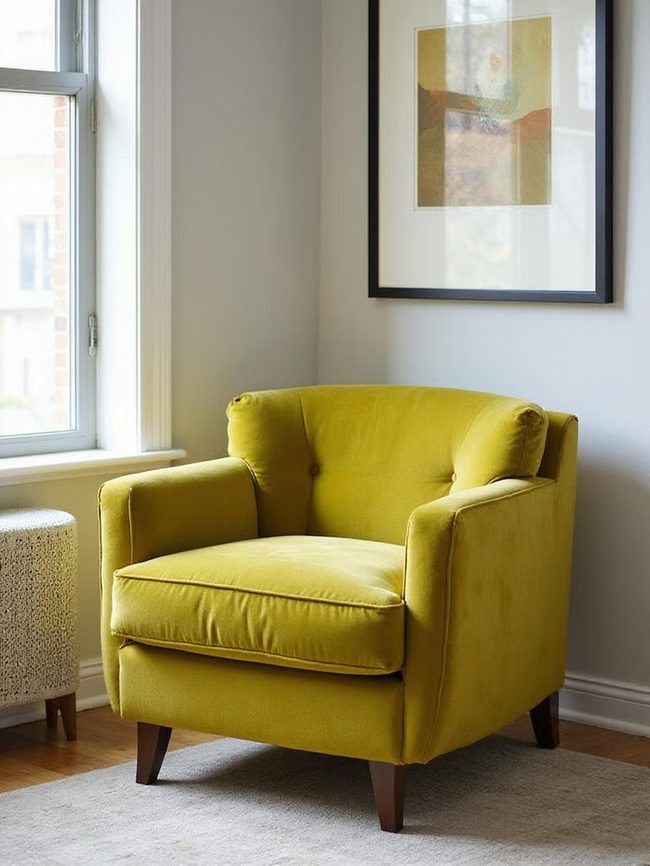
Picking an accent chair is about choosing something bold that tells its own story and brings personality to your room, think a reclaimed teak plantation chair with woven rattan, or a classic British wingback dressed in a wild Amazonian botanical print, rather than another neutral solid that blends in.
Your sofa can be the reliable, sophisticated host, but your accent chair should be the fascinating guest who just flew in from somewhere exotic with tales to tell.
I once worked on a serene, minimalist coastal home where we brought in a single sculptural armchair made from polished concrete and soft leather, and it became pure art that grounded the entire room and gave it a pulse.
Don't hunt for just another place to sit; instead search for a piece with a strong point of view that doesn't have to match anything else and exists purely for joy.
When you bring in that standout chair, you can make it even more dynamic by playing with the textiles around it and layering textures that complement its personality.
This is where you stop thinking about function and start thinking about expression.
Asymmetrical Balance Creates Living Room Flow
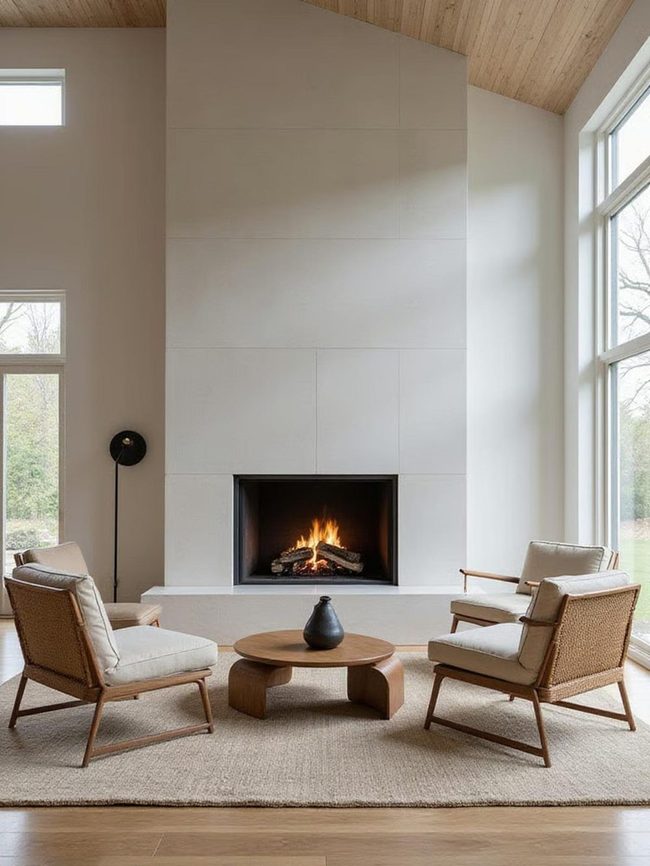
Matching everything perfectly in a room might seem safe, but asymmetrical arrangements actually deliver far more personality and interest than mirror-image setups.
When you balance visual weight instead of repeating identical pieces, your eyes travel naturally through the space in a way that feels fresh and alive.
Heavy furniture like a large sectional sofa doesn't need another equally substantial piece across from it to look balanced.
You can combine several lighter elements on the opposite side, perhaps a sculptural floor lamp, an armchair, and a cluster of plants, and together they'll counterbalance that weighty sofa.
One quick trick to check if your spacing works is snapping a phone photo and switching it to grayscale, which strips away color and makes it easy to spot where the heavy and light areas sit.
How you position chairs throughout the room also shapes the way people naturally move and gather in the space.
This kind of layout keeps rooms from feeling stiff or predictable and instead gives them an organic quality that looks attentively planned without appearing overdone.
Paired Chairs Create Intimate Conversations
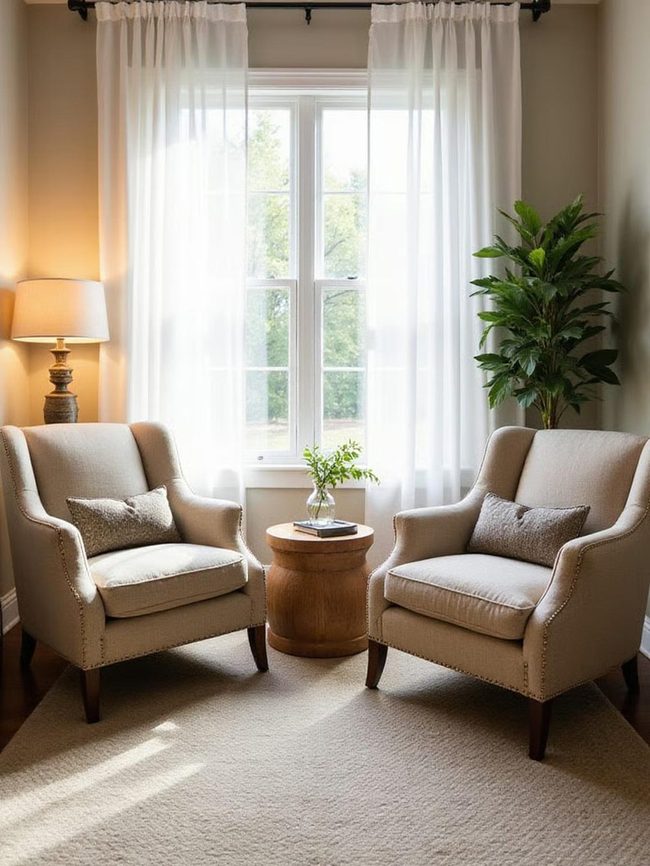
Two comfortable chairs positioned to face eachother with a small table nestled between them can transform any space into an intimate gathering spot, and this simple setup works whether you tuck it by a window, near a fireplace, or in a quiet corner of your home.
Angling the seats slightly inward naturally draws people together and makes talking feel easy and natural, so you won't find yourself shouting across a massive room anymore.
Modern open-plan living can feel disconnected, but these paired seating arrangements set up their own little world within your larger space, perfect for morning coffee or an evening glass of wine with someone you care about.
Low-slung chairs work especially well in bigger rooms because they can swivel to face eachother for private chats and then pivot toward the main seating area when you want to join the larger group.
You get flexibility and that rare sense of closeness all at once.
Beyond just one corner, this angle-the-chairs approach spreads throughout your whole room and pulls people naturally into better connection.
Finding those natural spots matters too, so scout your space first and spot where the light falls or where the room naturally feels quieter.
Open Pathways Through Strategic Chair Placement
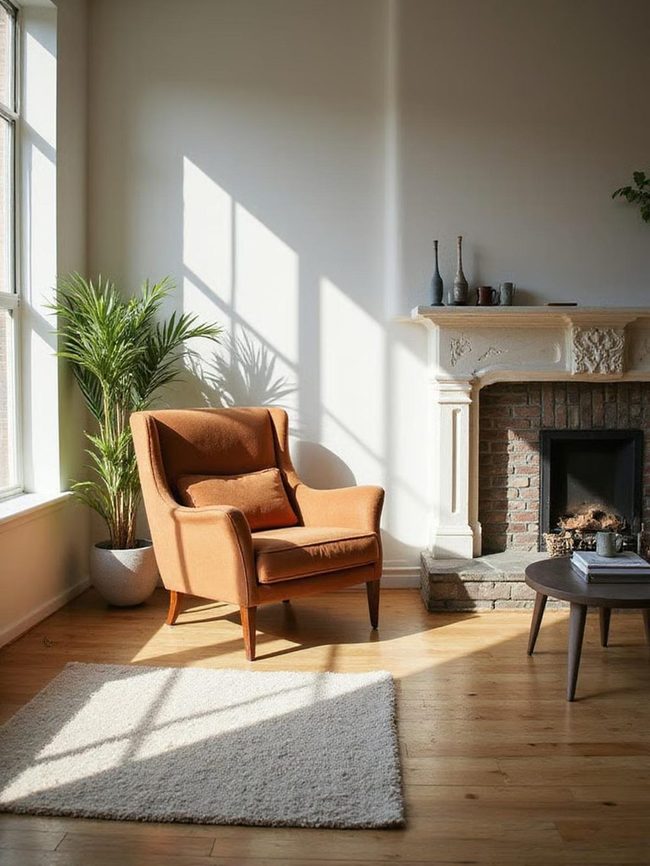
By setting an armchair's back to face a walkway, you establish a gentle boundary that signals where seating areas end and passages begin, which prevents people from wandering directly through conversations and keeps those moments private.
Main traffic routes like the path from your doorway to the sofa or kitchen to patio doors need room to breathe, so aim for at least three feet of clear width in these spots.
Chairs work best when they're positioned to separate different activity zones with quiet elegance rather than obvious barriers.
Your living room gains both beauty and functionality when furniture placement tells people where to move without ever feeling restrictive.
Good design makes navigation feel natural, and seating placement is how you accomplish that goal.
It's less about creating obstacles and more about defining distinct spaces with grace.
Warm Light Pools Transform Seating
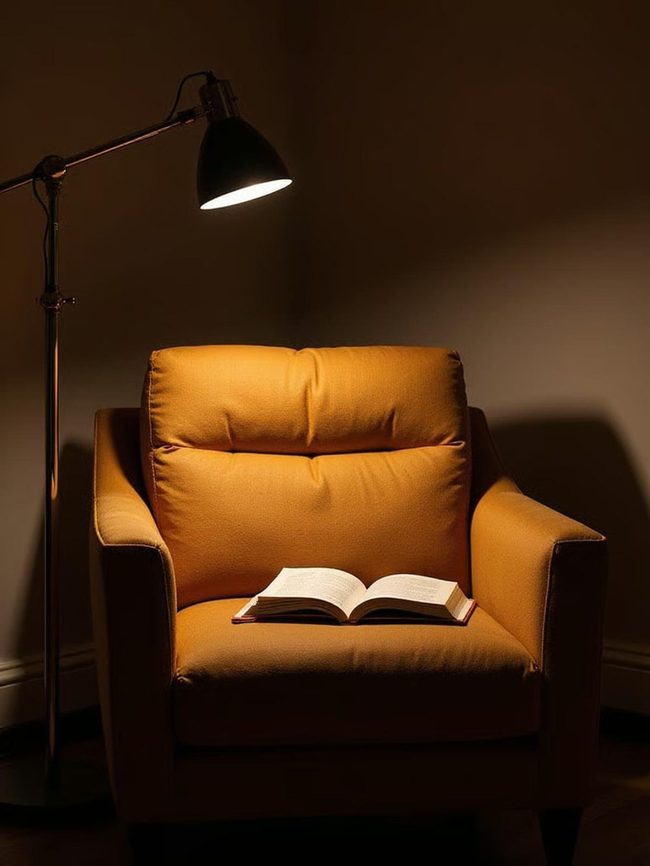
Task lighting around your chairs does so much more than just help you see, it updates the whole feel of the room by replacing that flat, harsh overhead glow with warm pools of light that draw people in and make them want to stay.
An arc lamp with real sculptural presence can anchor the space and become something beautiful to look at, while a pharmacy-style floor lamp offers that classic appeal plus the flexibility to angle it exactly where you need it.
Both options work best when paired with warm bulbs in the 2700K range, which you can find at any hardware store, and adding a dimmer switch gives you real control over whether the space feels clear for reading or low-key and relaxing for just sitting.
General room lighting might help you navigate, but it leaves everything feeling sterile and flat, whereas task lighting creates depth and makes an area feel much more intimate and personal.
You get to set the mood whenever you want, adjusting clearness up or down based on what you're doing or how you want to feel.
Michael Thompson
Senior Content Editor
Expertise
Content Strategy Development, Editorial Team Leadership, Home Décor Trends & Style Curation, Digital Storytelling for Interior Design, Quality Assurance in Publishing
Education
University of Missouri, Columbia
University of Texas at Austin
Michael Thompson is the senior content editor at Decorrio, bringing over 12 years of experience in journalism and home décor writing. With a journalism degree from the University of Missouri and a master’s in English from UT Austin, he blends storytelling with expert design insights.
At Decorrio, Michael curates inspiring content that helps readers transform their spaces with style and ease. He’s passionate about home organization, DIY projects, and quality design ideas that make everyday living more enjoyable.
Outside of work, Michael enjoys exploring Austin’s culture, tackling home improvement projects, and mentoring aspiring writers.