
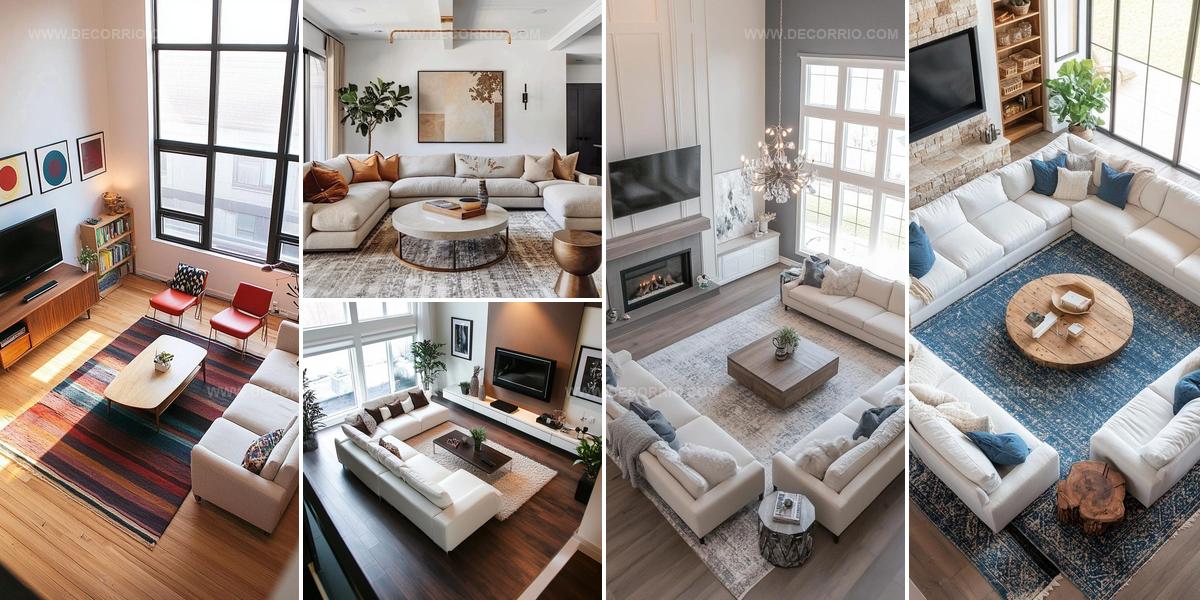
13 Smart Ways to Arrange Your Living Room Furniture
A well-planned living room furniture arrangement ideas can make even modest spaces feel comfortable and inviting.
The way sofas, chairs, and tables relate to one another affects how people move through rooms and interact during gatherings.
Balance between function and style matters when positioning pieces around focal points like fireplaces or windows.
Traffic flow becomes smoother when pathways remain unobstructed and seating encourages conversation.
Proportions play a significant role because oversized items can overwhelm small areas while tiny furnishings may appear lost in expansive rooms.
Flexibility allows homeowners to adapt layouts for different occasions, from movie nights to entertaining friends.
Finding arrangements that suit how you actually live will help every corner of the space work harder for daily needs.
Multiple Chairs Face Each Other
Start by placing a substantial sofa or spacious sectional in the center of your room, facing your fireplace or television, because comfort truly is the foundation of any gathering space.
Around the perimeter, add secondary seating like armchairs, loveseats, and chaises positioned away from walls to form natural reading nooks and spots where people can actually talk to one another.
Bench seating and round ottomans can fill corners and unused spaces, offering flexible extra places to sit while keeping the room from feeling cramped.
Mix different heights and styles throughout, pair standard armchairs with lower papasan chairs, combine parsons chairs with curvy accent pieces, and vary between plush, firm, and molded options to keep things interesting.
Arrange everything so seats face toward in all other rather than toward a single focal point, and consider sectionals with chaise options if you want flexibility to shift the layout depending on whether you're hosting a party or enjoying a quiet evening alone.
Use side tables sparingly and put them on casters so you can move them easily when you need to rearrange, and look for pieces that do double duty, like sofas with hidden storage or ottomans that hide serving trays underneath.
Scattered Furniture Zones Connect Spaces
If scattered, curated rooms spark joy for you, a vignette style living room layout offers exactly that kind of freedom and personality.
Start by spotting different activity zones within your space, then float your sofa to face the media center for TV watching and position two chairs by the windows so you can enjoy the view.
Rather than pushing furniture against walls, angle across piece toward the heart of its own zone, and complete the scene with coffee tables, side tables, floor lamps, and ottomans.
Mix small and large pieces within across area, think of pairing a delicate slipper chair next to a substantial sofa or combining a chaise with tall-backed armchairs, and vary heights across your groupings so the room feels layered from every angle.
Scatter smaller rugs throughout instead of one large one, overlapping them slightly at the edges for that relaxed feel, and use negative space between groupings by adding slim bookshelves, console tables, or floor lamps in the gaps without crowding.
Layer in eclectic touches by mixing vintage leather club chairs and tufted ottomans with modern and antique pieces, plus global accents like tribal pillows or Persian rugs that speak to your style.
Set up small displays on furniture and shelves with stacked books, candles, framed photos, sculptures, vases, and found objects arranged in asymmetrical patterns rather than rigid lines.
Plush Sectional Centered Living Room
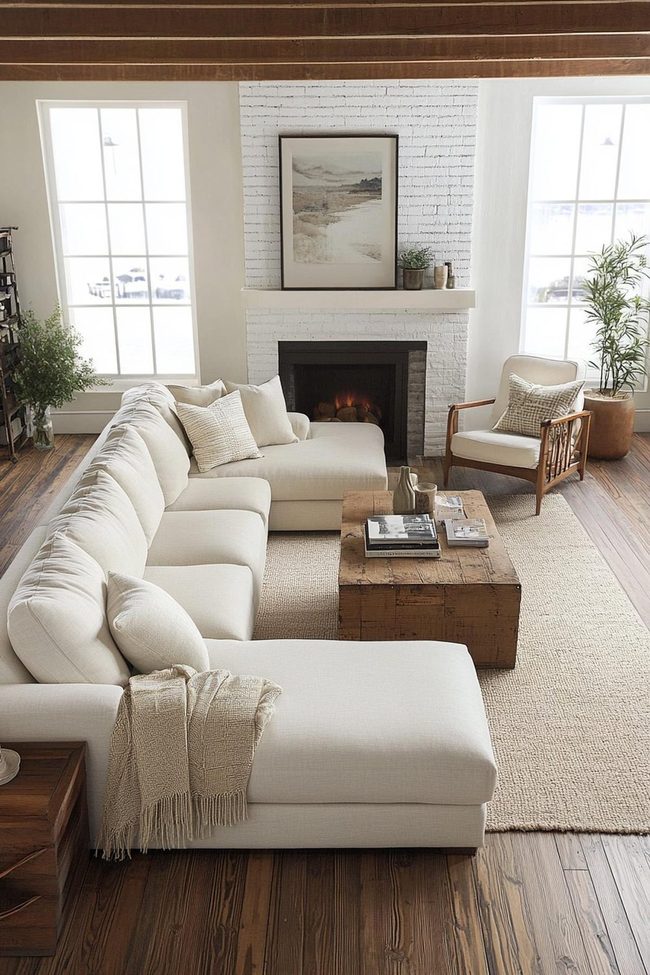
This plush sectional sofa brings comfort and works well for both large and small living rooms since you can arrange it in so many ways.
Start by positioning your sectional to face your room's anchor point, this might be a fireplace, media console, or mounted TV, and angle it slightly toward that focal area while making sure you have enough space on both sides for end tables, floor lamps, and people to move through easily.
L-shaped sectionals are particularly easy to center since they have a clear front side, and you can point the chaise toward something like windows, while U-shaped pieces should have their open end facing your main anchor point, though measuring first prevents blocking pathways.
From there, build your layout outward by flanking throughout end with matching side chairs or accent tables for symmetry and positioning a media console or bookcase behind the sofa, just keep at least two to three feet open for traffic flow.
Lighting reshapes the space, so add sconces or pendant lights above the sectional and place table lamps on end tables for task lighting alongside a floor lamp or two behind the sofa for atmosphere.
Throws and pillows draped on the sectional add softness, while poufs, ottomans, or stools fill empty corners and area rugs under and around the seating help define zones and can be angled toward your focal point rather than strictly centered.
L-Shaped Sectional Space Maximizer
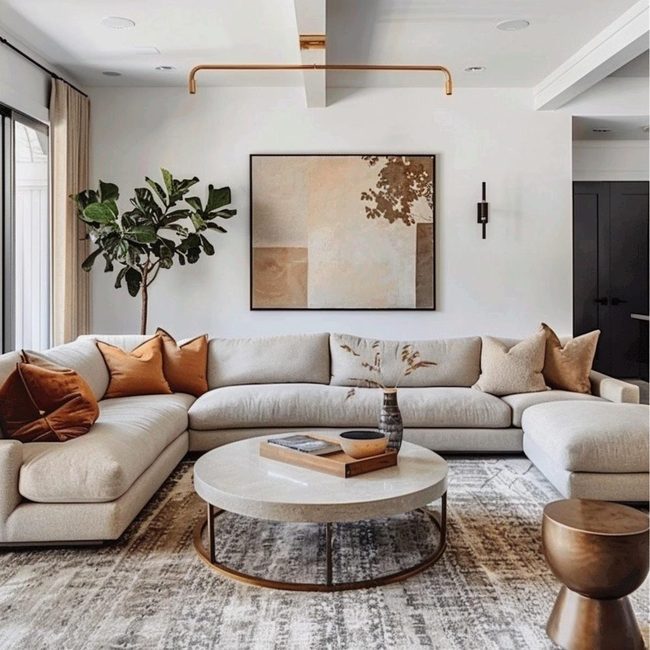
L-shaped sectionals are wonderfully versatile pieces that maximize seating while keeping rooms feeling open and spacious, so positioning one properly can transform how your space flows and functions.
Start by placing the long side against a wall and angling it toward your room's main feature, whether that's a fireplace or large window, though you can also float it away from the wall to allow traffic to move freely behind it.
Your orientation matters too, facing the sectional toward an open kitchen or dining area blends spaces into one communal zone, while directing it toward a solid wall with a TV creates a more contained feel, and you might even angle it slightly toward a corner focal point instead.
Be mindful of windows and doors on adjacent walls and leave at least 18 inches of clearance, plus enough space between the sectional and what it faces so people can move around comfortably.
Behind the sectional, that space is valuable real estate for a sofa table, bookcase, media console, or floating shelves, and adding floor lamps here brightens the area without blocking pathways.
Balance the short end of the sectional by placing a chair, chaise, or ottoman there, then nestle side tables into corner nooks for space-saving surface space and position a cabinet or console near the TV to fill the room without feeling cramped.
Floor-To-Ceiling Library Display
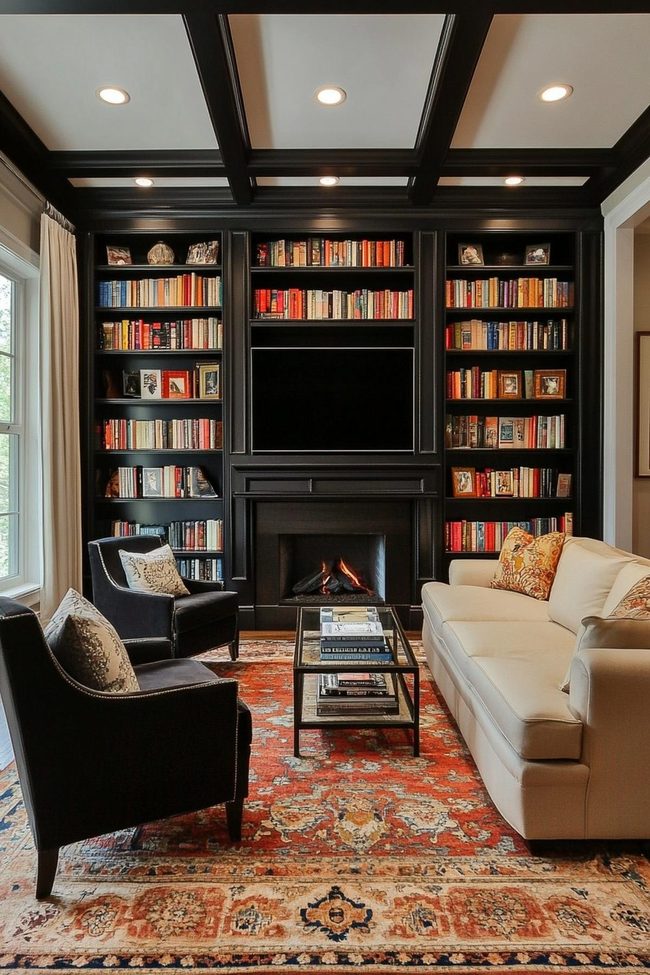
If you love books, collections, or displaying the favorite media, a shelving-centric living room puts all the treasures front and center.
Start by picking the primary wall, whether that's where the TV hangs, next to the fireplace, or a long empty wall that needs purpose, and anchor substantial storage there with open bookcases or built-in units arranged symmetrically on either side of the room's center point, or go with one large shelving unit down the middle.
Keep the rest of the furniture low-profile with pieces like glass coffee tables and lightweight chairs that don't block the view of the displays.
Take the shelving all the way up to the ceiling when you can, and mix in horizontal cabinets, floating ledges, and wall-mounted rails to break up the vertical lines and add dimension.
Organize the books and objects by color or height, alternating stacked novels with vases and framed art while repeating similar shapes and materials throughout for visual harmony.
Add built-in lighting inside the shelves or use track lighting and sconces spaced above across unit so the displays actually look good and you can see what you're showing off.
Work in hidden storage too, doors that conceal media equipment, baskets that hide clutter, and glass cabinets with interior lighting for the most prized collectibles or special pieces.
Open Floor Seating Arrangement
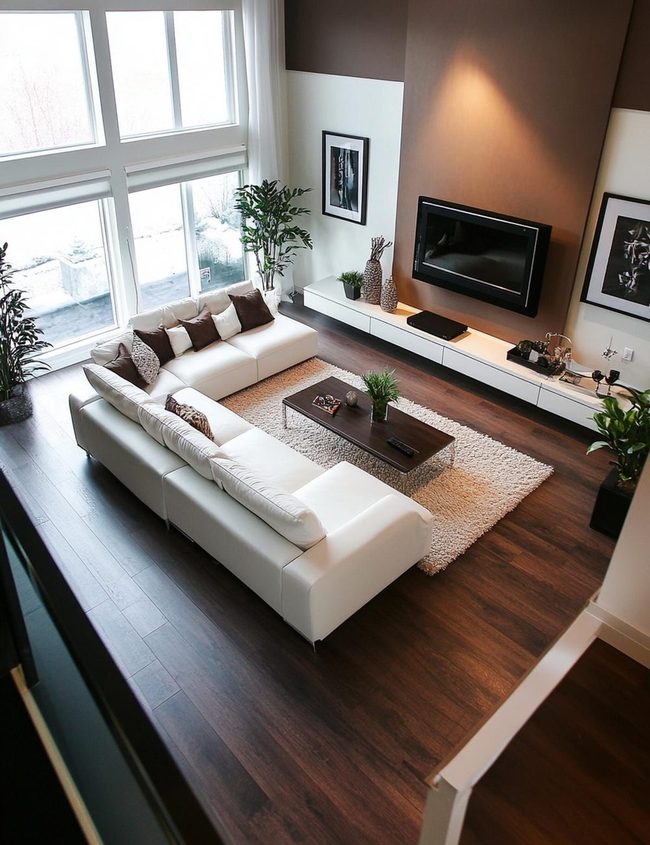
Arranging your furniture away from the walls creates an open, breathable living room that feels larger and more flexible than a traditional layout.
Start by pulling your sofa or sectional out at least 12-18 inches from the wall, which opens up the room and allows people to walk behind it comfortably.
Position it to face something interesting, a fireplace, windows, or a wall-mounted TV, so the seating has a clear direction.
Next, place chairs or benches on either side of the sofa, perpendicular to it, which encourages people to gather and chat while keeping the overall footprint reasonable.
Layer in area rugs under throughout furniture grouping and use runners to connect the spaces, which helps anchor the layout and define different zones throughout the room.
Behind the sofa, you can add slim console tables, media units, or floating shelves against the wall to provide storage and display space without feeling cluttered.
Incorporate lighting with floor lamps and sconces positioned around the furniture groups to avoid creating dark, cavernous corners, and add table lamps in spots where people might read or relax.
Drape blankets over chairs and scatter pillows on the sofa for comfort, lean artwork against the wall behind the seating, and arrange framed photos to personalize the space without overwhelming it.
Mirrored Furniture Layout Creates Balance
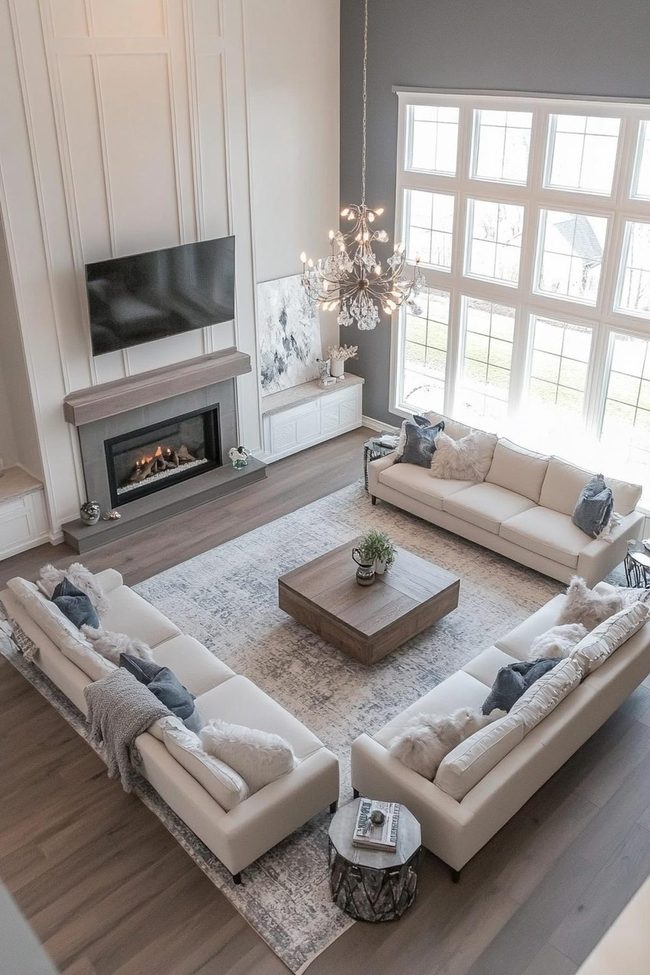
Symmetrical furniture placement delivers striking visual power by using mirrored repetition on both sides of a central axis to formal balance, and this impressive technique works beautifully in larger living rooms where you want to establish grandeur and serenity.
Start by identifying your room's focal point, a fireplace, large window, or media console, and position it centered on a wall or slightly off center along your axis line.
On either side of this anchor, place matching pieces like sofa tables, cabinets, or shelving units at equal distances, making sure they share the same proportions and style.
Position your primary seating at every end of the room angled inward toward the focal point, whether that's identical sofas or different chairs balanced in weight and size, and repeat any paired furnishings like side tables throughout.
Fill the central negative space with a coffee table, ottomans, or additional seating, and layer area rugs underneath to anchor your furnishings and a landing spot at the heart of the room.
Enhance the symmetry by choosing lighting and decor in matched sets, think matching table lamps on paired end tables or artwork of like size on opposite walls, while maintaining equal visual weight on both sides and resisting the urge to clutter one side more than the other.
Gray L-Shaped Sectional Corner Solution
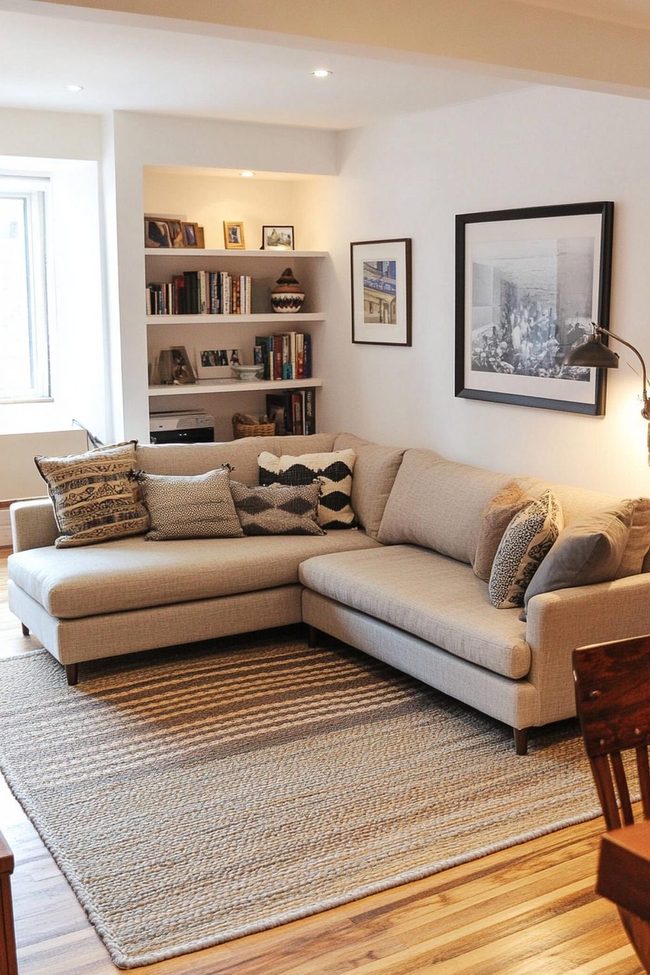
That corner sofa elevates that awkward empty space into functional seating that actually uses your square footage wisely, and positioning it into the corner itself is your starting point.
Angle the sofa so both sides face into the room rather than running it straight against the walls, and leave some breathing room between the furniture and wall for end tables and lamps.
Traffic flow matters too, so if doors or openings are nearby, make sure you're not blocking movement through the space and keep at least 24 inches of clearance on all sides.
You might need to pull the sofa a few inches from the wall to let people pass behind comfortably.
Next, think about what you want to focus on, if it's the TV, angle your seating to face it directly, but if you have a fireplace, float the sofa to one side so everyone can enjoy the view.
Behind the sofa works perfectly for shelves or a slim media console, and a handy side table fits right into that corner nook for extra storage and function.
Across from the sofa, two armchairs or a loveseat establish a natural gathering spot, and if space is limited, pick chairs with narrow backs and low arms to keep things open.
Balanced Furniture Flow Energy
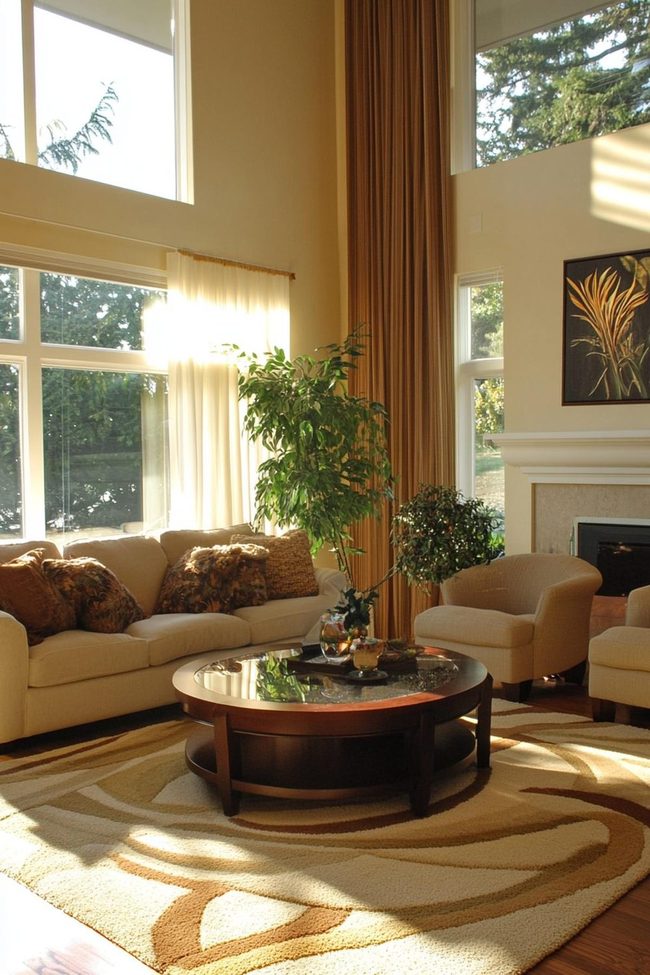
Feng Shui, an ancient Chinese philosophy, guides us to arrange furniture in ways that let life force energy (called qi) flow freely through our spaces, and when this energy gets stuck or blocked, it can make us feel moody and mentally foggy.
One of the most visually striking changes you can make is positioning your seating to face room entrances and avoid placing chairs with their backs to doors, which welcomes positive energy into your space.
Incorporating organic, flowing shapes like oval tables, round rugs, and curved lines also makes a big difference because harsh angles project aggressive energy and disrupt the harmony you're trying to build.
Another key principle involves the command position, placing your primary seating furthest from the entryway while still being able to see who enters, which gives you a sense of authority and protection in your own home.
Beyond these larger arrangements, you can add symbolic enhancements like living plants, water features, or meaningful animal imagery to nourish your qi, and displaying artwork showing water, gardens, or family moments uplifts both your mood and the room's energy.
Balance matters too, so position sofas and beds in quieter, dimmer areas for calm while placing desks in brighter, more active zones to keep yang energy flowing where you need it.
Centered Anchor Furniture Square
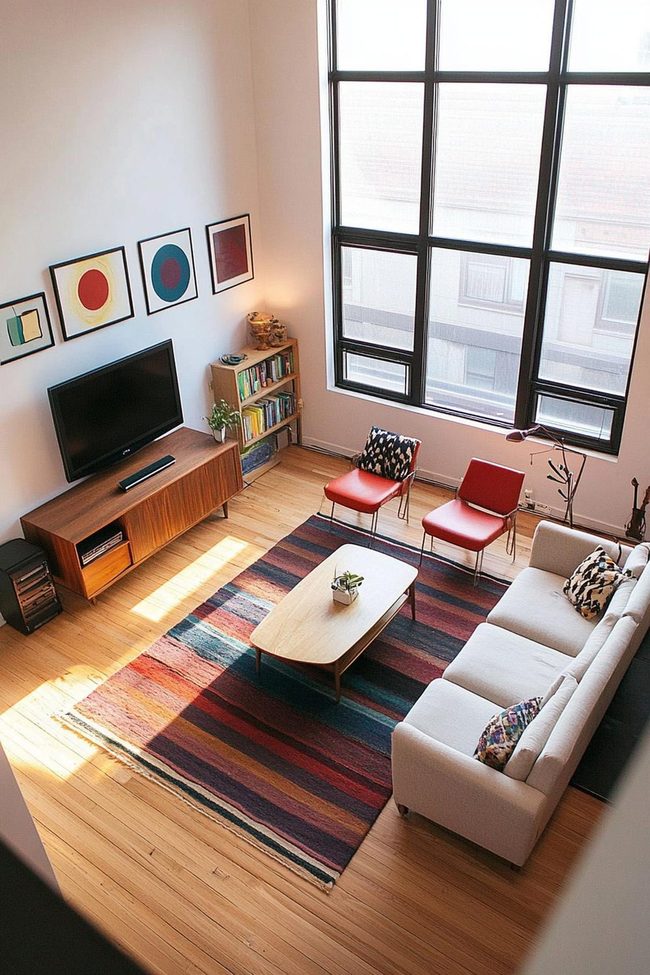
Square furniture placement works beautifully for balanced proportions and smooth traffic flow through your living room.
You arrange pieces in a square or box shape with a focal point at the center, and this symmetric layout brings order to any size space.
Start by choosing your central anchor, this could be a coffee table, rug, or seating cluster, and position it either centered or slightly off center for asymmetrical balance that aligns with your TV or other focal point.
Surround this anchor on all four sides with furnishings like a sofa on one side facing the TV and perpendicular side chairs or a loveseat on another to keep the area open and functional.
On the remaining two sides, place substantial pieces like a media console, bookshelves, or cabinetry to ground the layout, and if space is tight, open shelving keeps visual flow moving.
Connect everything by layering square or rectangular rugs underneath every component and extending them outward from the anchor like satellites, with overlaps where they meet.
You can enhance the symmetry by repeating design elements throughout, matching lamps and side tables at every sofa end, or artwork in similar frames hung above opposite pieces.
Introduce other geometric shapes like octagonal coffee tables, round ottomans, and oval rugs to break up strict lines while still complementing the overall square structure.
Fireplace Anchors Living Room Arrangement
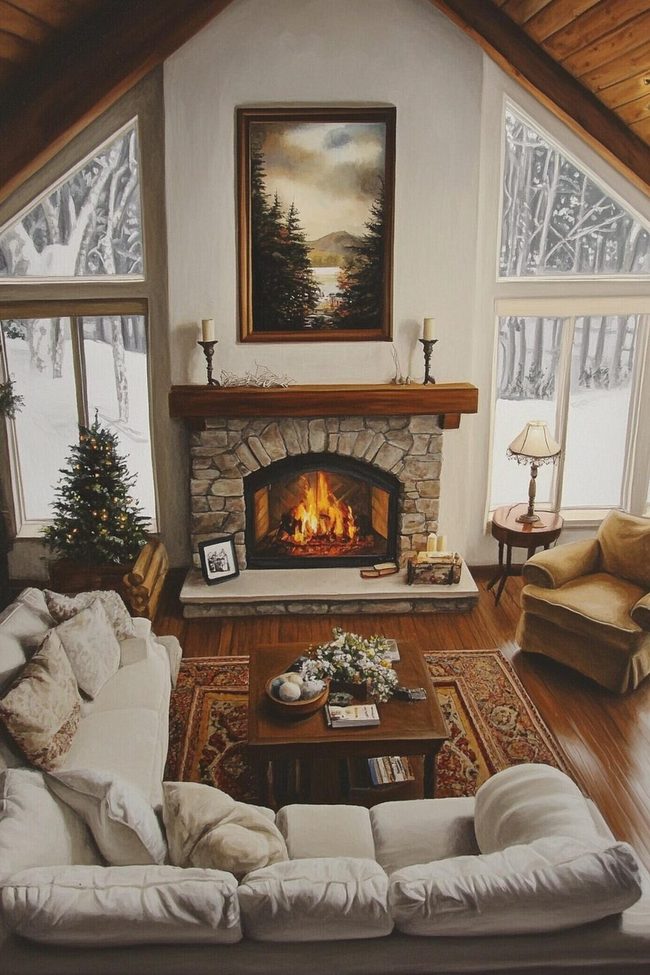
Start by pinpointing what will anchor your living room, whether it's a fireplace, entertainment center, large window, or striking furniture piece, and position it where eyes naturally land, ideally at either end of a wall rather than dead center.
Angle your main seating like a sofa or sectional toward this anchor and leave enough breathing room between pieces for easy movement throughout the space.
Secondary furniture such as accent chairs, shelves, and media cabinets should sit progressively farther away from your focal point, while lighter items like side tables and lamps drift toward the edges of the room so everything orbits around your central anchor.
When you add accessories and décor, think in triangles by placing pairs of table lamps at angles to throughout other, arranging decorative objects diagonally on side tables, hanging wall art off-center from your focal point, and laying area rugs that guide attention toward your anchor.
Lighting becomes your supporting player here, sconces, picture lights, and track lighting can highlight artwork near your focal feature, while side table and floor lamps handle task and accent duties, and a statement chandelier or pendant light above strengthens the anchor itself.
In the open space around your focal point, consider adding a console table behind the sofa for interest, floating a comfortable chair nearby to build a secondary gathering spot, or defining zones with area rugs if you have room.
Sunken Seating Arrangement Encourages Interaction
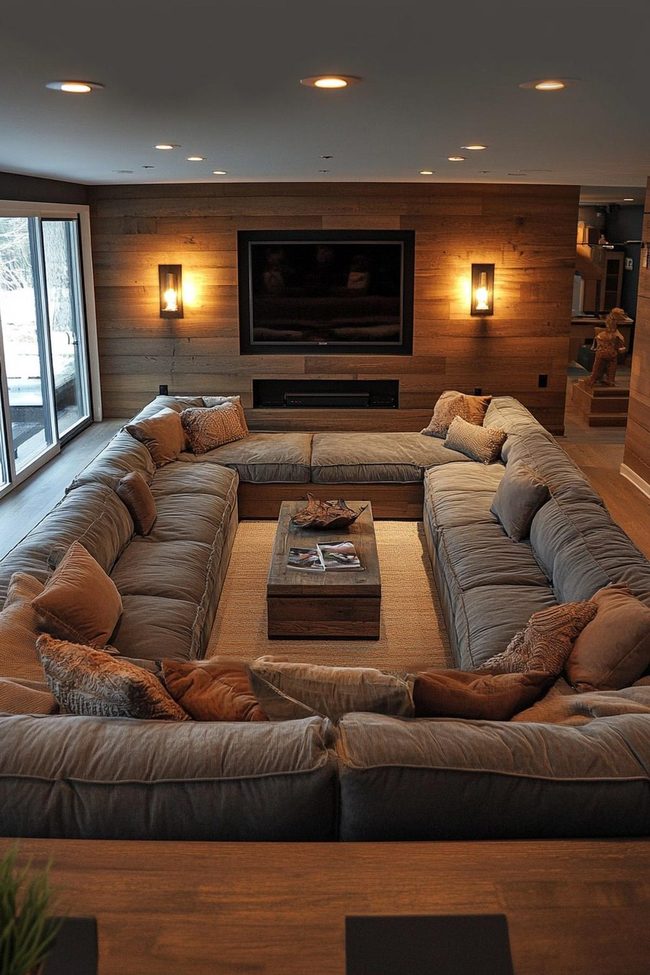
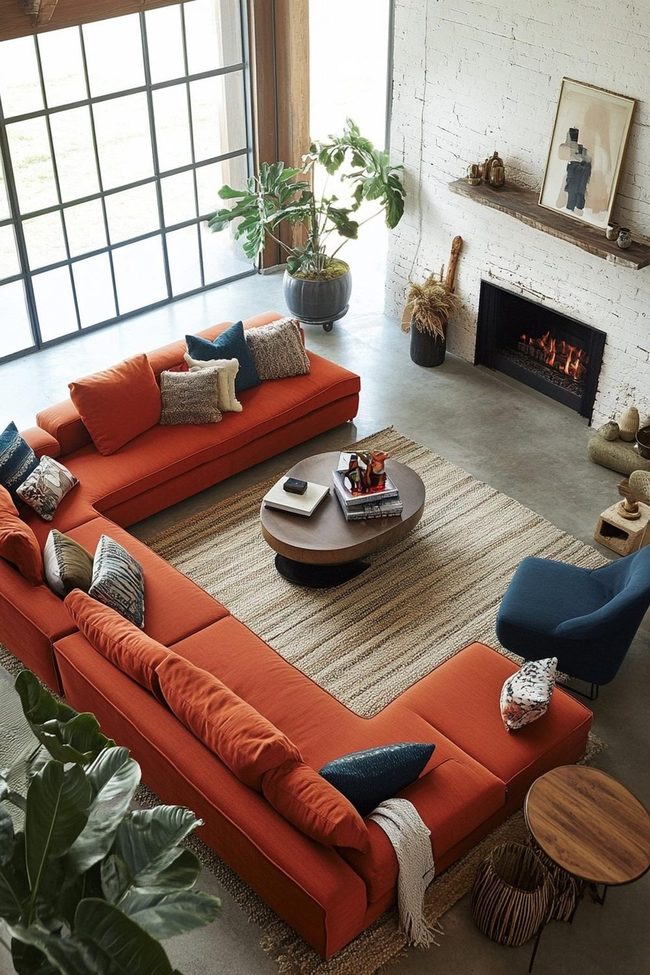
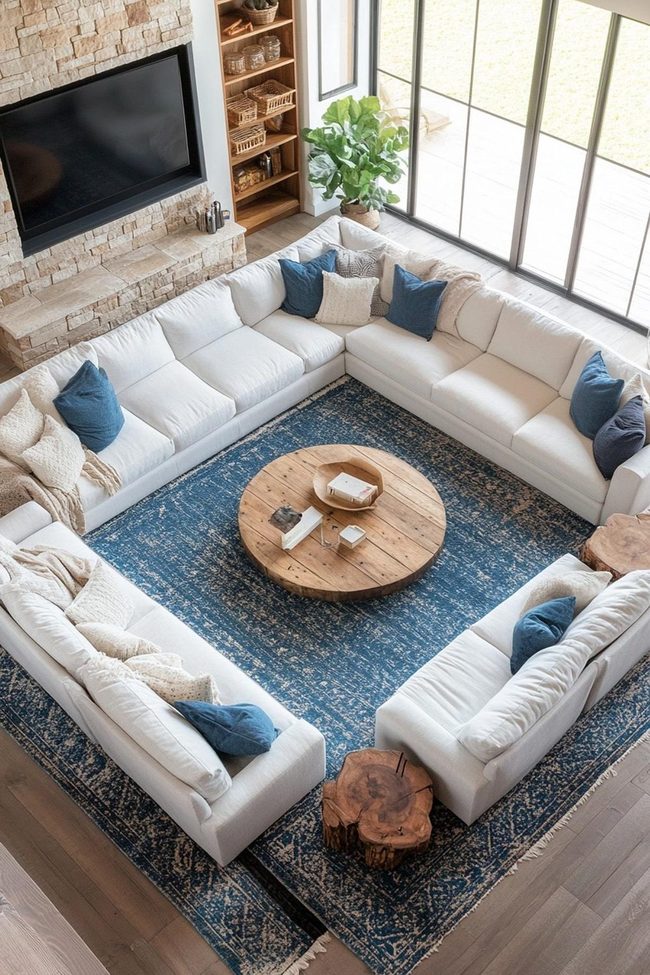
Start with your largest sofa or sectional arranged in a U-shape with the open end facing your fireplace or TV, then place two armchairs directly across to form a sunken seating area that naturally draws everyone inward and encourages real connection.
Lay down an area rug that extends under and around all the seating to anchor the whole arrangement, and fill the center space with coffee tables and ottomans that hold books, remotes, and decorative items while reinforcing that enclosed, room-within-a-room feeling.
Balance the lower seating by hanging wall art or mounting your TV higher up, so your eyes don't feel pulled down constantly.
In the surrounding space, you can add accent chairs, benches, shelving, media cabinets, or stools to fill gaps and provide extra seating when people come over, though you will want to leave clear paths for movement behind and around the pit.
Layered lighting makes all the difference here and we suggest placing floor lamps behind the seating to gently illuminate the walls, paired with table lamps and sconces for tasks and a centered pendant or chandelier for ambiance.
Your material choices shape the whole personality of the space, so consider woven natural textiles and wooden pieces for a relaxed boho vibe, or go moody with lush velvets and rich leather if you prefer something more dramatic and glamorous.
Eclectic Mix Across Different Eras
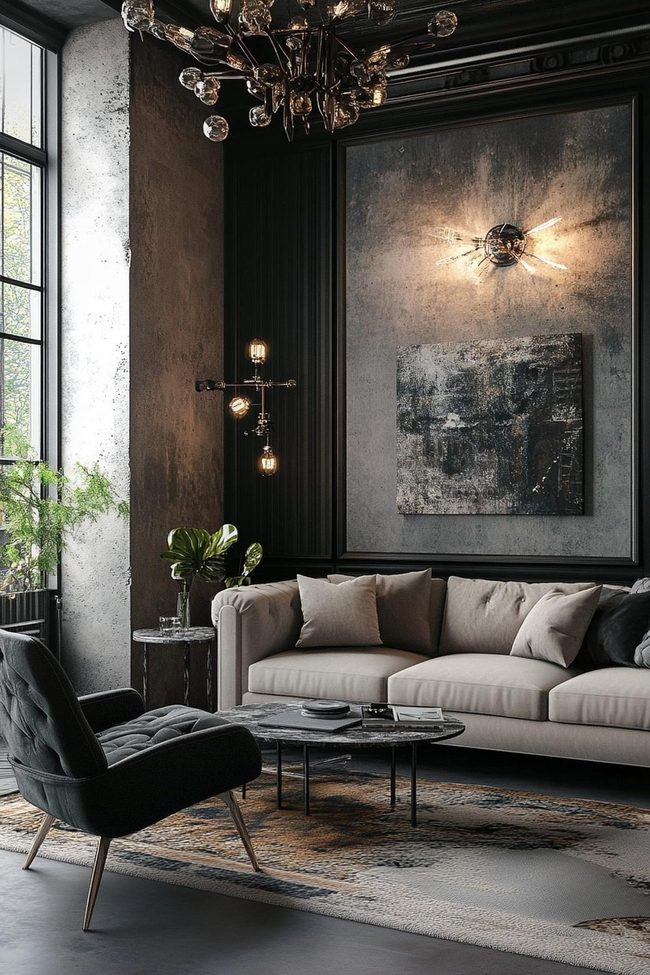
When you love multiple design styles at once, there's no need to choose just one, mixing furniture and decor from different eras and aesthetics creates rooms full of character and personality that reflect who you really are.
Layered lighting works beautifully to bridge different periods together, so consider installing a sputnik chandelier or industrial pendant above a traditional sofa, or pair a curved table lamp with straight-lined sconces.
Playing with scale keeps mixed-style spaces interesting and prevents them from feeling flat, whether that means floating a small slipper chair next to an oversized sofa or stacking design books on top of a refined marble table.
Balance your vintage and contemporary pieces by pairing something with clean lines like a modern sectional with a substantial antique coffee table or console cabinet.
To keep everything from feeling scattered, stick to a consistent color palette and material story throughout, muted neutrals like blacks and grays work well for moody modern spaces, while light-filled primary colors on accessories can bring in retro playfulness.
Repeat certain materials such as warm woods, cool metals, or tactile fabrics across your space, and if you're using many patterns like graphic prints, florals, and plaids, keep your color scheme tight to hold things together.
Michael Thompson
Senior Content Editor
Expertise
Content Strategy Development, Editorial Team Leadership, Home Décor Trends & Style Curation, Digital Storytelling for Interior Design, Quality Assurance in Publishing
Education
University of Missouri, Columbia
University of Texas at Austin
Michael Thompson is the senior content editor at Decorrio, bringing over 12 years of experience in journalism and home décor writing. With a journalism degree from the University of Missouri and a master’s in English from UT Austin, he blends storytelling with expert design insights.
At Decorrio, Michael curates inspiring content that helps readers transform their spaces with style and ease. He’s passionate about home organization, DIY projects, and quality design ideas that make everyday living more enjoyable.
Outside of work, Michael enjoys exploring Austin’s culture, tackling home improvement projects, and mentoring aspiring writers.