
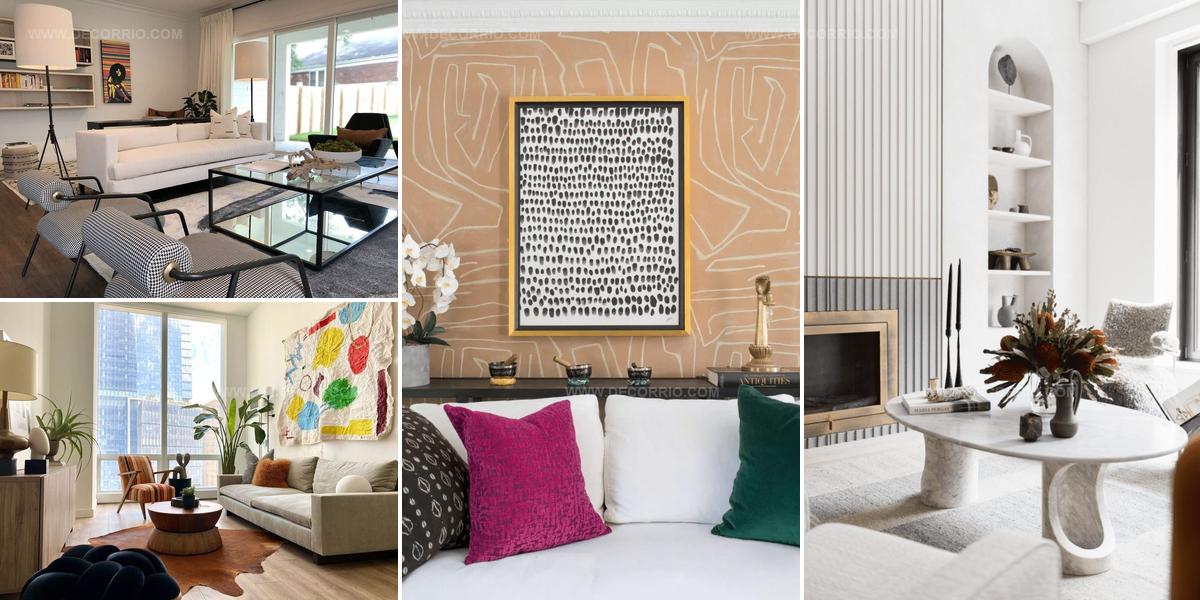
75 Gorgeous Living Room Ideas That Inspire

Beautiful living room ideas can reshape how you experience the heart of your home every single day.
A well-designed space becomes more than just four walls and furniture - it turns into a personal sanctuary where comfort meets style.
The right combination of colors, textures, and arrangements makes all the difference between an ordinary room and an exceptional one.
Living spaces reflect personality while serving practical needs, which is why thoughtful design matters so much.
Whether you prefer minimalist elegance or cozy warmth, countless approaches exist to enhance what you already have.
Small changes often create surprising impact, proving that transformation doesn't require enormous budgets or professional help.
Allow yourself to reimagine what's possible in the space where you spend so much time relaxing and connecting with loved ones.
Pillowed Window Seat With Layered Light
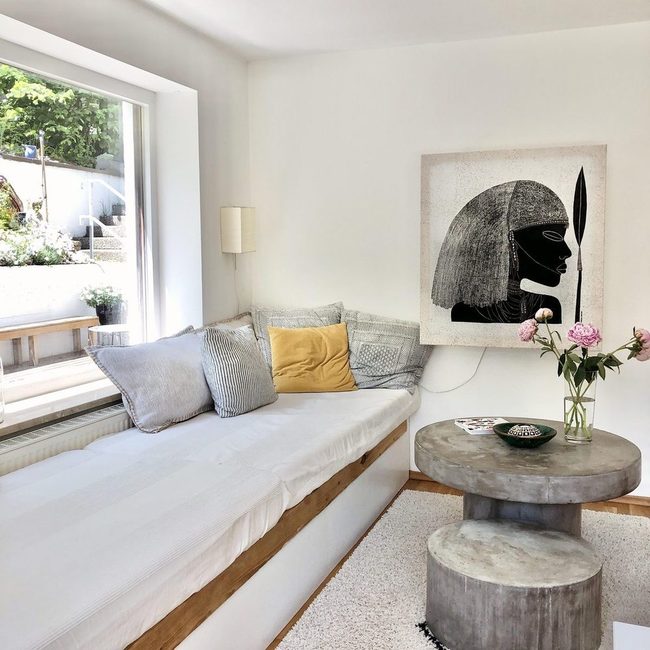
Adding a window seat to your home gives you the perfect spot for reading or simply relaxing by natural light, and Mani Tagba of Afro Bohemian Living shows us how to do it right.
Stack multiple pillows across the seat so you have plenty of cushioning and back support for hours of comfort.
Bring in a lamp or string lights near the window to brighten the area when daylight fades.
You'll find yourself drawn to this corner again and again because it combines everything you need for a peaceful retreat.
Good natural light during the day means you can read without straining your eyes.
Evening lighting makes the spot functional even after sunset.
Build this kind of seating area and you'll have a dedicated escape from the rest of your home.
It's one of those simple additions that really improves how you live in your space.
Vintage Paintings Meet Modern Gold
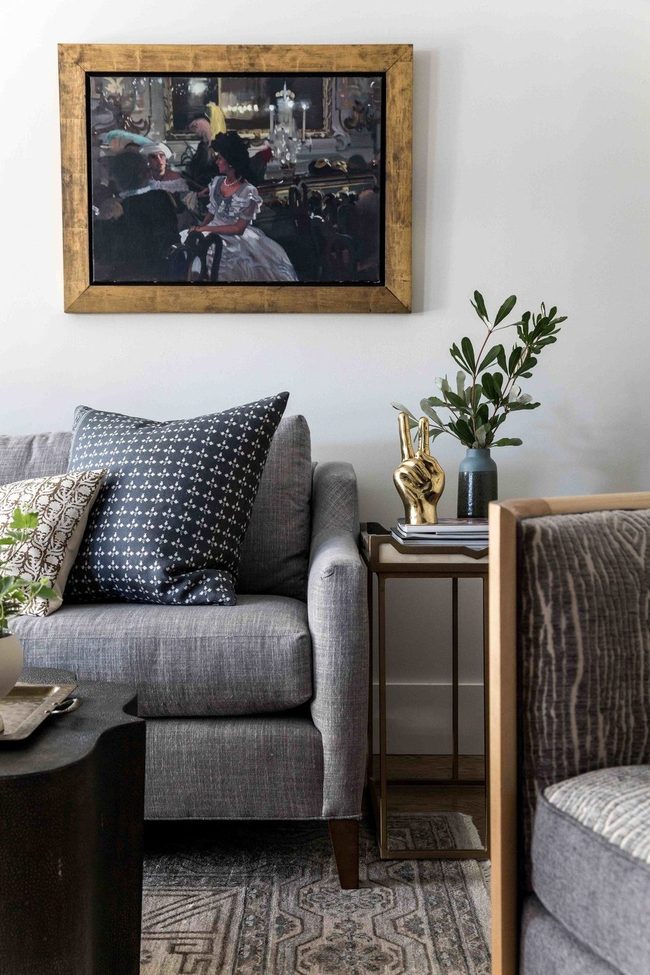
Pairing vintage pieces with modern accessories lets you design a space that feels entirely unique and personal to you.
Consider how designer Tyler Karu mixed a classic painting with contemporary elements like a gold peace sign sculpture to achieve an eclectic living room that stands out.
An old-fashioned artwork serves as a strong anchor for the room and gives it character and history.
Adding newer pieces around it prevents the space from feeling stuck in time and keeps things fresh and interesting.
You can blend eras by choosing modern accessories that echo or complement the colors and mood of your vintage finds.
This mix of old and new works well because it tells a story about who you are and what you love.
We see this balance at work when a traditional painting hangs near sleek, contemporary decor without either style overpowering the other.
Starting with one meaningful vintage item and building around it with current pieces makes the decorating process easier and more fun for most people.
Sculptural Coffee Table Gallery Space
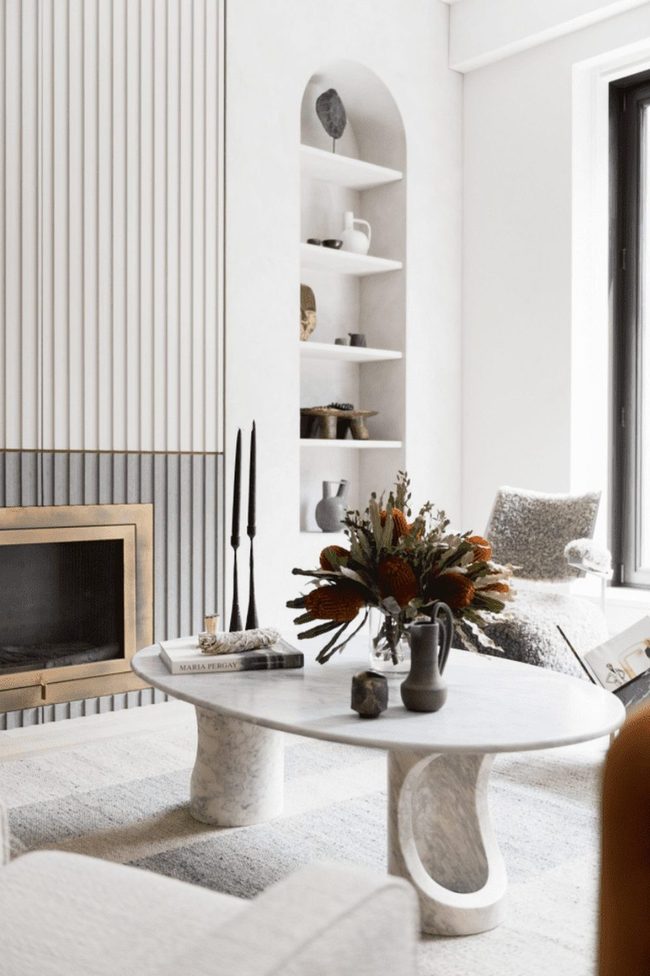
Walk into this living room by Yael Weiss Interiors and you'll spot museum-quality design that stops you in your tracks.
Bold sculptural pieces throughout the space reference fine art and three-dimensional forms that demand attention.
We remain captivated by the coffee table, which serves as a stunning anchor for the entire room.
Such striking objects function as both functional furniture and gallery-worthy installations.
You can arrange your own space this way by selecting one or two architectural pieces that have real presence.
Objects with unusual shapes and materials work better than typical mass-produced items.
Mix them alongside your everyday furnishings so they stand out as conversation starters.
This approach transforms a standard living area into something that feels like a personal gallery.
Neutral Patterns Small Sparkle
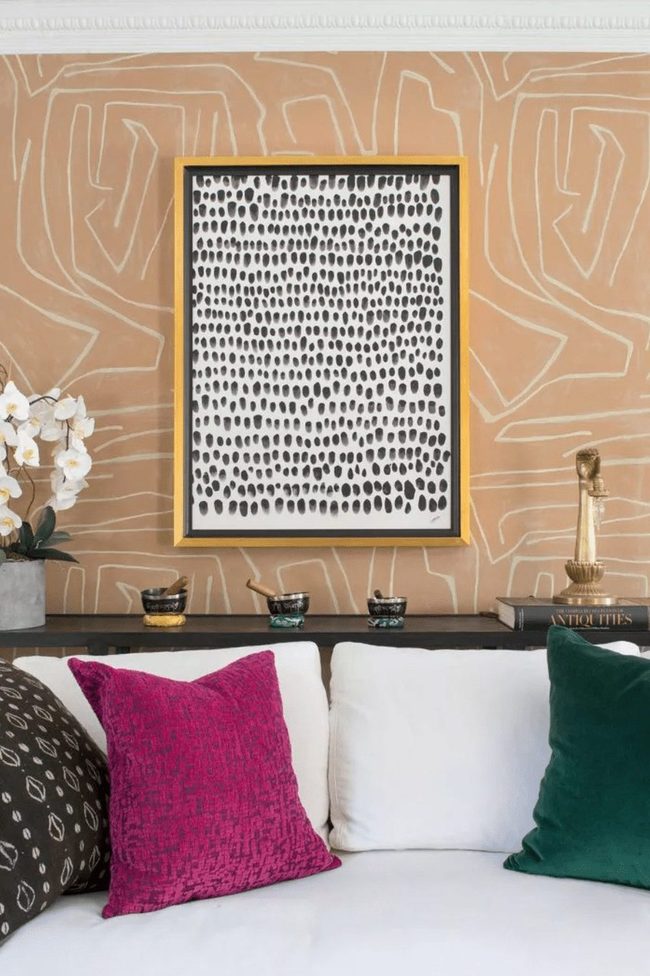
Wallpaper can transform a small living room into something that sparkles like a jewel box, especially when you go with neutral shades that have interesting patterns instead of overly bold designs.
Jewel-toned pillows scattered around the space enhance this luxurious feel and tie together the whole look.
You don't need to commit to dramatic colors to make the room feel special and layered.
Soft patterns on the walls give the space depth without overwhelming the area.
Adding these textured elements makes your small room feel richer and more sophisticated.
I'd suggest starting with the wallpaper first, then building your pillow selection around the tones you see there.
This way, everything feels connected naturally rather than forced.
Monochrome Walls With Brass Details
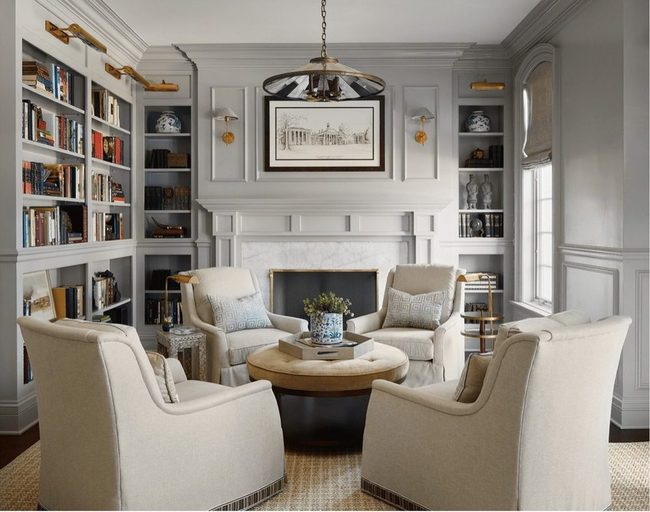
Wall paneling and molding give any room an instant dose of glamour that you'll notice right away, and when you pair them with brass fixtures and high-end accessories, the effect becomes even more striking.
Painting the walls and woodwork in one unified color keeps things looking clean and sophisticated while letting the architectural elements stand out Brass accents like hardware and light fixtures add warmth and a touch of luxury that elevates the whole aesthetic.
Wooden paneling on its own gives dimension to your walls and breaks up flat surfaces in a way that feels substantial and refined.
You don't need elaborate designs either-simple, clean paneling lines work just as well as anything more complex.
The combination of these elements transforms an ordinary room into something that feels professionally designed and expensive-looking.
Blush Pink Sofa With Soft Layers
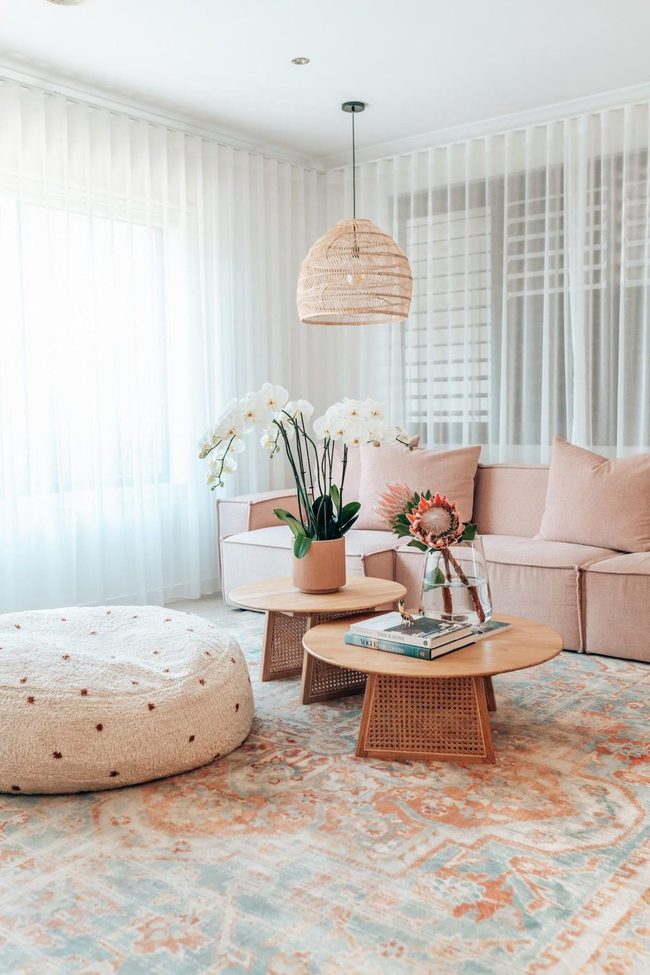
Blush-pink sofa commands your living room with its bold presence, and when you layer in plush floor cushions alongside fresh flowers, the entire space shifts into something genuinely welcoming.
House of Harvee nailed this approach by balancing that standout seating piece with softer accessories that calm the room down.
Floor pillows scattered around add texture and comfort, making you want to sink in and stay awhile.
Fresh blooms bring life and a natural sweetness that softens the overall mood.
Combining these elements transforms an ordinary living room into a space that feels like a warm embrace You can totally use this same strategy in your own home by picking a bold furniture piece and then layering in gentle touches that balance it out.
It's a simple way to build a room that feels both put-together and deeply relaxing.
Jewel Tones Layered Patterns Living
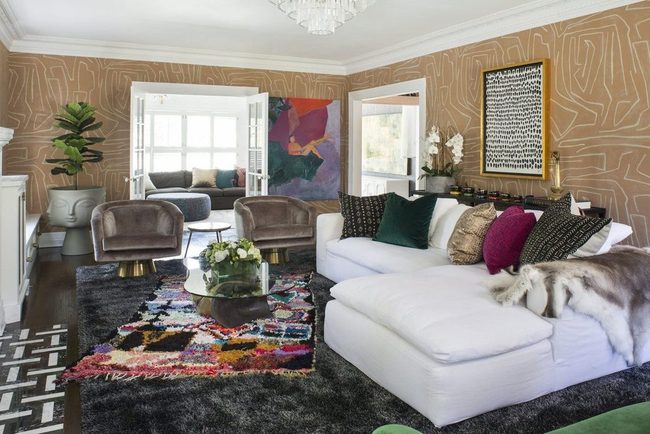
Maximalist design has its own charm that goes beyond the minimalist approach many of us are used to, and when done well, it delivers real satisfaction.
Designer Katherine Carter showed us how to pull this off by combining bold printed wallpaper with deep jewel-toned colors and layered rugs throughout her living room space.
What makes her approach work so beautifully is that despite having many elements competing for attention, the room never feels chaotic or overdone.
You can layer patterns and colors freely and still maintain a sense of balance if you understand how different pieces relate to each other.
Her choices prove that you don't have to strip things down to achieve a polished look.
Instead, abundance becomes an asset when each component has its place and purpose.
Mixing textures, patterns, and rich hues together opens up endless possibilities for personal expression in your home.
We often think more is less, but maximalism teaches us that thoughtful abundance can feel just as refined as anything spare and simple.
Macrame Meets Modern Craftsman
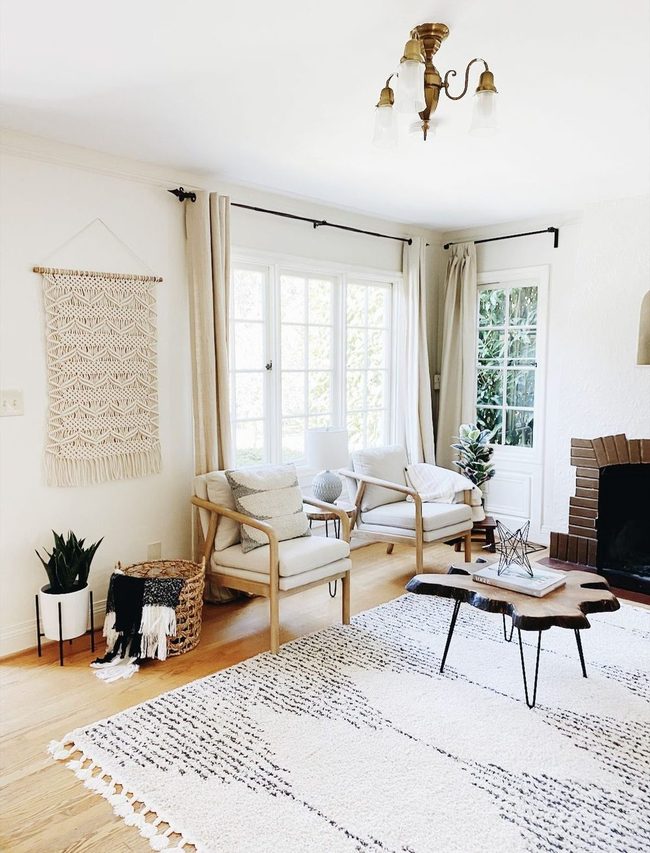
Window treatments like simple draperies paired with textured macrame wall hangings give older Craftsman homes a fresh, modern feel that suits today's style.
Portland contains so many vintage houses, and I really enjoy helping people blend contemporary touches into these spaces while honoring what made them special in the first place.
Sarah from Arbor & Co. shares this same passion for updating classic homes without erasing their character.
She loves discovering which original pieces homeowners choose to preserve and then building new layers around them.
Wall hangings and curtains become your way to connect old and new styles without fighting against the home's bones.
By keeping what matters and adding contemporary touches to your walls and windows, you can honor a home's history and make it feel current at the same time.
Oversized Mirror Opens Tight Spaces
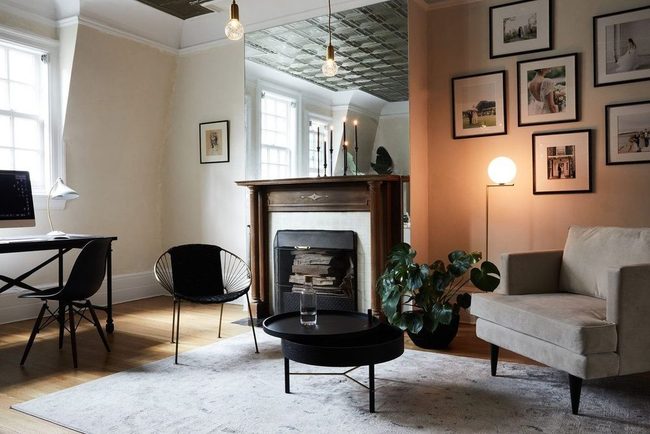
If your living space feels cramped, mirrors are your best solution and one of the oldest decorating tricks around.
Hang an oversized mirror to make the room feel larger and more open by reflecting light throughout the area.
Rather than settling for a standard mirror above your fireplace, consider going bold with a floor-to-ceiling wall mirror instead.
This dramatic choice stretches your walls vertically and bounces natural light all around the space.
You'll notice how the room suddenly feels wider and taller at the same time.
Large mirrors work especially well in small rooms because they double the visual depth without taking up any physical space.
Even a single well-placed mirror can shift how you experience an entire room and make furniture arrangements feel less crowded.
Layered Shelves, Curated Breathing Space
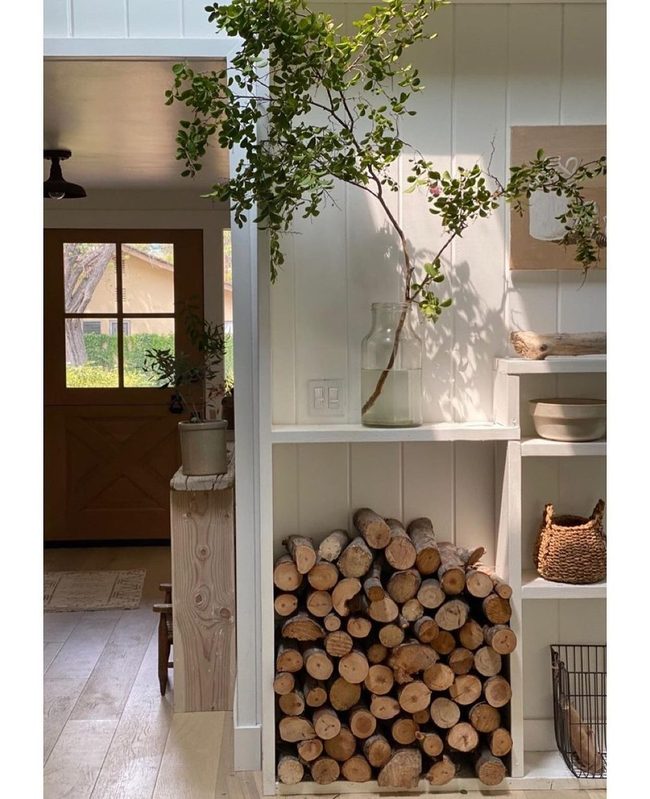
Built-in shelves and bookcases offer a great opportunity to show off your style, so it's worth spending time to get them right.
Mixing different textures, shapes, and colors keeps shelves from looking boring or one-note.
Karen Emile of Milk & Honey Life demonstrates how this approach works well in practice.
Open space between objects matters just as much as what you put on display.
When you leave breathing room on your shelves, they feel organized rather than packed in.
You can arrange books, decorative objects, and plants so each area has balance.
Grouping items by height or color creates visual interest without overwhelming the eye.
The key is finding that sweet spot between filling the space and leaving it open enough to breathe.
Warm Art Softens White Walls
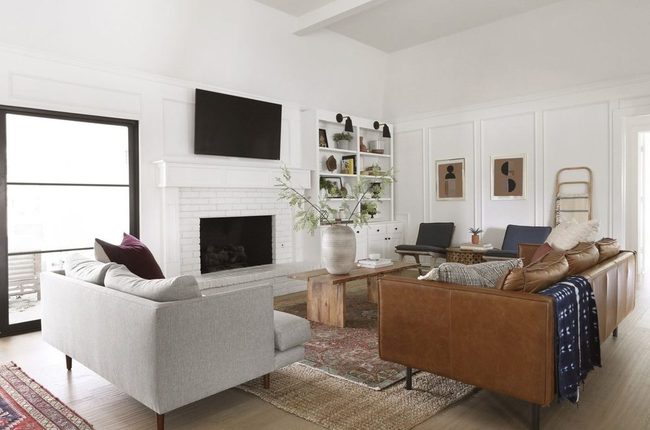
White walls work best when you balance them with warm tones and comfortable pieces, so consider hanging art in warm hues to keep the space from feeling too plain and cold.
Adding soft furnishings like plush chairs, layered rugs, and cushioned seating makes the room feel lived-in and welcoming.
You can layer textures throughout the space with blankets draped over furniture and upholstered pieces in neutral shades.
Warm-colored artwork on those clean white walls becomes a natural focal point and draws attention upward, breaking up the blank canvas effect.
Mix in natural materials like wood or woven elements to add depth and warmth without overwhelming the simplicity of white.
This approach keeps your space feeling fresh and modern while still being comfortable enough to relax in.
The combination of warm art, soft furnishings, and natural textures transforms plain white walls into a balanced room that feels both calm and inviting.
Simple additions like these make all the difference in turning a stark backdrop into a space where you actually want to spend time.
Soft Fabrics Meet Raw Wood
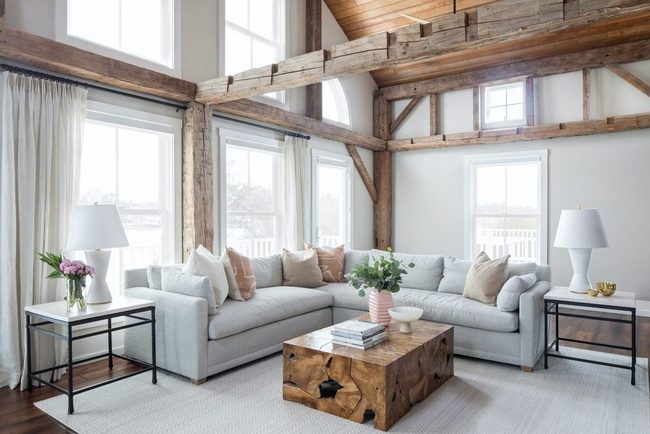
Rustic design is everywhere right now, and while all that exposed wood and natural elements look amazing, you don't want your space to feel like a pioneer homestead.
Christina Kim of Christina Kim Interior Design balances rough textures with softer touches to keep things from getting too heavy.
She brings in down-filled sectionals in blush tones and pairs them with flowing drapery and delicate lamps that feel more refined.
This mix of rugged wood beams and feminine fabrics creates a wonderful contrast that keeps the room from feeling one-note.
You can take this approach by layering soft materials against your harder architectural features.
Plush upholstery and gentle colors work well next to chunky wood elements and natural stone.
We find that this balance makes rustic spaces feel livable and warm instead of cold or overwrought.
Black Frame Glass Doors Light Division
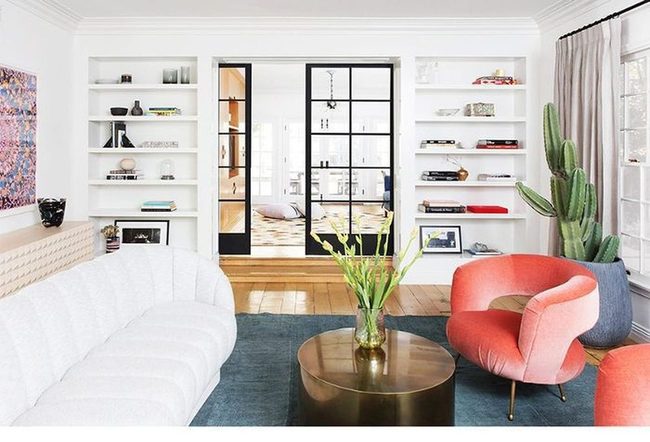
Sliding glass doors with black frames make a striking statement as they separate your living room from the rest of your home while still letting light flow through the windows.
You get privacy without sacrificing that open, breezy feeling since the glass panels don't block out the natural brightness Installing this kind of door system gives you the best of both worlds and prevents noise from traveling between rooms.
The windows in these doors mean you won't feel closed off even when they're shut.
It's a smart way to mark where your living area begins and make the room feel more intentional.
You can easily open them up when you want the space to feel connected again.
Dual-Purpose Living Room Workspace
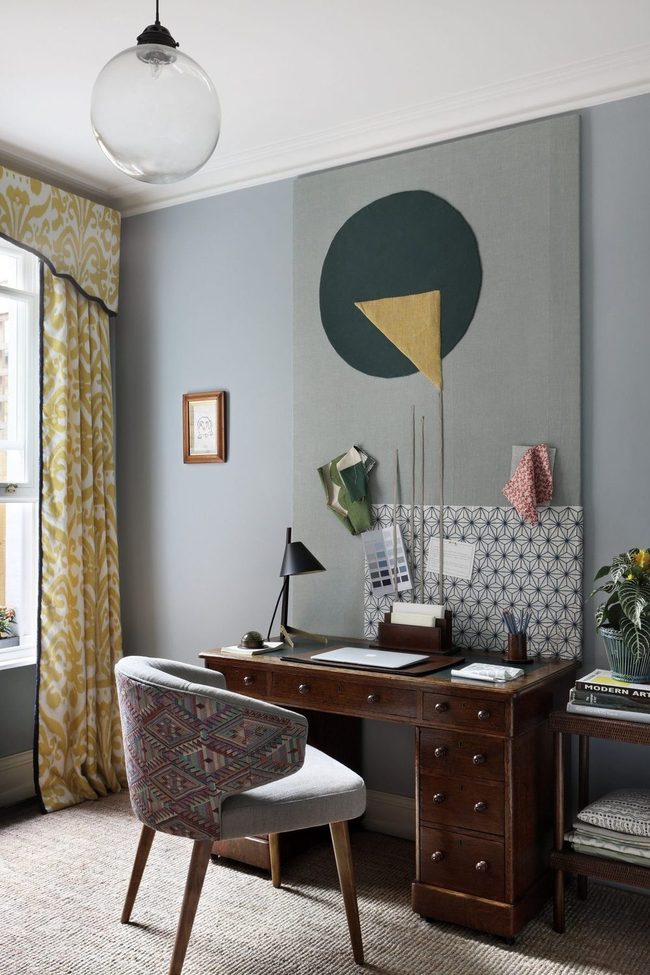
If your living room needs to serve double duty as a workspace, you can design an area that looks good and gets the job done.
Studio Peake shows us how by positioning a desk, comfortable chair, and task lamp within the room's layout.
A quality desk acts as your anchor point and keeps work supplies organized in one spot.
Pairing it with a supportive chair means you can spend hours there without discomfort.
Good lighting from a task lamp helps you focus on work while preventing eye strain.
You'll find that this setup blends seamlessly into your living room without making it feel like an office.
One trick is choosing furniture pieces that match your room's style so the workspace doesn't stand out awkwardly.
When you're done working for the day, you can still enjoy your living room as a relaxing space without office vibes taking over.
Hot Pink Against Calm Beige
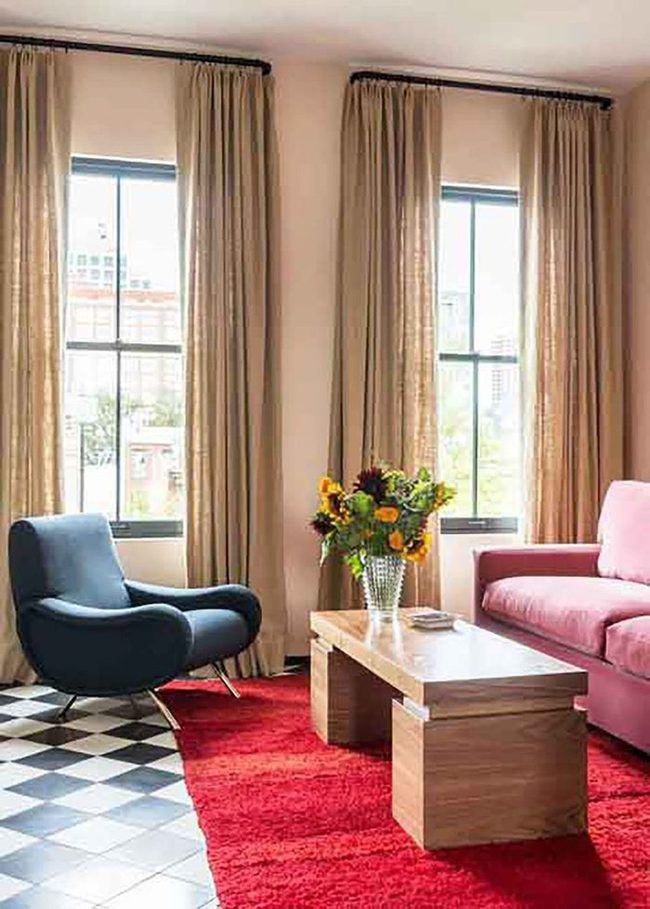
Bold pinks and reds pop against a mostly neutral backdrop and give this minimal room an unexpectedly fun energy, even though these colors seem like they shouldn't go together at all.
You can use these daring hues in small amounts-think pillows, art pieces, or accent furniture-to avoid overwhelming the space.
Floor-to-ceiling beige curtains balance out the color bursts and keep things from feeling chaotic.
We often assume that clashing colors need to be toned down everywhere, but here they're allowed to shine in specific spots.
This approach shows that mixing unusual color combos works when you have a calm, neutral foundation to support them.
Curves Meet Angles Living Room
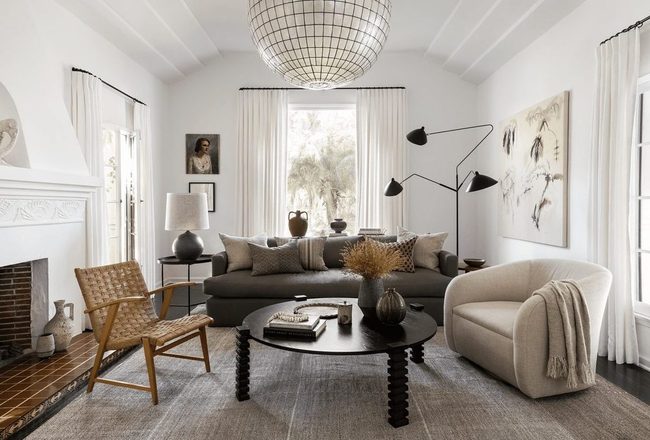
Mixing different furniture shapes and sizes keeps your living room from feeling flat and boring-designer Katie Hodges proves this by pairing a plush rounded chair with a spiral-leg coffee table and a light woven seat to create an interesting, relaxed look without needing bold colors.
Smooth curves from the chair contrast nicely with the geometric lines of the table legs, and this mix of visual weights keeps the eye moving around the room.
You don't need every piece to match or follow the same design rules to make a space feel put together.
Varying your furniture silhouettes adds personality and keeps things from looking too stiff or predictable.
In neutral rooms especially, shape becomes your secret ingredient for depth and character.
Whether you go with rounded seating, straight-lined tables, or pieces that sit somewhere in between, these choices help define your style and make the room feel intentional.
Most people overlook how much a simple shape combination can do, but it's one of the easiest ways to upgrade your décor without spending a fortune on new colors or patterns.
Yellow And Blue Against Neutral Walls
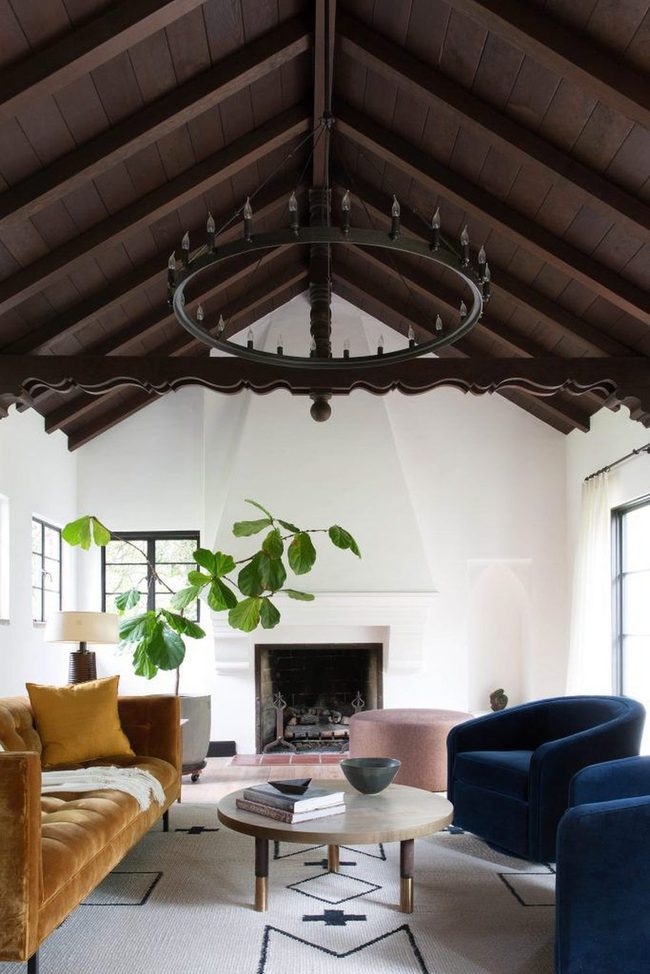
When you need fresh ideas for decorating, the color wheel offers a smart starting point and can guide your choices in exciting directions.
Designer Katie Martinez demonstrates this beautifully by pairing yellow with blue, two primary colors that naturally complement each other and demand attention in any room.
She keeps the surrounding walls and furnishings neutral so these two bold hues become the stars of the space.
This approach works because the eye naturally gravitates toward bright, contrasting colors while the muted backdrop prevents the room from feeling overwhelming.
You don't need to cover every surface in color to make a strong statement.
Sometimes restraint matters just as much as boldness when you're mixing shades.
The neutral elements act like a frame around your chosen colors, letting them shine without competition.
We see how powerful color can be when you use it strategically and don't dilute its impact with too many competing tones.
Guitars And Surfboards As Room Art
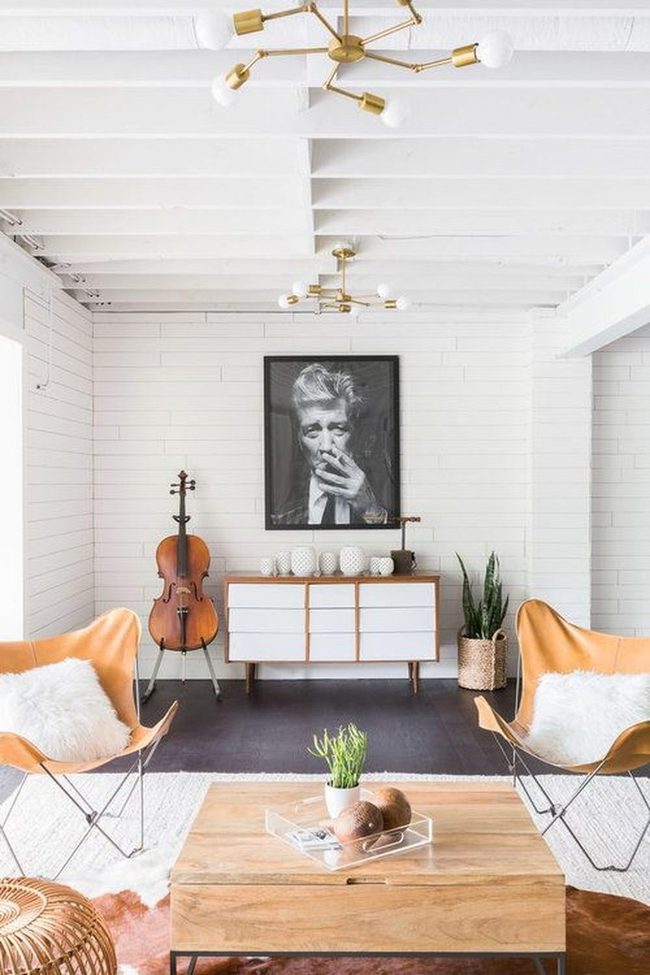
If you play music or spend time surfing, turning your hobbies into room decorations makes total sense.
Leaning a guitar or ukulele against the corner of your living room does double duty-it stays within arm's reach when you want to play, and it fills your space with personality.
We all know how boring a room can feel without personal touches, so displaying something you actually use brings life to otherwise empty walls and corners.
Your favorite board or instrument becomes both functional and decorative at the same time.
This approach works especially well when you choose items with interesting shapes or colors that naturally draw the eye.
By keeping your hobbies visible and accessible, you're reminded daily of the things you love.
It's one of the easiest ways to make a room feel like it truly belongs to you rather than looking like it came straight from a catalog.
Minimal Art, Maximum Impact
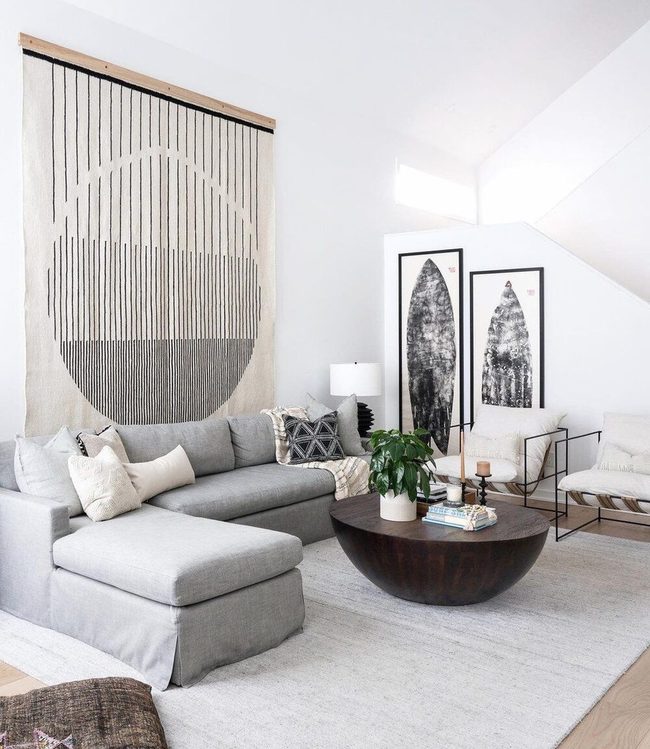
Large-scale artwork can completely change how you feel about a neutral room, and you don't need busy patterns or bold colors to make it work.
In this living room, a single oversized piece hangs on the wall with a simple design and restrained palette, yet it commands attention just through its sheer dimensions.
Size matters more than you might think when decorating.
Because of how much wall space it occupies, even a minimal artwork becomes the room's strongest visual element.
You can hang a piece like this and watch how it shifts the whole mood of your space.
Simplicity in the design actually allows the scale to shine, giving your room personality without overwhelming it.
Sometimes going big with your art choices is the easiest way to add interest where there wasn't any before.
Scattered Floor Cushions Bright Patterns
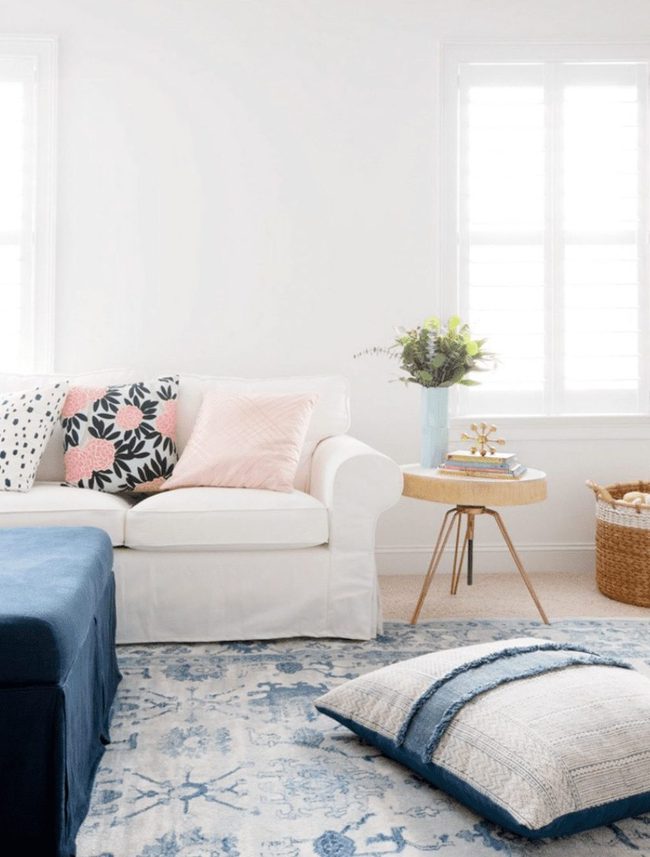
Floor pillows give you extra seating without eating up square footage, and they're perfect when you're running low on space for another chair or couch.
Picking ones in bright colors or interesting patterns instantly brings a relaxed, free-spirited vibe to any room.
You can scatter them around a low table or tuck them into corners where they sit ready whenever someone needs a spot to perch.
They work especially well in bedrooms, living rooms, or any casual hangout space where comfort meets style.
I like how versatile they are since you can swap them out whenever you want a fresh look.
Leather Rocker Modern Simplicity
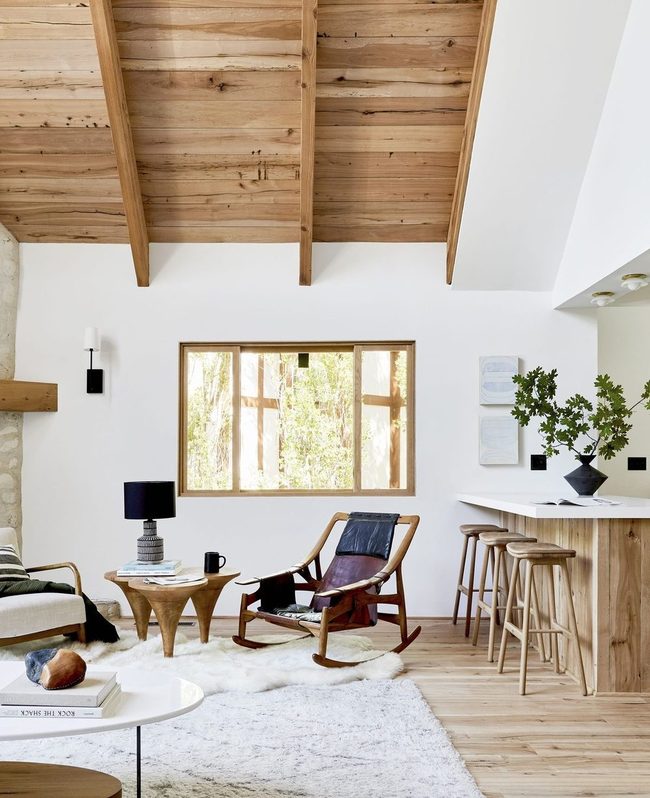
Rocking chair can be a smart way to add seating variety to your living room and make the space feel more relaxed.
You don't have to commit to full farmhouse style if that's not your thing.
Consider a rustic-chic rocker with a leather back instead, which keeps things modern and streamlined.
This type of chair works well in minimalist settings because it offers function without clutter.
One chair like this gives you a place to unwind while maintaining the clean aesthetic you want.
The combination of natural wood and simple leather feels both comfortable and contemporary.
Adding this piece means you're mixing textures and styles in a way that feels balanced.
You'll end up with a room that's cozy without looking overdone.
Single Shelf Leaning Prints
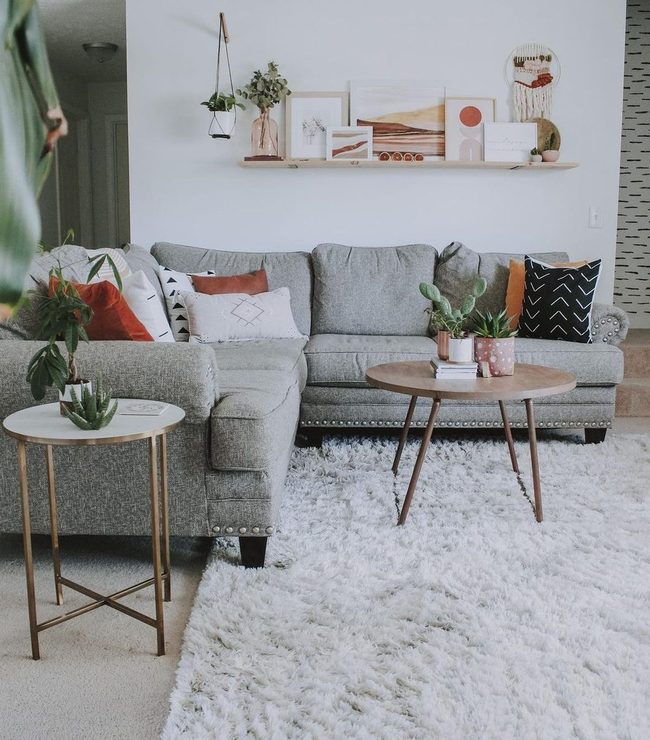
If gallery walls feel overwhelming, try a simpler route instead and mount just one shelf where you can lean your favorite prints against the wall.
Bare walls become interesting spaces through this method.
You get to display art without the commitment of multiple frames and nail holes.
Leaning prints casually against the wall adds dimension and lets you swap them out whenever you want.
It takes just minutes to rearrange, so experimenting with different pieces feels easy.
Earthy Green Farmhouse Living
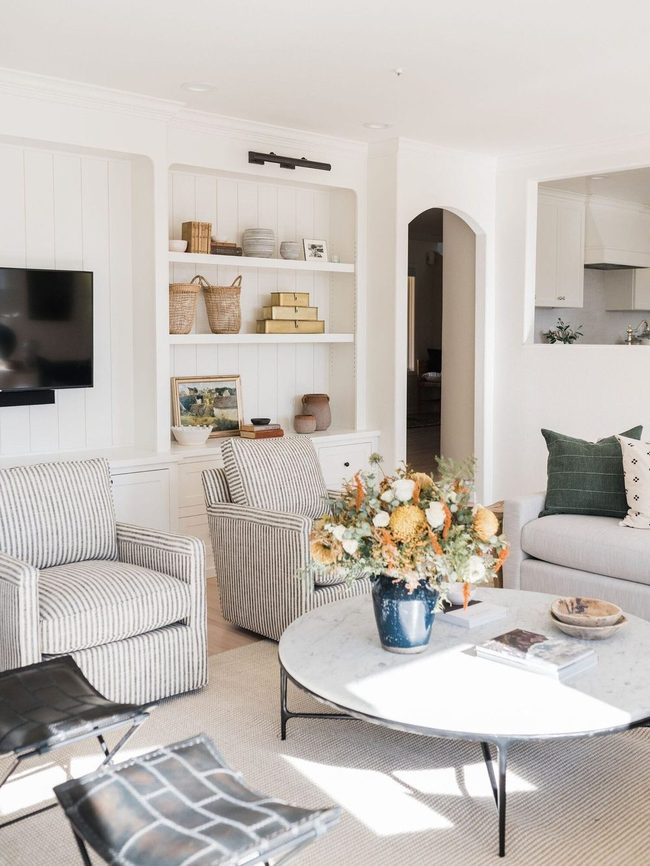
Light and bright spaces bring that cheerful farmhouse feeling to life, especially when you're located in a region surrounded by natural greenery like the Pacific Northwest.
Designer Molly Kidd understood this perfectly and incorporated earthy green tones throughout the living room to echo the landscape just beyond the windows.
Nature-inspired colors ground a space and make it feel connected to the outdoors.
Green walls and furnishings work well with wood accents and natural materials you might already have on hand.
If your home sits near forests or gardens, pulling in these muted earth tones helps blur the line between inside and outside.
You can use these shades on walls, furniture, or through accessories like pillows and artwork.
We tend to feel more relaxed when surrounded by colors found in nature, and it costs nothing to step outside and gather inspiration from your own surroundings.
Earthy palettes are forgiving and flexible, so you won't feel locked into one specific style or theme.
Bold Pendant Statement Starter
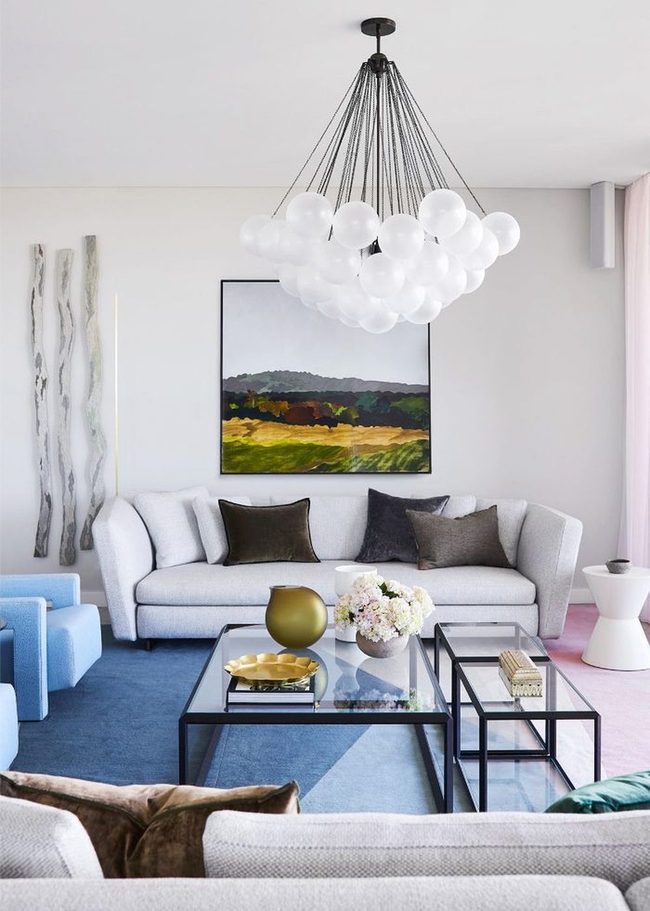
Bold pendant lighting dominates this room and sets the tone for everything else you see when you walk in, and the fixture's dramatic design brings personality to an otherwise clean, simple space.
Beyond the light itself, colorful seating and a patterned rug echo that same energy and tie the room together visually.
When you plan a space like this, the overhead fixture becomes your starting point, and then you can build outward with complementary pieces that share that same confident spirit.
We recommend considering what you want people to notice first, because that's where your eye lands the moment you enter-and here, that's absolutely the pendant.
Secondary colors and textures in your furniture then support that opening statement without competing with it.
By thinking about your lighting as the lead actor rather than just background support, you give your whole room direction and purpose.
Modern Art Meets Classic Furniture
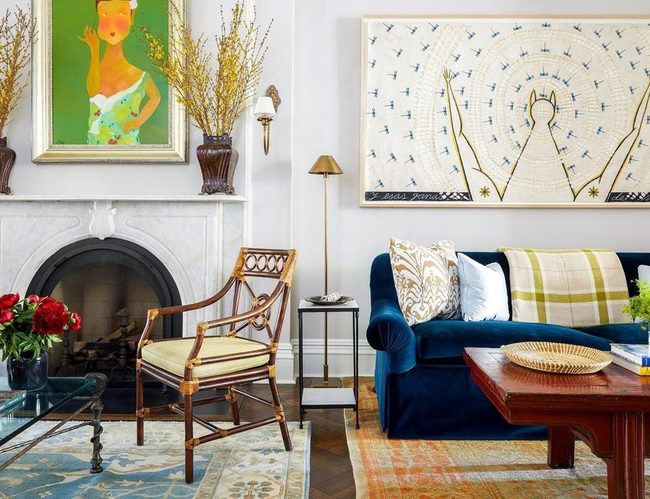
You don't have to choose between classic comfort and personal style since blending them together gives you the best of both worlds.
One great way to do this is combining traditional furniture shapes with modern colors and patterns that reflect who you are.
Bold artwork on the walls makes the space feel lived-in and shows your taste without overwhelming the room.
Adding rich colors and varied patterns across pillows, rugs, and textiles keeps things interesting while the classic furniture anchors everything in timeless style.
This balance means your living room stays elegant and grounded while still feeling full of character.
Red Window Frames Command Attention
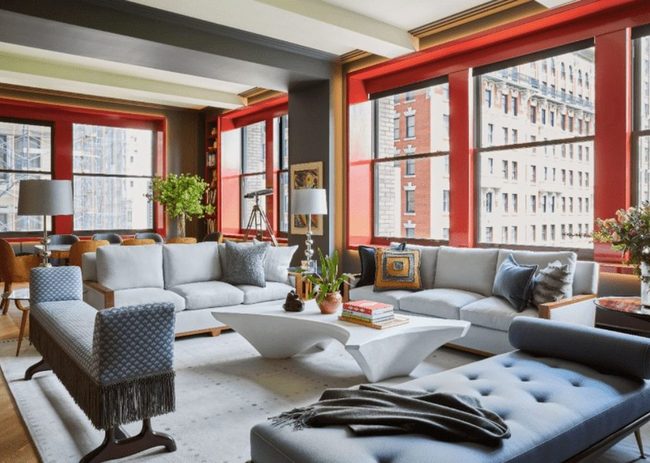
Red-framed windows stand out as the most striking feature in this urban apartment, and they deliver a bold pop of color that commands attention the moment you walk in.
Because natural light floods through these windows, the vibrant hue stays energetic without overwhelming the space or making it feel cramped.
You can balance this statement-making feature by keeping walls, furniture, and other surfaces in neutral tones so nothing competes with those dramatic frames.
This approach prevents colors from clashing and lets the red windows be the show-stopper they deserve to be.
Light neutrals around the room create breathing room and let your eye rest between glances at the bold frames.
Going neutral elsewhere also means you won't feel tired by the color since it's concentrated in one spot.
If you're nervous about using red, this setup proves that bold colors work best when they have space and balance around them.
Warm Gray Walls Black Contrast
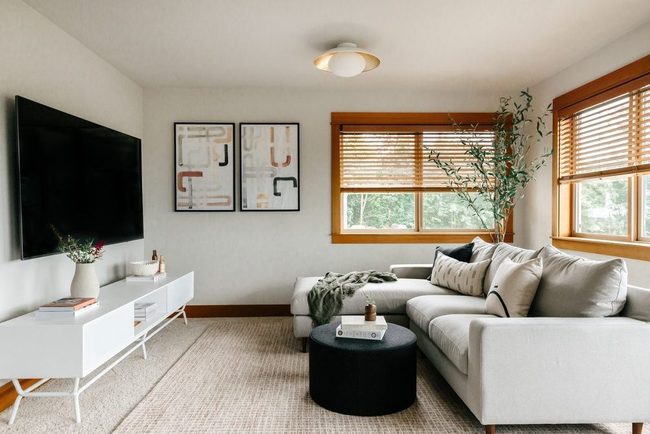
Hong designed this living room to balance comfort with visual excitement by layering opposite colors and tones throughout the space.
Nestled among trees in the Pacific Northwest, the room starts with warm gray walls and natural wood trim as its foundation.
Soft blush tones and creams bring warmth and softness to the environment, while bold black accents cut through these lighter shades and add sharp definition.
You'll notice how the contrast between light and dark keeps the room from feeling flat or boring, even though it maintains that relaxed, lived-in quality.
Rather than playing it safe with a single color story, Hong mixed warm and cool tones to give the space depth and interest.
This approach means you get a room that feels both comfortable for everyday living and visually engaging to spend time in.
Black elements punch up the softer palette without overwhelming the peaceful atmosphere that the natural surroundings already provide.
The mix of opposing tones shows that you don't need bold colors or trendy pieces to make a space feel complete and thoughtfully put together.
Single Fabric Statement Wall
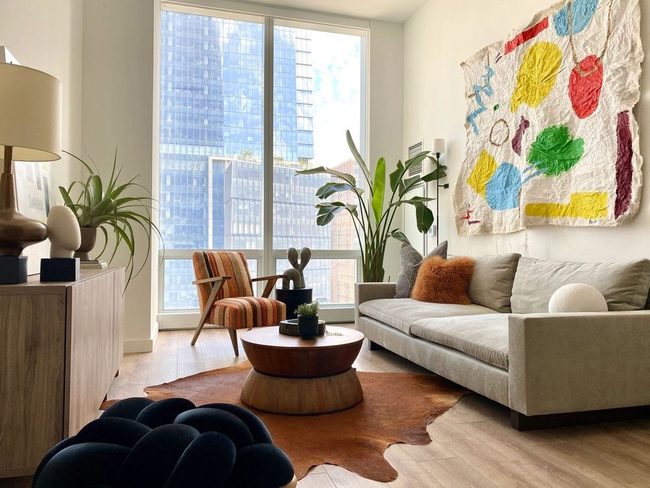
Hanging a large tapestry on your wall offers a simple solution that outshines complicated gallery walls, especially when your budget is tight.
One fabric piece covers a huge area and brings texture into the room without requiring multiple frames or arrangements.
You can find quality options at reasonable prices, and the instant visual impact comes from the size and pattern alone.
Tapestries work well in almost any room, from bedrooms to living spaces, and they shift the whole feeling of a wall in seconds.
Since you only need to hang one item instead of several smaller pieces, the setup takes minimal effort.
The variety of patterns and colors available means you can match your existing décor or go bold with something completely different.
This approach saves you time and money while still making a real difference in how your space looks and feels.
Gold Mirrors And Fireplace Elegance
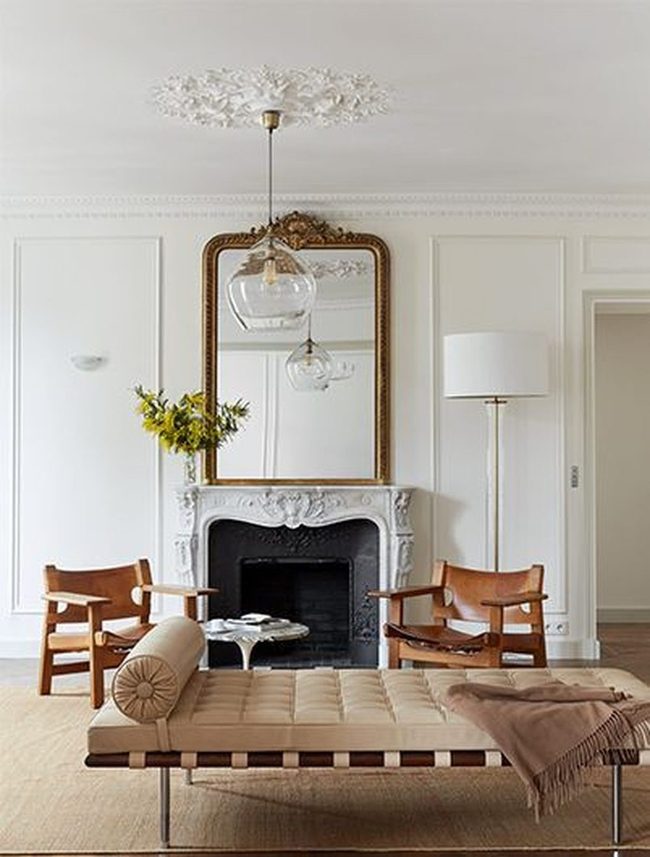
Floor-to-ceiling mirrors with gold frames dominate this living room and bounce light across every wall, giving the space an instant dose of European sophistication.
An ornate fireplace serves as the room's anchor point, drawing eyes with its detailed molding and classical charm.
Leather furnishings, especially the chaise lounge, bring both comfort and luxury into the layout without overwhelming the room.
Minimal accessories and clean lines keep the space feeling airy rather than crowded, which is exactly what makes Parisian design so appealing.
You can achieve this look by balancing statement pieces like the mirror and fireplace with simple seating and bare wall space.
I love how this approach lets each element breathe and lets your eye rest naturally.
Modern restraint paired with ornamental touches gives you that European elegance without feeling fussy or overdone.
Black Tile Fireplace With Minimal Furniture
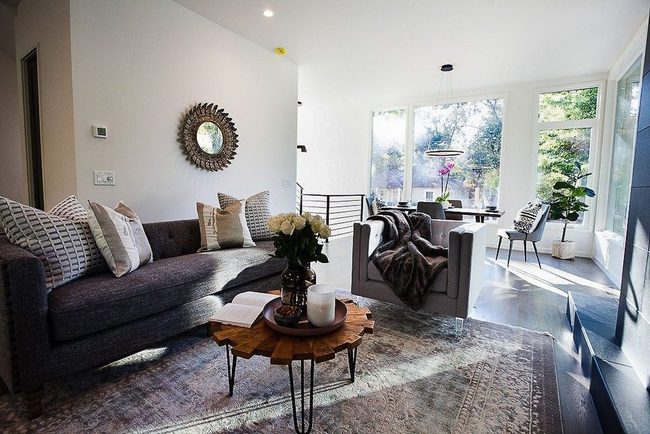
When you're decorating your living room, start by spotting the architectural bones that deserve attention and give them room to shine.
Large windows that flood the space with natural light and a striking fireplace clad in modern black tile should anchor your design choices.
Leah Alexander of Beauty is Abundant demonstrates this beautifully by keeping the furniture minimal so the architecture stays front and center.
A few well-placed pieces from West Elm-like plush pillows and a faux fur throw-add warmth without crowding the room.
This approach lets light pour through the windows during the day and keeps the fireplace as a visual anchor without competing elements around it.
Open layouts work best because they respect what makes the space special in the first place.
By stepping back and letting your room's natural features guide your decisions, you end up with a space that feels both comfortable for family nights and effortlessly put together.
The key is restraint paired with comfort, not filling every corner with stuff.
Green Foliage Meets Natural Wood
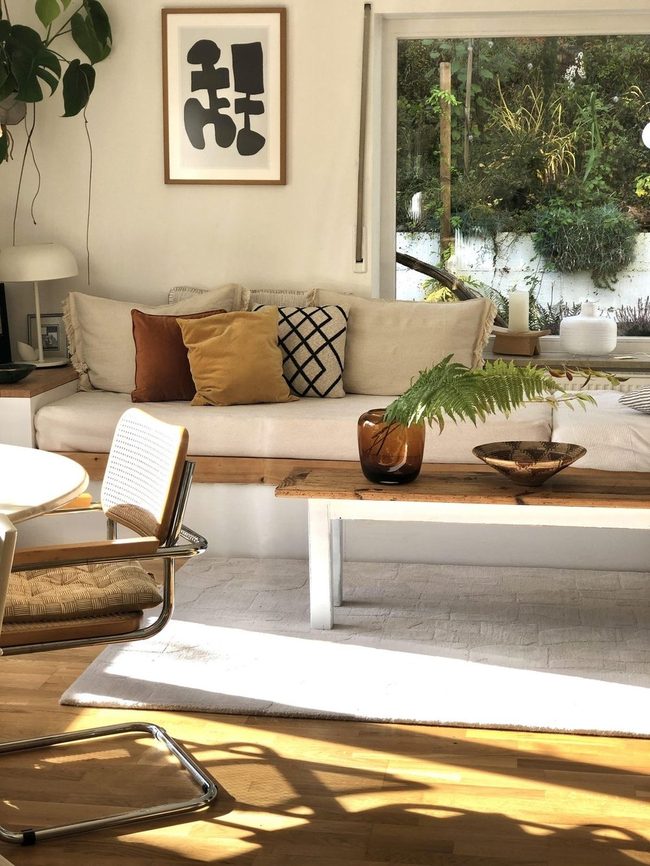
Lush greenery and natural wood finishes can turn your interior into an extension of your outdoor environment, and if you have a plant collection, this approach makes perfect sense for your space.
Raw wood furniture and potted ferns bring the garden inside and erase the boundary between your home and the world beyond your walls.
You can achieve this look by selecting pieces with natural grain and texture that echo what you'd find outside.
Plants of various sizes scattered throughout your rooms add life and depth while connecting each space to nature.
Wood tones warm up your interior and pair beautifully with green foliage, creating visual harmony across your home.
Starting with a few statement plants and wooden accents allows you to build this aesthetic gradually and see what feels right for your own style.
The beauty of this method is that you're not locked into any one design rule-just choose what speaks to you and let your plants guide the way.
Handmade Canvas And Brass Lighting
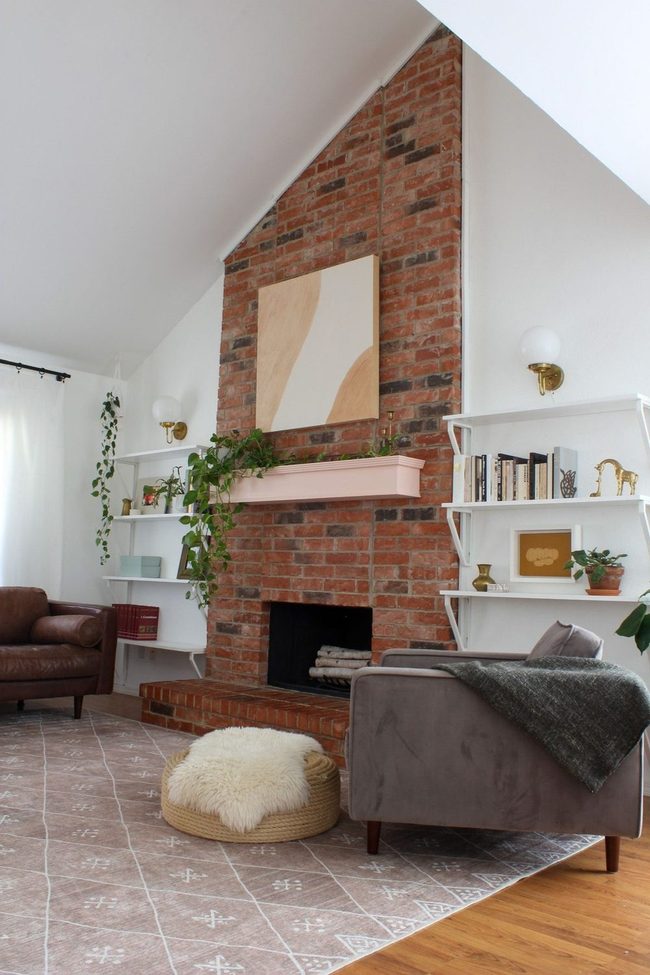
Building your own pieces and making custom art can transform a bare room faster than you'd expect, just like Amanda from the design blog Dwellaware discovered when she constructed side shelves and made texture art above her fireplace mantel to warm up that empty space.
If your room feels too dark, brass plug-in sconces with long white cords offer both function and style without needing an electrician to install them.
Live plants scattered throughout the space do wonders for freshening up a room and making it feel more alive.
You don't need a huge budget to make these changes happen.
Hand-painted canvases, wall-mounted shelving, and simple DIY projects can all be done in a weekend Sometimes the best-looking rooms come from mixing purchased pieces with things you've made or repurposed.
Zebra Rug Meets French Chairs
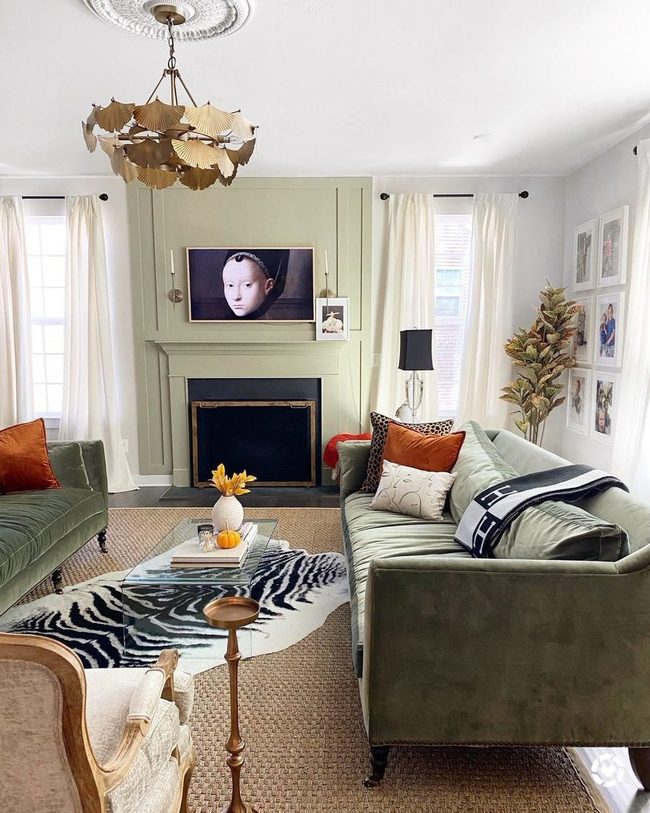
Brexton Cole Interiors mixed old-world pieces with contemporary furnishings to build a room that feels like a personal collection of finds from different eras and styles.
Full-length draperies and French-inspired accent chairs sit alongside modern accents such as an acrylic coffee table and a bold zebra rug, and this combination gives the space real character.
You can achieve this look by pairing items that don't typically go together and letting them speak to each other on equal ground Mixing periods and styles this way prevents the space from feeling too formal or too casual, and instead it becomes a reflection of what you actually love.
If you're drawn to both heritage design and current trends, this method lets you honor both without compromise.
We find that people respond well to rooms that feel collected over time rather than purchased all at once, and that's exactly the feeling you create here.
Black Frames Command Every Room
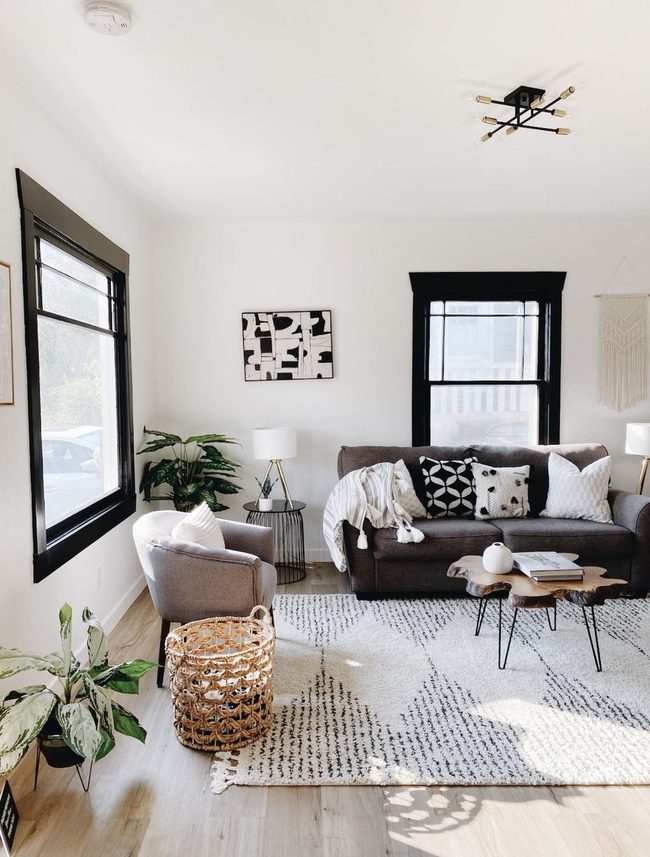
Black and white stands as one of those color pairings that stays relevant no matter what trends come and go, and Sarah from Arbor & Co. can't help but rave about how striking black-framed windows look in a space.
She worked on a freshly remodeled craftsman home that blended traditional architecture with current fixtures, which gave her the perfect canvas to play with bold contrasts.
By layering black and white throughout the rooms, she managed to make those beautiful windows command serious attention in every view.
The combination feels timeless because it works in older homes just as well as it does in newer ones and requires no updating as styles shift.
You can use this pairing in so many ways-from window frames to accent walls to furniture pieces-and it always delivers visual interest.
Timeless Black White Contrast
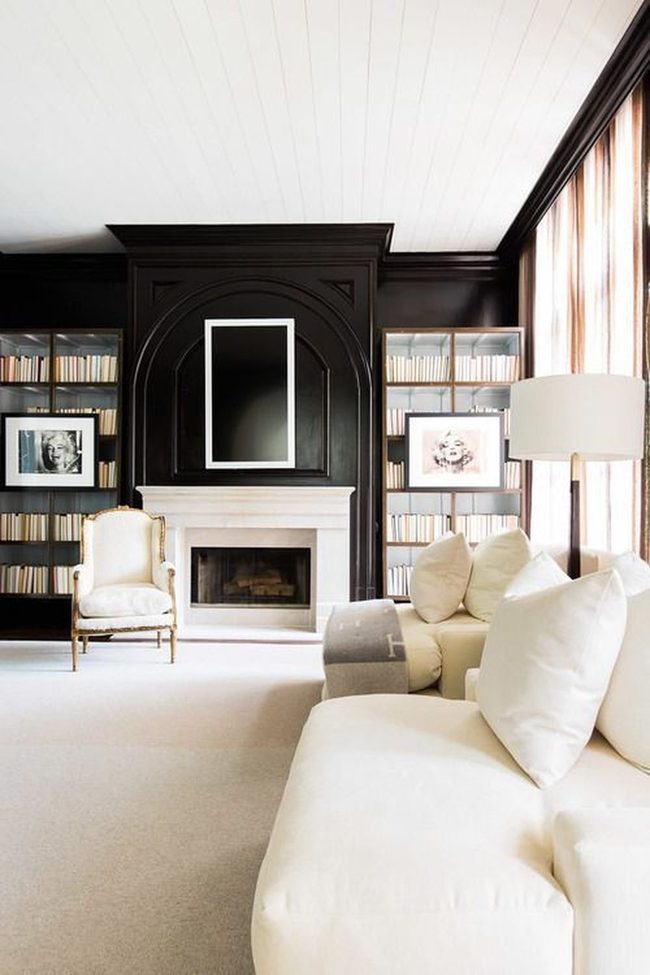
Black and white stands out as one of the most striking color pairs you can choose, and it works across nearly every style from traditional to modern to glamorous to farmhouse and beyond.
Both colors are neutral on their own, yet when you put them together, the contrast between them becomes visually powerful and grabs attention immediately.
This combination never goes out of style, so you can feel confident using it whether you're decorating a single room or your entire home.
Light walls with dark accents, dark furniture against a white background, or even bold striped patterns all demonstrate how these two colors play off each other beautifully.
You don't need to overthink the balance-the natural contrast does the heavy lifting for you.
Many people hesitate before committing to such a bold pairing, but I can tell you that the results speak for themselves.
Whether you lean toward crisp, clean lines or softer, more layered spaces, black and white adapts to your vision.
When you're uncertain about which direction to take your décor, this timeless combination is always a safe bet that delivers real results.
Soft Pink Walls With Teal Statement Chair
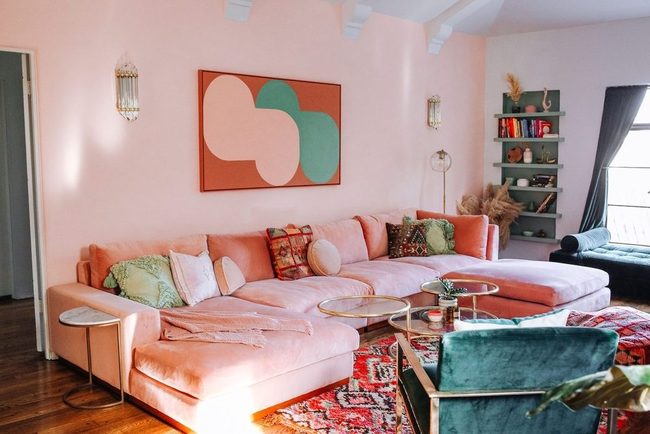
If you love a particular color, lean into it fully and let it dominate your space.
Danielle Nagel of Dazey Den demonstrated this beautifully by wrapping her living area in soft pink tones from wall to wall, making the hue the undeniable star of the room.
She kept things almost entirely within one color family, which makes the space feel unified and restful.
One deep teal chair sits as a striking contrast against all that pink, and it's really the only other shade you'll notice when you look around.
We like how this single accent piece breaks up the monochrome scheme just enough to keep things interesting without overwhelming the room.
You can easily replicate this approach by picking your own favorite color and building everything around it.
Start with walls and large furniture, then sprinkle in just one or two accent colors to prevent the space from feeling flat.
This method works well whether you prefer warm tones, cool tones, or anything in between.
Warm Blue Wainscoting Meets Pattern
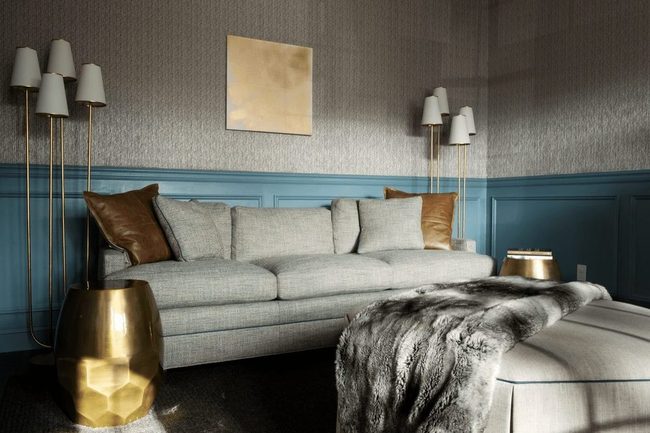
Bold architectural elements like wainscoting deserve to stand out in your space, and pairing them with unexpected color choices makes them even more striking.
Consider how a warm blue shade works beautifully against traditional wallpaper patterns to bridge the gap between classic style and modern sensibility.
You don't need to choose between honoring heritage and embracing contemporary design because mixing these approaches gives your room character and depth.
Simple touches like these architectural details become conversation starters when you let them breathe and shine without overcrowding the wall.
Paint selection matters greatly, so pick a hue that complements both the woodwork and your wallpaper rather than fighting against them.
This kind of balance keeps your space from feeling stuck in one era while maintaining the charm that makes traditional homes so appealing.
Your walls can tell a story when you thoughtfully layer different textures and colors together.
Balanced Weight, Airy Spaces
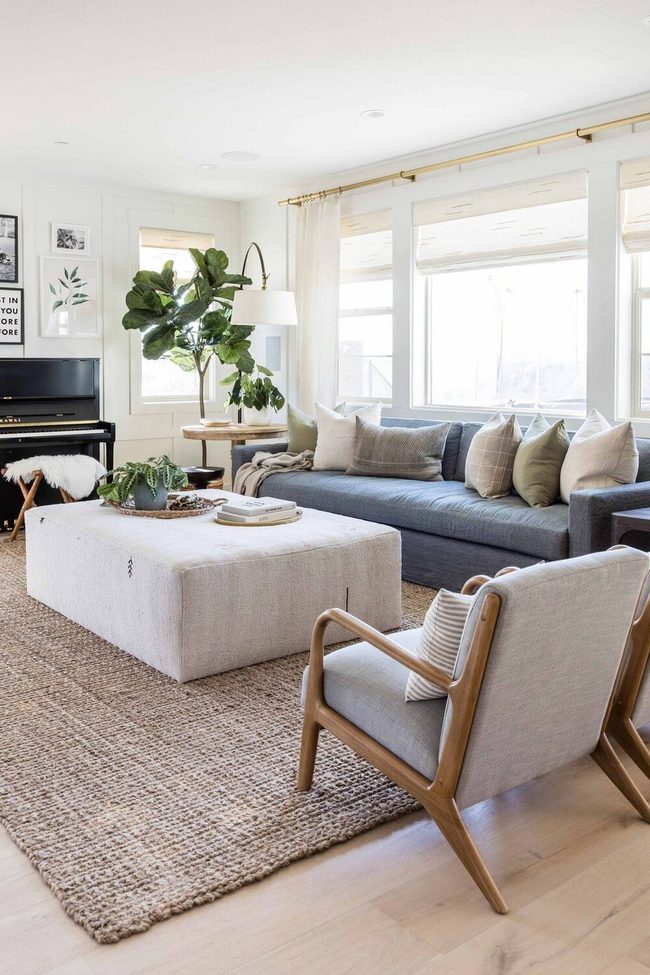
Heavy furniture pieces can overwhelm a space if you rely on them too much, so balancing them with lighter options keeps your room from feeling cramped or dark.
You want a mix of both substantial and airy pieces throughout the space to achieve good flow and openness.
Pure Salt Interiors demonstrates this principle beautifully in their living room design, where they've paired weightier items with more delicate furnishings.
By distributing visual weight evenly across the room, you prevent any single area from dominating your eye or feeling too dense.
Lighter pieces like thin-legged tables or open shelving give your eye places to rest between heavier seating and storage solutions.
Think about how each item sits in the space and whether it needs a more delicate companion nearby.
This approach ensures your room feels balanced and comfortable rather than stuffy or overwhelming.
Exposed Beams Meet Bare Windows
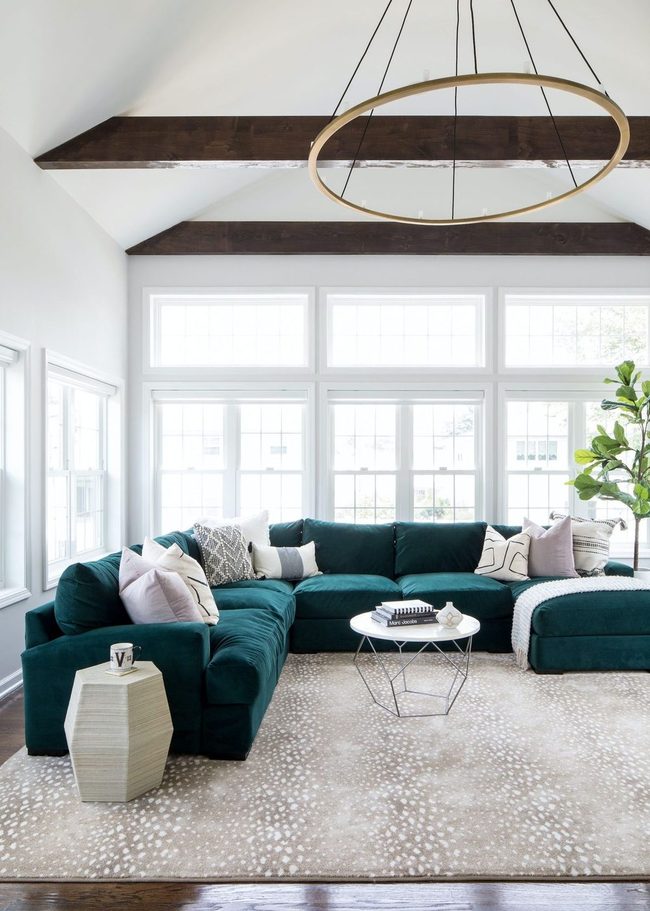
Bare windows that frame natural light pouring into your space can be one of the most striking design choices you make in any room.
Victoria Bell of Victoria Bell Design shares that she deliberately skipped traditional window coverings in her living room project because the setup already had so much going for it.
Vaulted ceilings and exposed beams create strong architectural lines that anchor the space, and she wanted those features to shine without competing elements.
Pairing these structural details with an oversized sectional gives you a relaxed foundation that feels both open and welcoming for everyday family time.
When you have quality bones like tall ceilings and natural light working in your favor, additional window treatments can sometimes feel unnecessary or even cluttering.
By letting windows remain unframed, you allow the room to breathe and maintain that fresh, airy quality that makes spaces feel larger than they are.
Sometimes the best design decision is knowing when less is more, especially when your architecture and furniture are already doing the heavy lifting.
Rattan And Green Coastal Living
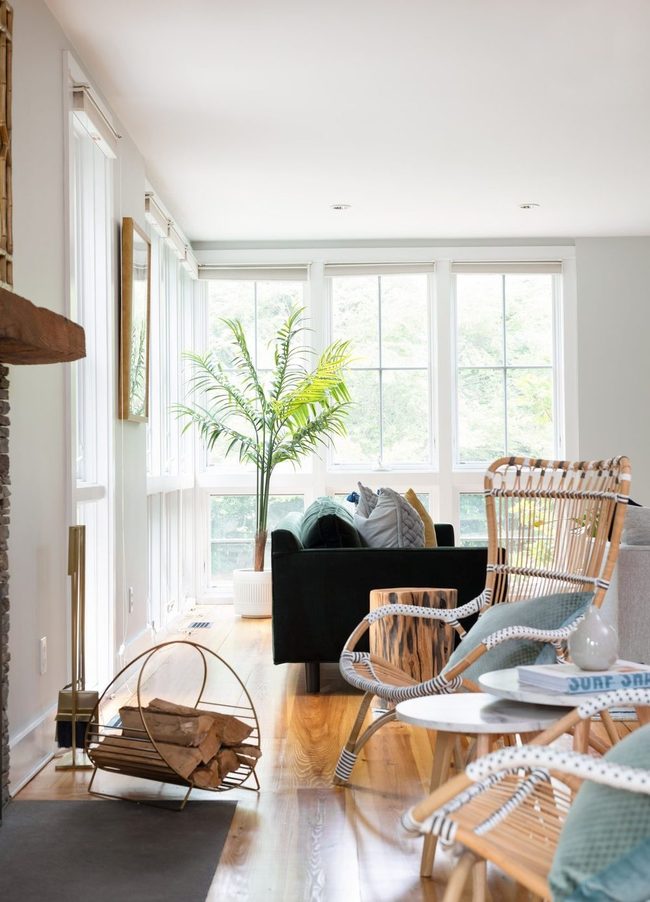
Rattan chair commands attention the moment you walk into this coastal living room designed by Desiree Burns of D Burns Interiors, and beside it sits an oversized plant that brings the outdoors right inside.
Burns chose a deep green sofa as the room's anchor, and she explains that her goal was to give the space a beach house feel without making it obvious or overdone Burns loved mixing playful colors and textures throughout the space, which keeps things from feeling too predictable or standard.
You can see how nature inspires the overall mood here without relying on the typical nautical decorations we're all used to seeing.
By bringing in these natural elements thoughtfully, the room feels both relaxed and interesting at the same time.
It's a great example of how outdoor-inspired pieces can fit seamlessly into your home when you focus on quality materials and a balanced color palette rather than forcing a specific theme.
Midcentury Meets Classic Warmth
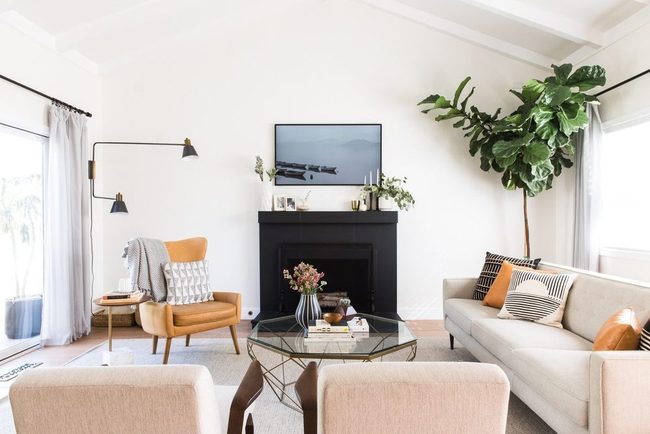
When you blend different design styles together, you get something that truly reflects who you are, and mixing midcentury modern with classic elements is a perfect way to do this.
One designer described her client's aesthetic as "midcentury modern's older sister" because it pulls from both eras without leaning too heavily on either one.
You'll see this balance play out in the living room through geometric patterns that add personality and visual interest to the space.
Neutral colors form the foundation and keep everything grounded while the clean lines of midcentury furniture maintain that modern feel.
Classic touches come through in traditional details and vintage-inspired pieces that bring warmth If you're worried about mixing styles, start by picking one neutral base color and then layer in pieces from different eras that speak to you.
Your space ends up feeling personal and layered, which is so much more interesting than sticking to just one design direction.
Brass Pendant Anchors Modern Interior
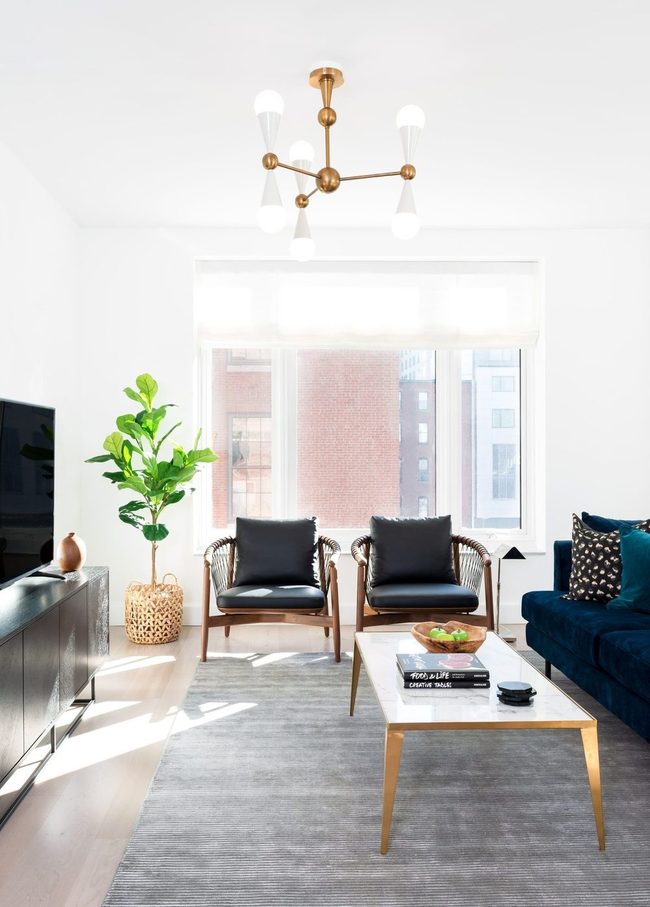
Statement pendant hanging from the center of the ceiling draws all eyes upward and fills the space with both light and visual interest, and when you choose something like a brass chandelier, it balances modern style with the warmth of natural materials like leather and wood furniture.
Lighting does more than just illuminate your room-it can set the mood and become a design feature in itself.
We often overlook what happens above our heads, but the ceiling is prime real estate for making an impact.
If you select a pendant or chandelier that matches your overall style, it becomes a natural anchor for the whole space.
Natural brass tones pair beautifully with contemporary furnishings and grounded seating pieces.
Your room will feel more complete when the lighting feels intentional and styled.
Don't underestimate how much a well-chosen fixture can brighten up both your space and your decorating scheme.
Deep Hunter Green Statement Walls
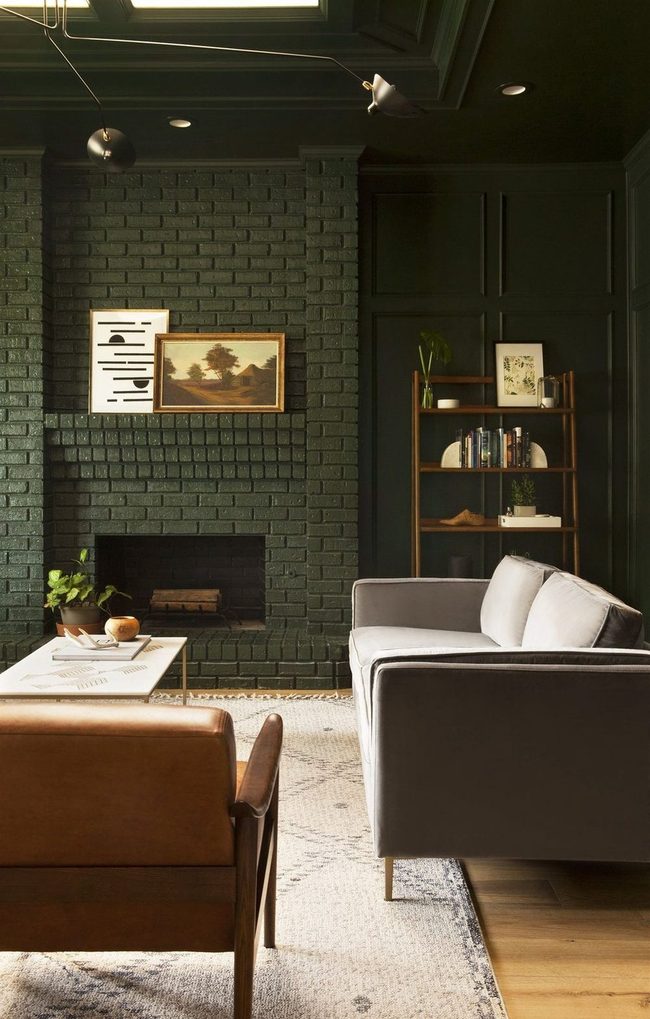
Deep hunter green paint on the brick fireplace, walls, and ceiling makes this living room impossible to miss, and designer Sarah Fultz of Sarah Fultz Interiors knew exactly what she was doing when she went bold with this choice.
Balancing that dark, saturated color works because the floors and furniture stay light and neutral.
You don't need to play it safe with your walls-sometimes a brave color decision is exactly what a space needs to feel put together.
When you commit to one strong shade like this, it becomes the main statement in the room.
Light furnishings and pale flooring keep the space from feeling heavy or closed in.
Paint is one of the easiest updates you can make, and choosing a confident color shows your personality without breaking the bank.
Going all in on a single hue across multiple surfaces like walls, ceiling, and even a fireplace takes guts but delivers real results.
We think this approach proves that sometimes the most impactful move is also the simplest one.
Alcove Seating In Neutral Tones
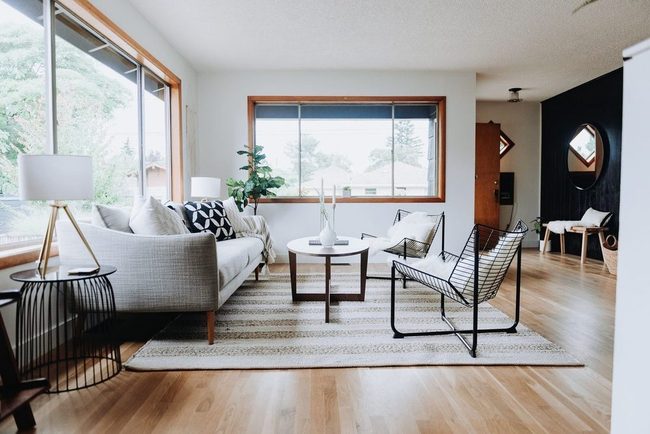
A small alcove near the entryway can turn into a comfortable living spot with the right layout.
This Arbor & Co. design proves that even a tight corner can feel useful and relaxed.
You do not need a large foyer or a separate room to make the area work.
In an open floor plan, a rug can help define the seating zone and make it feel more grounded.
This simple boundary keeps the living area clear, comfortable, and easy to enjoy.
Emerald Velvet Statement Sectional
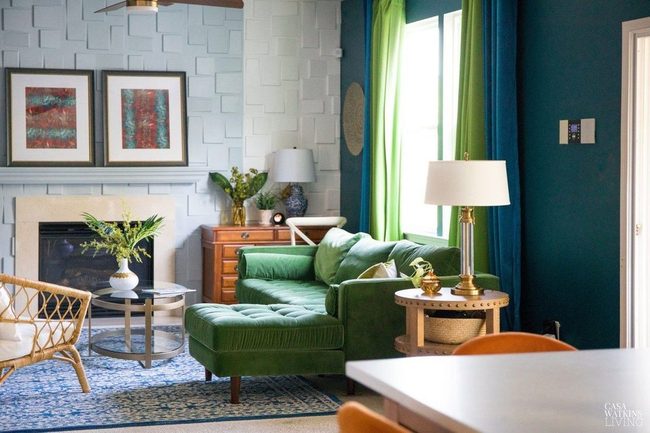
If you're going to spend hours relaxing in your living room, the sofa deserves to be something you actually love looking at and sitting on.
Stephanie Watkins from Casa Watkins Living picked a bold green velvet sectional as her room's anchor piece, and it absolutely commands attention.
You might want to think about high-performance fabrics if kids, pets, or regular visitors will be using your space often.
These durable materials stand up well to spills and wear while still looking great.
Choosing a statement sofa sets the tone for everything else you add to the room.
It becomes the starting point for your color scheme and style direction.
When you pick something with personality and strength, the rest of your decorating falls into place more naturally.
Your living room becomes a space where both comfort and style get equal attention.
Layered Neutrals Calm Living
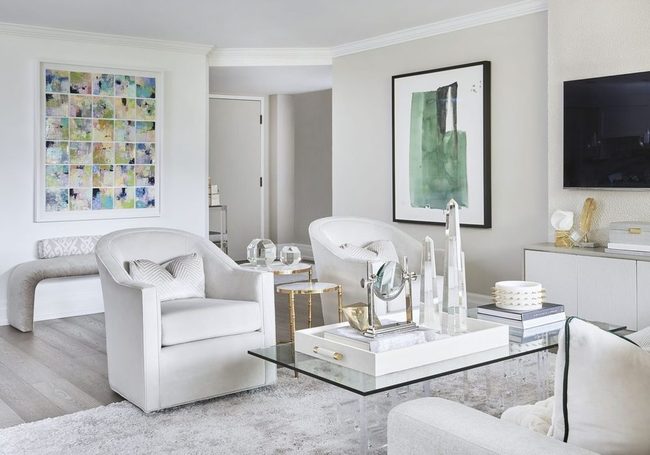
Even though this living room appears mostly white at first glance, there's actually much more happening beneath the surface.
Jennifer Backstein of Jennifer Backstein Interiors deliberately mixed warm and cool tones throughout the space to achieve genuine comfort and balance.
She explains that pairing warm and cool neutrals with pale pastel tones produces a clean, calm, and cozy environment.
You can see how the temperature shifts in the color palette work together without feeling jarring or disconnected.
Layering these different tones prevents the all-white approach from feeling sterile or cold.
When you step back and look at the room as a whole, the combination feels both peaceful and lived-in.
This approach shows that neutral doesn't have to mean boring or flat.
Black Walls Create Intimate Theater
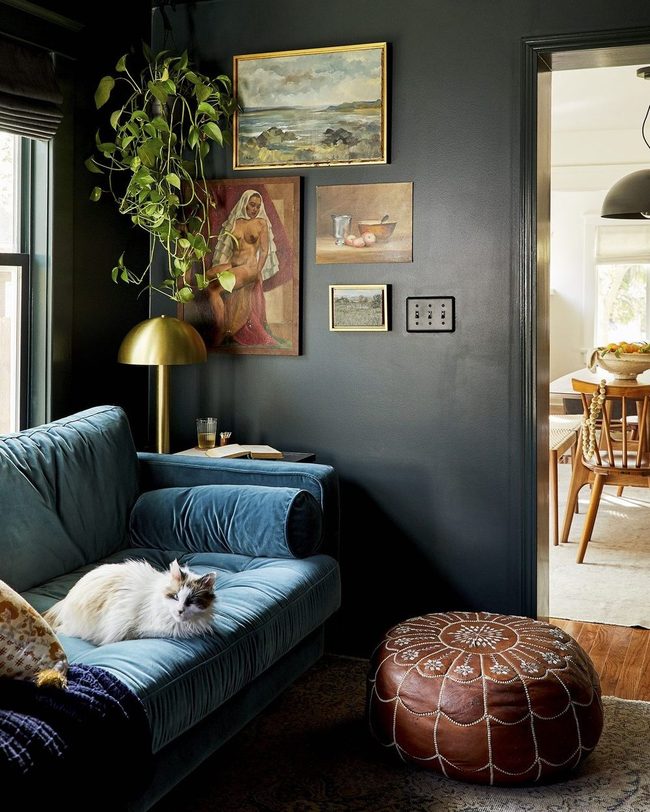
Deep black walls in a compact TV room offer a wonderful alternative to traditional light palettes, and Velinda Hellen's bold choice shows how darker hues can wrap a space in warmth and comfort rather than making it feel cramped.
By painting everything-including the trim-in this moody black tone, she eliminated visual boundaries and created a cocoon-like environment that feels perfect for relaxing and watching movies.
You might assume that dark colors shrink rooms, but when applied thoughtfully to every surface, they actually draw your focus inward and make the space feel like your own private retreat.
Nothing competes for attention when walls and woodwork blend into one unified dark backdrop.
Settling into this room feels natural because the darkness creates an intimate atmosphere where you can fully unwind.
If you're working with a smaller room and want it to feel more personal than expansive, going dark is a strategy worth considering.
It transforms an ordinary space into a den-like sanctuary that wraps around you the moment you step inside.
Layered Rugs Define Space
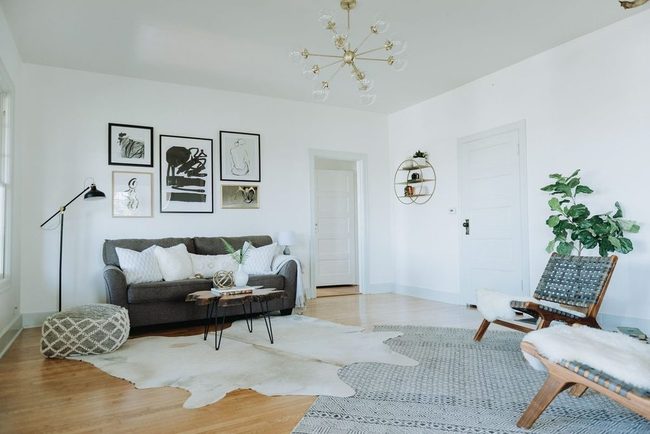
Over on the other side of the room, Arbor & Co.'s design team took a stripped-down approach to let the fireplace be the star of the show, and this restraint paid off beautifully when paired with layered rugs that demand attention.
Stacking rugs on top of each other creates visual interest without cluttering the space, and the overlapping technique works especially well in rooms with unusual floor plans.
Sarah handled the tricky layout by strategically layering these rugs to define the seating area and add warmth underfoot.
Beyond the rugs, she balanced the minimalist approach by hanging a collection of modern artwork above the sofa.
This art cluster brings in fresh energy and personality to the room.
You can apply this same strategy in your own home by choosing rugs in complementary colors or textures and letting them overlap in ways that feel natural to your space.
Simple doesn't have to feel empty or plain when you use layering to add depth and character.
Wrought Iron Candle Chandelier Statement
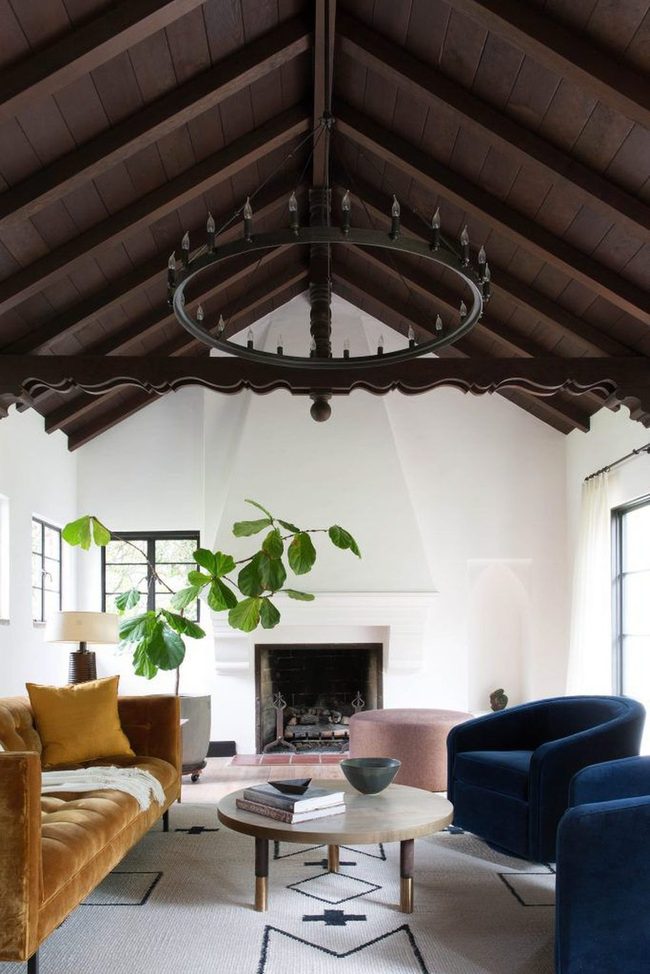
Candle chandelier makes a stunning statement piece for any Spanish-style living room, and the way it hangs from your ceiling immediately draws attention while casting dancing shadows across your walls.
If you have exposed wooden beams in your space, matching the chandelier's finish to those beams creates a unified look that feels natural and connected throughout the room.
Beyond its visual appeal, this fixture serves the practical purpose of brightening your space with a warm glow that feels authentically period-appropriate and comfortable You can position it as a centerpiece above your seating area, and it becomes both functional lighting and a beautiful focal element that guests notice immediately.
Hanging a candle chandelier at the right height matters too-keep it high enough that it doesn't obstruct sightlines but low enough that its presence commands respect in the room.
When evening falls and you light those candles, the entire atmosphere shifts into something warm and inviting that no modern light fixture can quite match.
Leather Chair Reading Nook
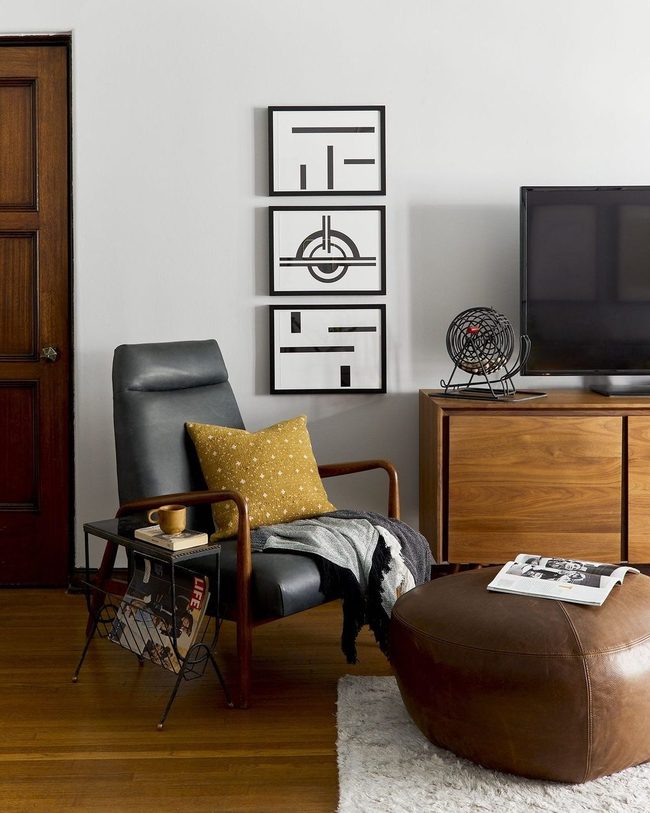
Even without a window to settle into, you can build a wonderful reading space with just a few pieces.
Start by choosing a comfortable leather chair as your base and pair it with a magazine rack that serves double duty as a side table.
Layer in a soft throw blanket across the seat and add an accent pillow for extra cushioning and warmth.
These simple elements work together to give you everything you need for hours of peaceful reading and relaxation.
Oversized Pillows, Family Gatherings
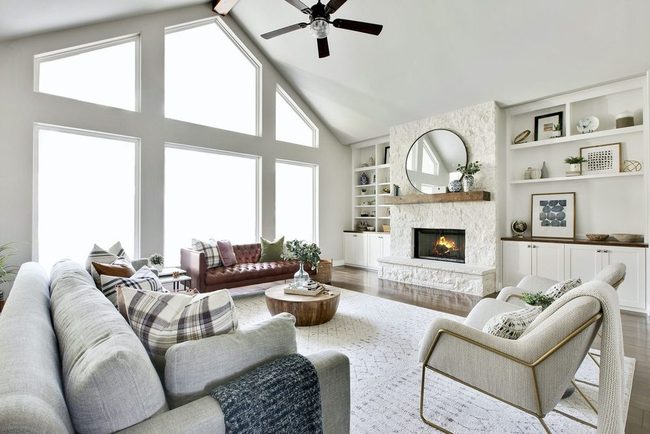
When you're looking to skip the formal route, a casual living room can feel so much better for everyday life, and piling on soft textures, oversized pillows, and cozy throws does wonders for that relaxed atmosphere.
Designer Ruqiya Imtiaz of Studio RIU shares how she developed a laid-back yet refined space for a family of seven, positioning it as the home's central gathering hub where everyone naturally comes together.
She focused on making the room comfortable and unpretentious, a place where the family could lounge around without worrying about keeping things pristine, and personal touches scattered throughout help make it feel authentically theirs.
Building in those comfortable elements means you get a space that welcomes people in and lets them truly unwind.
Soft furnishings and warm textiles set a friendly tone that says relaxation is welcome here.
Family moments and memories happen naturally in rooms like this, where comfort wins out over anything too polished or stiff.
Mixing in personal items alongside those plush elements keeps the space from feeling cold or staged.
Marble And Brick Balance
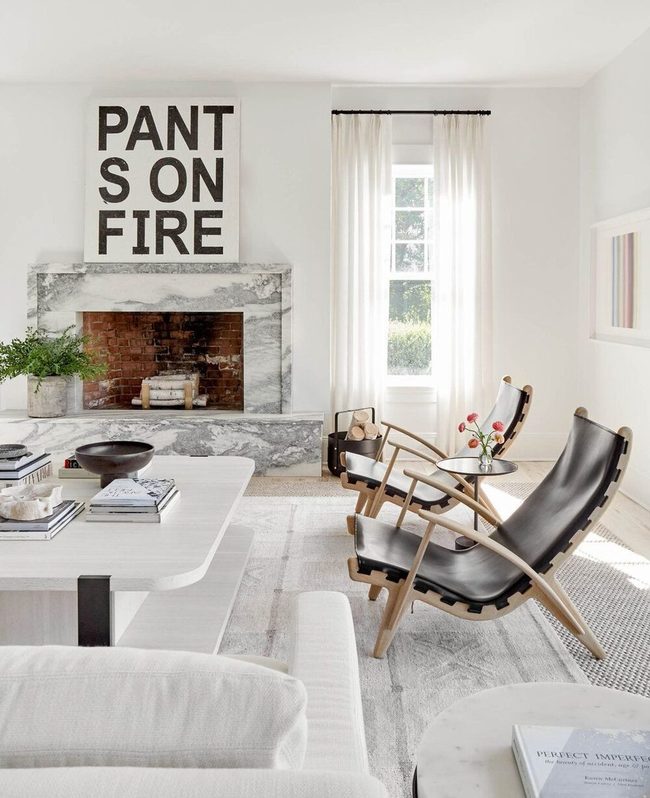
Your living room can benefit from combining different materials like marble and brick around a fireplace, since the rough texture of brick balances out the shine of marble and keeps the whole space from feeling too fancy or cold.
Two materials that seem like opposites actually work well together because they help each other out and prevent the room from looking overdone.
Mixing materials this way makes a space feel more down-to-earth and welcoming, which is something we all want in our homes.
You don't need everything to match perfectly or follow one style to make a room look good.
Instead, blending things like sleek surfaces with weathered textures gives your living room personality and depth.
When you put together different finishes and materials, the room becomes easier to live in and enjoy.
Both the fancy and rustic elements balance each other out, so nothing overpowers the space.
People often think they need to stick to one design theme, but the truth is that mixing what you have creates rooms that feel real and lived-in.
Practical Style For Real Living
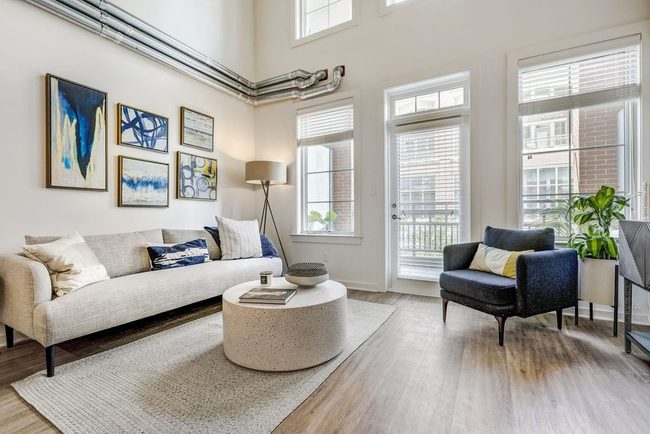
When you're decorating with young kids or pets at home, high-performance fabrics keep your space looking fresh without constant worry about spills and stains.
If hosting people matters to you, adding a bar cart or extra seating into your layout makes entertaining easier and more enjoyable.
One studio recently worked with a young professional who wanted to refresh their loft apartment living room with something fun and modern.
You'll find that understanding your own habits and how you actually use your space makes all the difference in what works best for you.
Whether you live alone, share your home with family, or throw regular gatherings, your decorating choices should match your real life.
We've seen that the best rooms reflect what their owners do daily, not what looks good in magazines.
Getting honest about your lifestyle from the start saves time and money on pieces you won't actually use.
Natural Light Transforms Dark Rooms
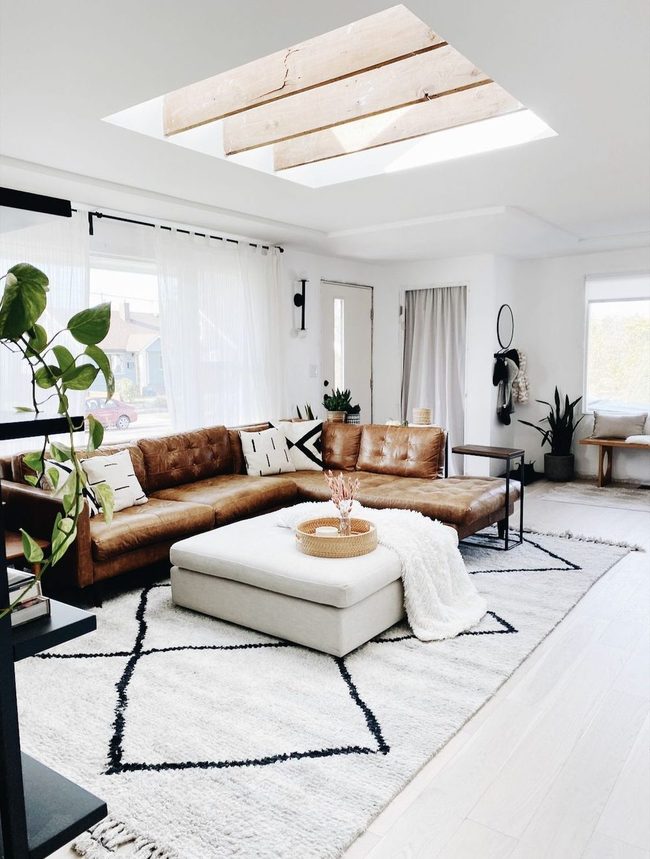
Skylights flood your space with natural sunlight and instantly make rooms feel bigger and brighter than before.
When the team at Arbor & Co. was planning their design, they made adding a large skylight their top choice because they understood how much light that room needed.
That one change opened up the whole space and brought in the warmth and glow that had been missing.
If you don't have natural light coming through your windows like you want, there are plenty of ways to bring brightness into your home.
You can install new windows, add mirrors to bounce light around, or use light fixtures that fill dark corners.
Moving furniture away from windows helps too and lets sunlight spread through your rooms more freely.
Sometimes we overlook how much difference good lighting makes until we actually fix it, and then we wonder why we waited so long.
Blush Pink Meets Bold Black
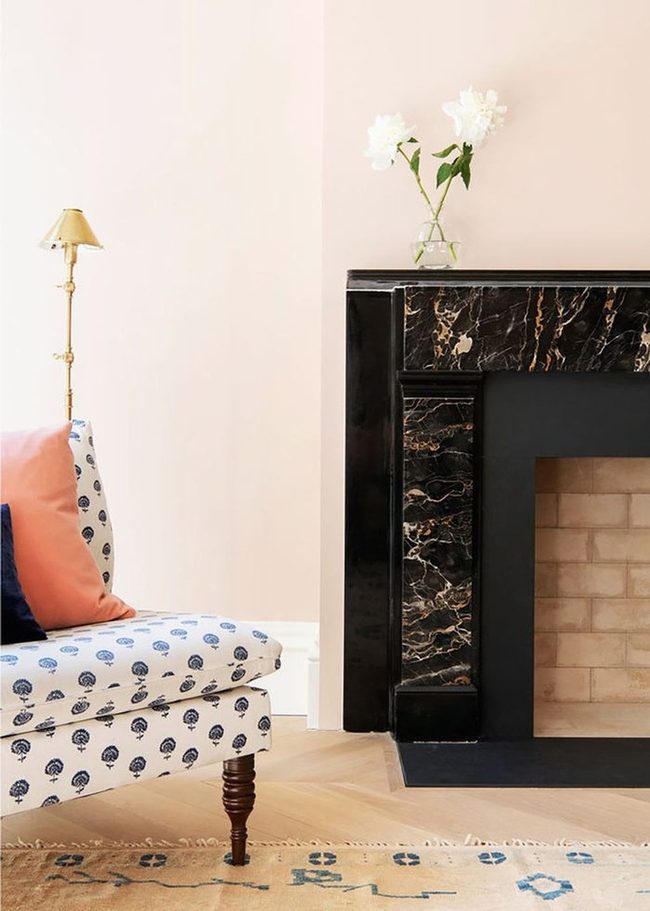
Pale blush pink paired with bold black creates a sophisticated look that appeals to adults who love the color without sacrificing style.
You can see how the contrast between these two tones immediately elevates the entire space and makes it feel more refined.
Layering in patterns through your rug and chair prevents the room from feeling too plain or one-note Mix in different textures alongside those patterned pieces and the palette stays interesting throughout.
By balancing the softness of blush with the strength of black, your room gains depth and personality.
The result is a space that feels both relaxed and polished at the same time.
Circular Mirror Brightens Fireplace
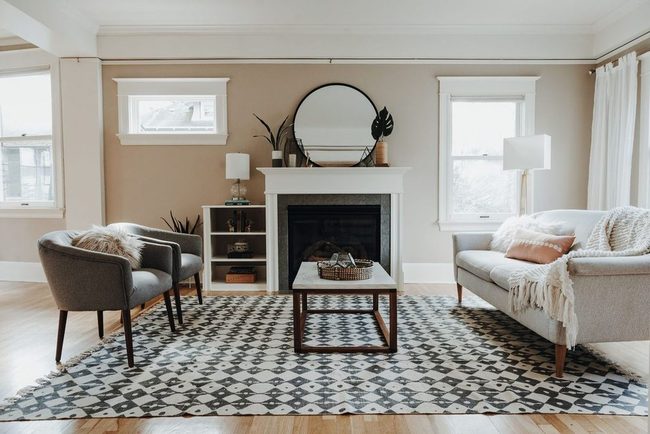
Large mirrors with their reflective surfaces instantly brighten any space and open up a room visually, which is why they're such a go-to choice for anyone looking to enhance their home.
Positioning a big circular mirror above your fireplace gives that area real presence and draws attention exactly where you want it.
You can experiment with different locations throughout your living room to see where the mirror's reflection does the most good.
Beyond just bouncing light around, mirrors also help trick the eye into perceiving more square footage than what's actually there.
Consider leaning a substantial mirror against a wall for a more relaxed vibe, or hanging one at an angle to capture interesting reflections from different parts of your room.
I've noticed that mirrors work particularly well when they're placed opposite windows, since they bounce natural light deeper into the space.
Whether you go with something round, rectangular, or uniquely shaped, adding a mirror is one of the easiest ways to transform how your room feels and functions on a daily basis.
Rattan Bowls Meet Living Greenery
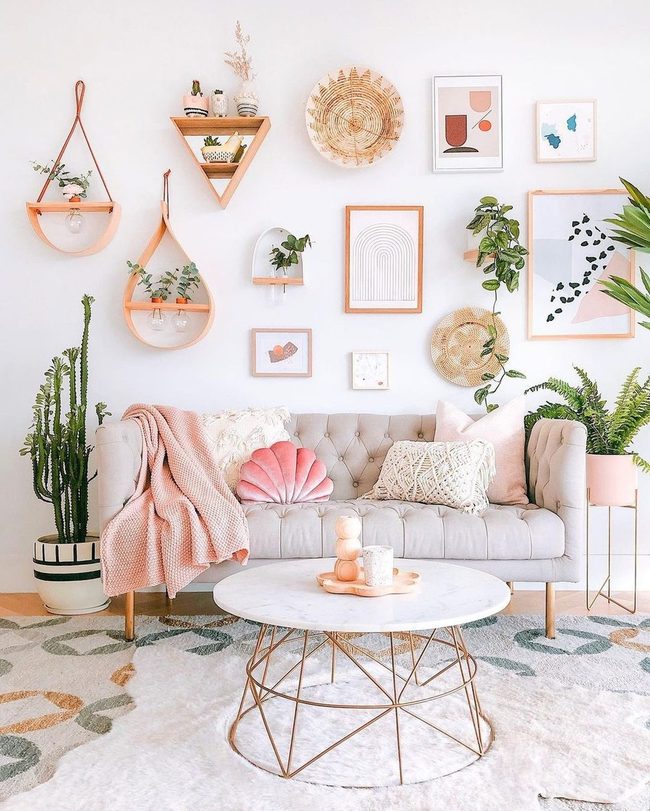
Mix pictures with unexpected items like woven bowls and live plants to build a gallery wall that stands out from the crowd.
In this pastel living room, the owner combined framed art with rattan pieces and greenery on one wall and made something truly distinctive.
Plants bring height and dimension to the display while the woven bowls add texture and warmth.
You can layer different materials and sizes to avoid a flat or boring look.
Plants also benefit from being near a wall, so this setup serves both beauty and plant care.
The mix of natural and artistic elements tells a story about your style and interests.
When you blend various objects together like this, you give your space personality and character that makes people notice it right away.
Cream To Taupe Layering
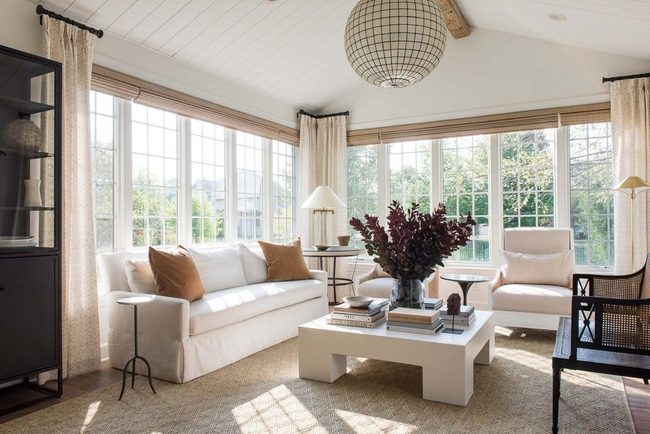
When you're drawn to a single color family but hesitate to stick with just one shade, tone-on-tone decorating offers a perfect middle ground.
Mixing different depths of the same hue-like cream paired with taupe-brings visual interest without overwhelming a space.
We can see this approach shine in rooms layered with multiple neutrals that shift from light to dark across walls, furniture, and accessories.
Each surface catches light differently depending on its depth, and this natural variation keeps your eye moving around the room.
You don't need bold contrasts or busy patterns to make a space feel alive.
A room built on these soft gradations of a single color family feels calm and restful while still maintaining personality.
This strategy works especially well in living rooms where you want comfort and relaxation.
By playing with lighter and darker tones throughout the space, you sidestep the flatness of a one-note room without the commitment of introducing entirely new colors.
Jewel Tones Patterned Maximalist Living
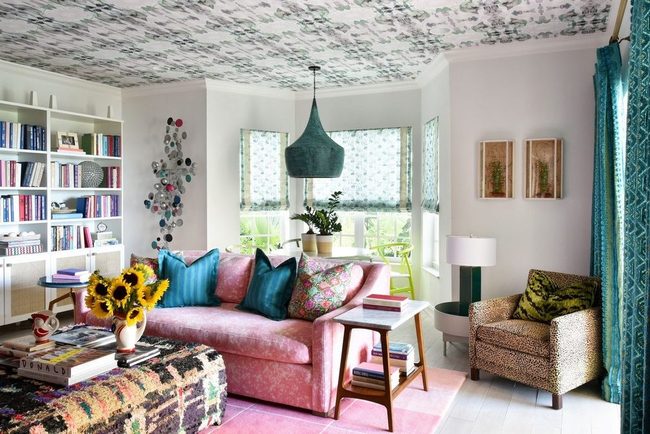
Bold patterns cover every surface in this living room, from the walls and furniture to the rugs and accessories, making the space impossible to ignore and setting the tone for maximum self-expression.
Multiple colors blend together throughout the room-think jewel tones, warm oranges, and rich earth tones-and they dance across fabrics, art pieces, and decorative objects in ways that feel both chaotic and harmonious.
Textures layer on top of each other, with plush upholstery sitting next to woven baskets and smooth ceramic pieces, so your hands and eyes have plenty to explore.
Designers Dekay & Tate chose this approach because their clients wanted a space that showed off their personality in a fun and fearless way.
Mid-century groovy vibes run through the whole room, with curved furniture shapes and retro color combinations that nod to that era.
We can see how this "more is more" mentality gives the room its own unique energy and charm.
You'll feel the confidence in every choice made here, and that's what makes maximalist design like this so appealing.
It's a room that celebrates boldness and refuses to play it safe.
Neutral Rug Divides Open Concept
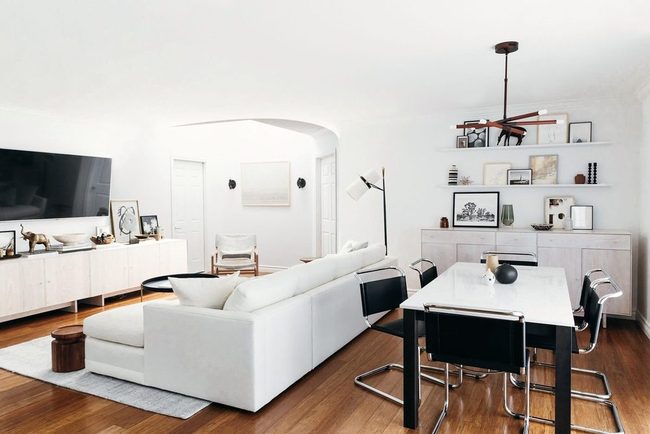
When your living room and dining area share the same space, you need smart ways to keep them feeling separate, and a rug is one of the easiest solutions.
Anne Sage added a rug to her living area to mark where that zone begins and ends, which is something you can do in your own home too.
On the dining side, a buffet serves as a solid anchor point that grounds the space and makes it feel purposeful Open concept layouts don't have to feel chaotic or blended together.
These simple elements help you maintain distinct spaces without walls or dividers.
You can adjust the size of your rug and the placement of furniture to match your own layout.
By thinking about how you use each area, you'll naturally figure out the right way to organize your combined space.
Layered Patterns Small To Large
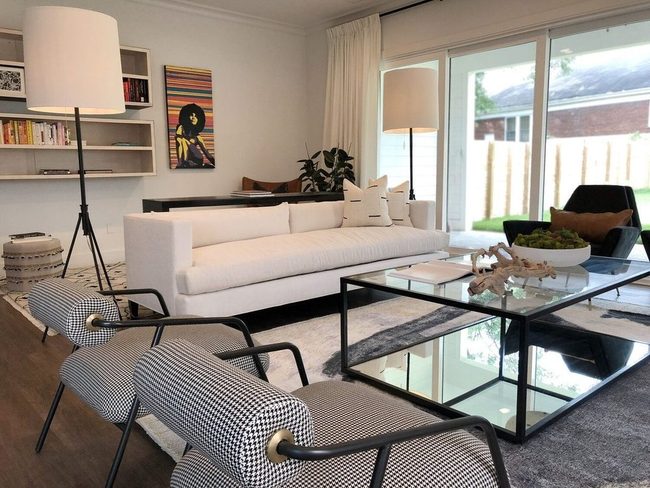
When you're mixing patterns in a room, pairing different scales works really well-consider how Forbes Masters combined tiny herringbone designs with a flowing watercolor rug and a bold mudcloth print on pillows, and all three designs played off each other beautifully.
Large patterns next to small ones create visual interest without feeling chaotic.
You can use an organic watercolor print as your rug base and layer it with geometric herringbone details and chunky mudcloth patterns on your seating.
Different pattern sizes actually help each style shine instead of competing for attention.
We find that starting with one statement pattern and adding smaller prints around it gives you a clear direction.
Mix a detailed rug with simpler pillow patterns, or balance geometric shapes with flowing designs.
The key is letting each pattern have its own size and personality so they complement rather than overwhelm the space.
Open Space Calm Family Living
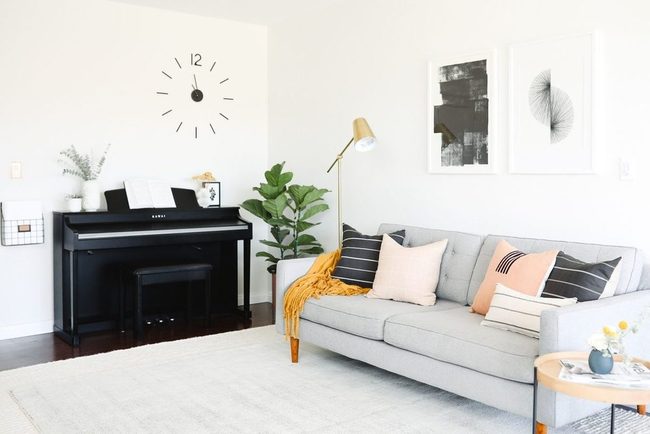
Keeping your space free of clutter makes an immediate difference in how a room feels, and sometimes the simplest approach works best.
When you remove items that don't bring you happiness, what remains gets the attention it deserves.
Cathie Hong of Cathie Hong Interiors explains how she helped a client with four young children achieve exactly this kind of environment.
Her client wanted a space where the family could gather without feeling overwhelmed by too much stuff around them.
Clean lines and open areas define the room, making it both practical and pleasant for daily life.
By letting go of unnecessary items, you open up the space and let natural light shine through When your home holds only what truly matters to you, everything in it stands out more and serves a real purpose in your daily routine.
Cream Walls, Statement Chair Star
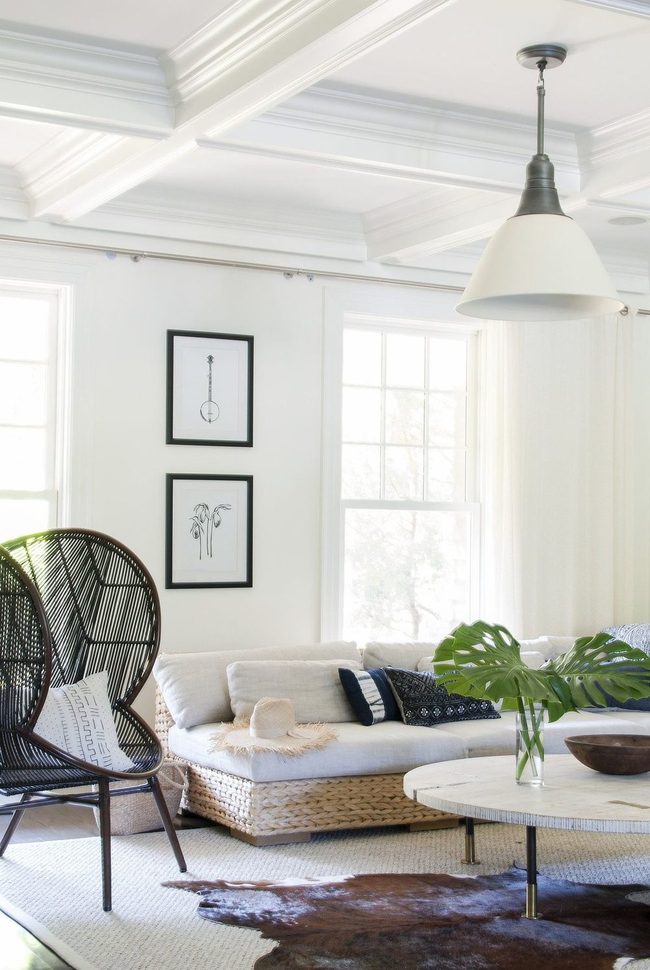
Even in a neutral living room, one bold chair can completely shift the energy of your space, and this example proves it well.
You get height, texture, and bohemian charm all from a single piece of furniture.
Pairing it with a patterned pillow makes the seating area feel even warmer and more lived-in If you want to add personality to a calm room, this method gives you a simple way forward.
Such a chair doesn't just sit there-it becomes something people notice and remember about your home.
We often think we need to change everything, but sometimes one standout piece does most of the heavy lifting for you.
Natural Wood Warmth Throughout
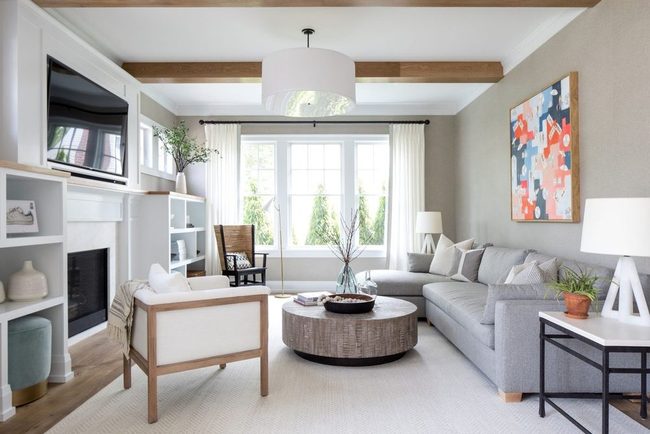
While you're designing your living room, keep comfort at the heart of everything, even if you're drawn to a more formal style.
Christina Kim of Christina Kim Interior Design shares how she prioritizes this balance in her own work, saying she focuses on making spaces feel both welcoming and livable rather than stiff or untouchable.
She often uses natural wood elements throughout a room-smooth ceiling beams, chair frames, mantel tops, and art frames all in matching tones-and this approach spreads warmth and a sense of belonging from one corner to another.
Wood's natural texture makes a space feel less intimidating and more like a home where real people relax and spend their days.
You don't need to sacrifice style to achieve this feeling, and in fact, mixing formal elements with touches of everyday comfort often works better than choosing one extreme or the other.
When you repeat materials and tones across different pieces in the room, everything feels connected and intentional without requiring a lot of fussy decoration.
The goal is a living room that looks polished but still feels like somewhere you'd actually want to sit down with a book or chat with someone you care about.
Matching Fireplace Built-Ins Gray
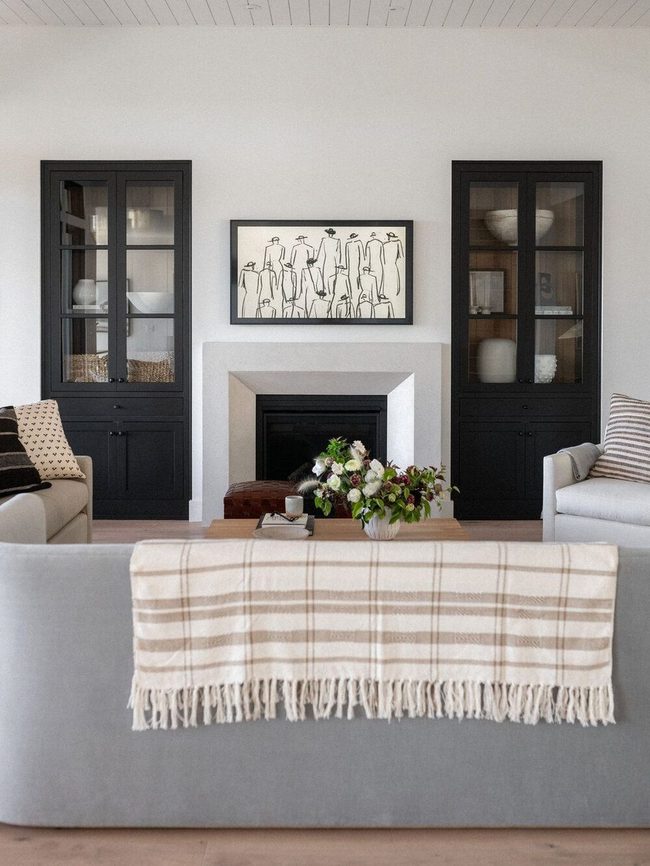
Matching built-ins on both sides of a fireplace make one of the strongest visual statements you can make in a room, and designer Molly Kidd of Light & Dwell knew this when she designed this space with symmetrical elements throughout.
Two leather ottomans sit directly in front of the fireplace, grounding the arrangement and giving you functional seating that looks balanced and deliberate.
Gray chairs placed on either side mirror each other and reinforce the balanced feel across the whole area.
Symmetry works because our eyes naturally find it pleasing and restful to look at.
When you arrange furniture and decor in matching pairs or mirror-image layouts, the space feels organized and calm.
You don't need to overthink this approach-simple matching pieces on opposite sides of a focal point deliver powerful results.
Even small rooms benefit from this principle, and I've noticed that symmetrical arrangements make spaces feel larger and more put-together than mismatched layouts do.
Bare Floors, Maximum Sophistication
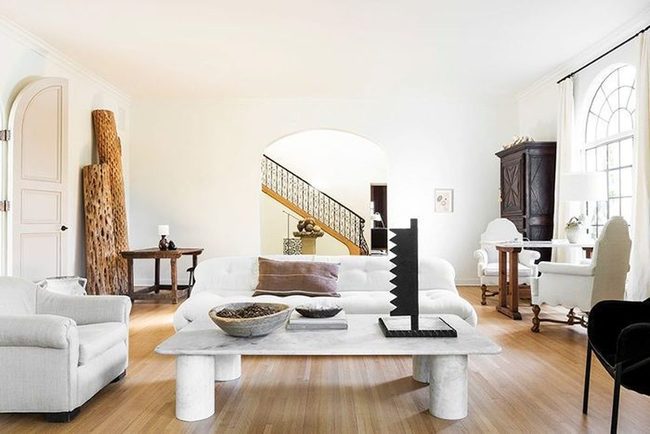
Going without a rug can give your room a more polished and streamlined appearance, and your plush sofa still keeps things comfortable without one.
Skipping the rug altogether means you get that clean, sophisticated look while maintaining plenty of comfort in your seating.
You'll also sidestep the hassle of dealing with carpet stains that seem inevitable over time.
Many people worry that removing a rug makes a space feel cold, but quality furnishings like a well-chosen sofa do the heavy lifting for warmth and comfort.
If you want a refined aesthetic in your living area, leaving the floor bare under your furniture is worth trying.
It's one of those small decisions that can shift how polished your entire room feels.
Blue Cabinet Tones Flow Through
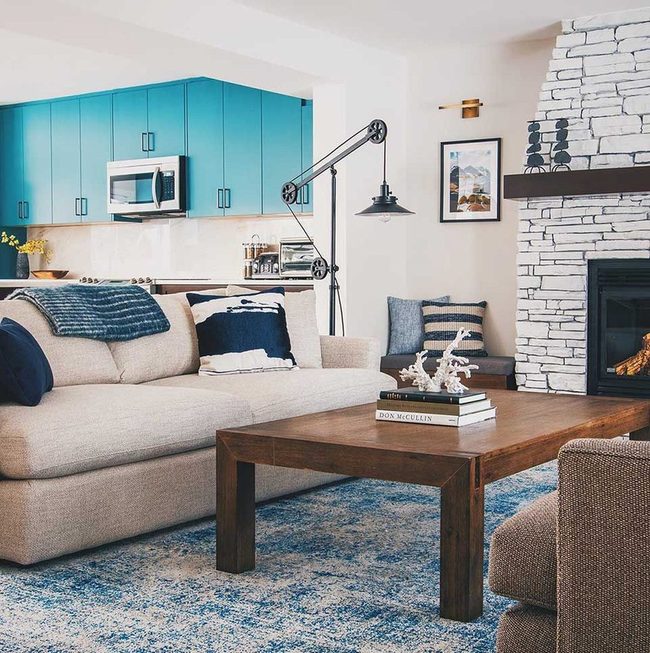
When you have an open floor plan, picking up colors from neighboring rooms like the kitchen makes everything feel connected and deliberate-notice how the blue from the cabinet doors repeats in the pillows and rug of this living room, and that repetition is what ties the spaces together without any walls to do the work.
You can pull accent colors from appliances, cabinet hardware, or even backsplash tiles and weave those same tones into your furniture and textiles.
This approach stops each room from feeling like an isolated box and instead creates one flowing space that feels planned from room to room.
Natural sightlines connect everything together when similar hues show up in multiple spots.
It's a simple way to make your home feel more intentional, and honestly, it's one of the easiest tricks we use when decorating open concepts.
Pay attention to what's already there in the next room-a cabinet color, a countertop shade, or even wall paint-and let that guide your choices for rugs, cushions, and wall accessories.
You don't need matching furniture or formal coordination; just echo the same color family in different ways throughout your connected spaces.
Herringbone Fireplace Color Pop
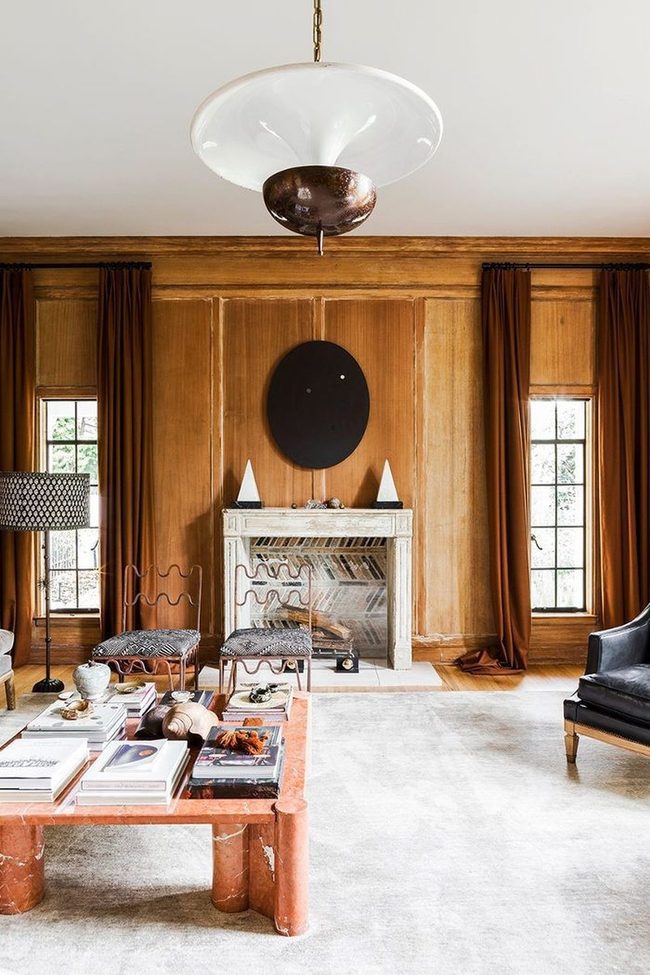
Your fireplace can become a standout feature when you add herringbone patterns and splashes of color inside it, which really stands out against an otherwise neutral room.
Pattern has this special quality-even when it's restrained, it shifts how a space feels and looks.
If your living room leans toward one color or lacks visual interest, the interior of your fireplace is a perfect spot to introduce something different.
You don't need much; a small amount of pattern goes a long way.
Interior tiles, paint, or brick arrangements can all give your fireplace personality and draw attention upward.
Since the fireplace often anchors a room anyway, making it visually engaging is smart design.
This approach lets you experiment with pattern without overwhelming the space.
When done right, this simple change refreshes your whole room.
Stone Fireplace Commands Entire Room
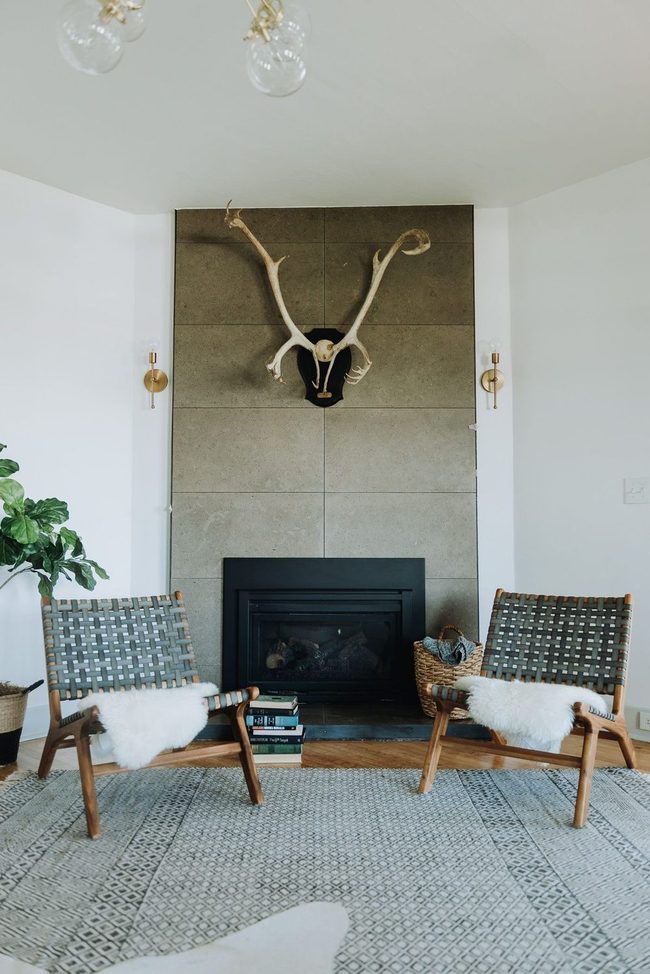
When you walk into a room with a massive fireplace as its centerpiece, let that stunning architectural feature be the star of the show and build everything else around it.
Placing a bold pendant light overhead naturally guides attention upward and amplifies the grandeur of what's already there.
Two woven chairs positioned on either side of the fireplace balance the space and echo the texture of that overhead statement piece.
Sometimes the most striking rooms work best when you skip the extra touches like a mantel and keep the focus simple and direct.
By choosing furniture and lighting that complement rather than compete with your best feature, you give it room to breathe and shine.
Sarah from Arbor & Co When you take time to identify what you genuinely love about a room, whether it's an architectural element or a view, you can design around it in a way that feels honest and strong.
Large-Scale White Living Comfort
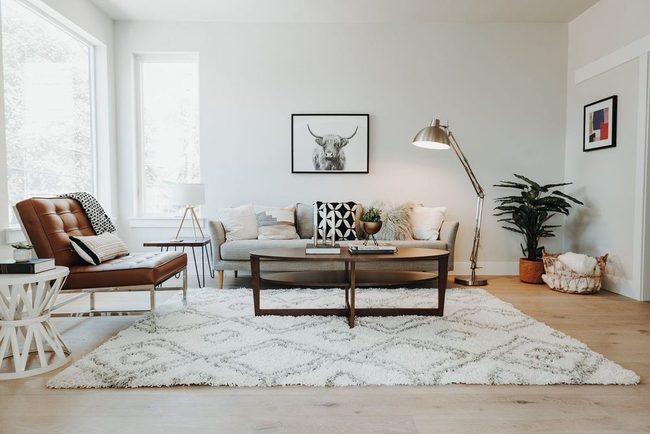
When you walk into a spacious living room, the scale of what you put in it makes all the difference, and what fits perfectly in one home might feel wrong in another spot.
Wide rooms like this one really shine when you fill them with larger furniture pieces and oversized accent chairs that match the generous proportions.
Sarah from Arbor & Co. points out how much she loves the brightness and openness of this particular space.
Since an all-white room can feel a bit plain without some variety, the goal was to bring in texture through substantial furniture selections and a large, comfortable rug.
Bigger pieces prevent the room from feeling empty or sparse, and they help ground the space so it doesn't echo.
When you match your furniture scale to your room's dimensions, everything feels right and well-suited to the space you're working with.
Deep Green Ceiling Lifts Neutral Palette
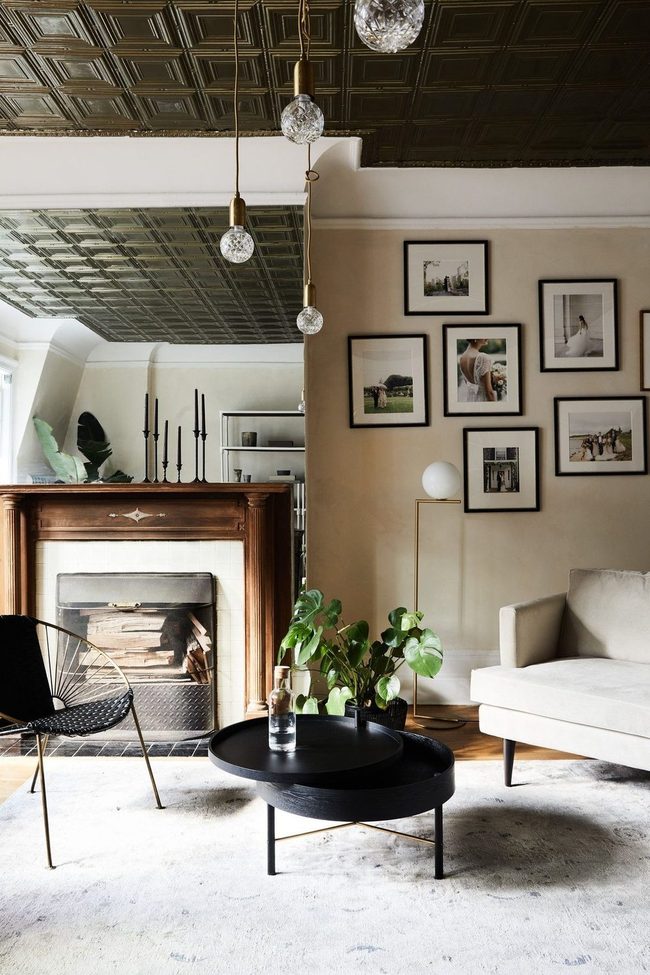
Neutral colors stay relevant forever, but keeping them from feeling boring takes some strategy One standout element in this space that we love is the deep green ceiling tile-it shows how you can take a simple color palette and add unexpected dimension by introducing a richer shade where you might not expect it.
When you focus on varying shapes and forms across your seating and storage pieces, the room gains personality even though the base colors remain understated.
Going with neutrals doesn't mean everything has to look plain or flat.
You can layer in texture, play with different silhouettes, and surprise people with an unexpected color choice in an architectural feature.
This approach keeps things fresh and interesting without overwhelming the space.
Layered Textures Meet Coastal Calm
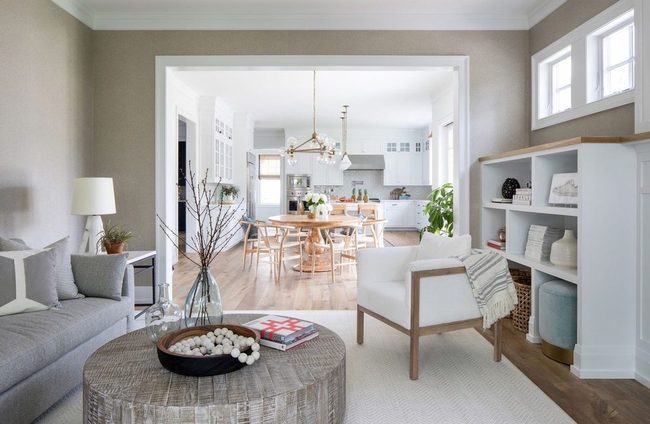
Your living room gains instant depth when you layer different textures together, and this coastal home shows just how powerful that approach can be.
White and taupe tones form the foundation, creating an airy feel throughout the space, while soft blue velvet brings in a luxurious touch that feels both natural and refined.
Christina Kim, the designer behind this transformation, combined chalky neutrals with varied textures to achieve a relaxed atmosphere that doesn't sacrifice polish.
Adding textiles, woven elements, and mixed finishes prevents the room from feeling flat or boring.
You'll notice the space feels more interesting when materials play off each other rather than matching perfectly.
Mixing soft fabrics with harder surfaces keeps the environment from becoming too uniform.
This approach works well for any home style, whether you're going for coastal vibes or something else entirely.
We recommend experimenting with what you already have at home before buying new pieces.
Deep Green Sectional Impact
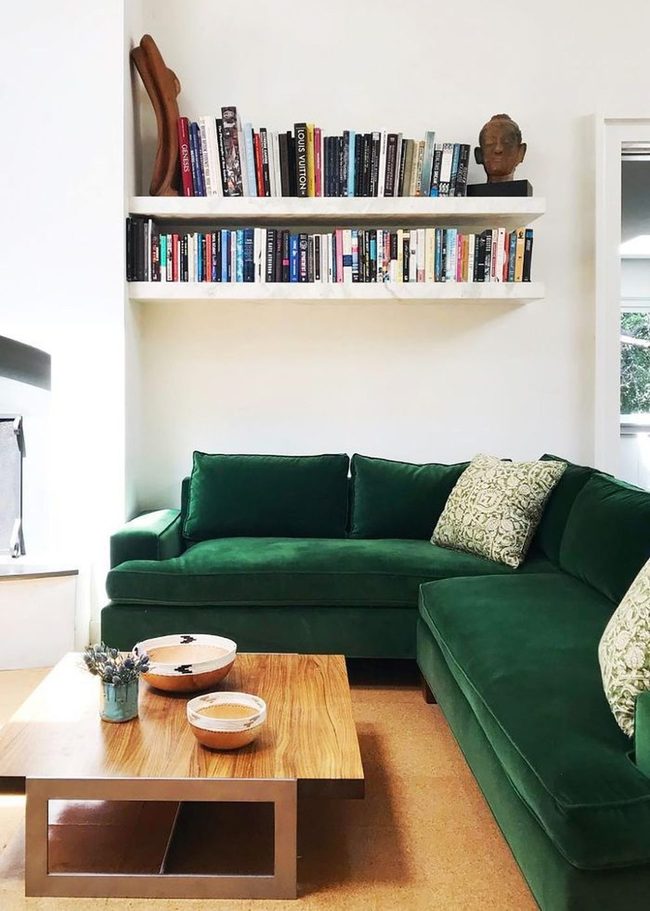
Statement sofa can completely transform a bland room without requiring fresh paint or expensive artwork.
If your living space feels flat and colorless, consider selecting a bold sectional in a rich shade like deep green to serve as your room's anchor point.
You'll be surprised how much personality a large upholstered piece can bring to neutral walls and basic furnishings.
This kind of furniture choice works especially well when you want maximum impact without major renovation.
Placing a striking sectional in your space immediately draws attention and sets the tone for everything else around it.
We recommend starting with your sofa selection when you're redesigning because it becomes the foundation for all other decorating decisions.
One standout piece like this gives you freedom to keep the rest of your room simple and grounded.
Your living area becomes instantly more interesting and put-together just by making this one bold furniture choice.
Faded Red, Bright Blue, White
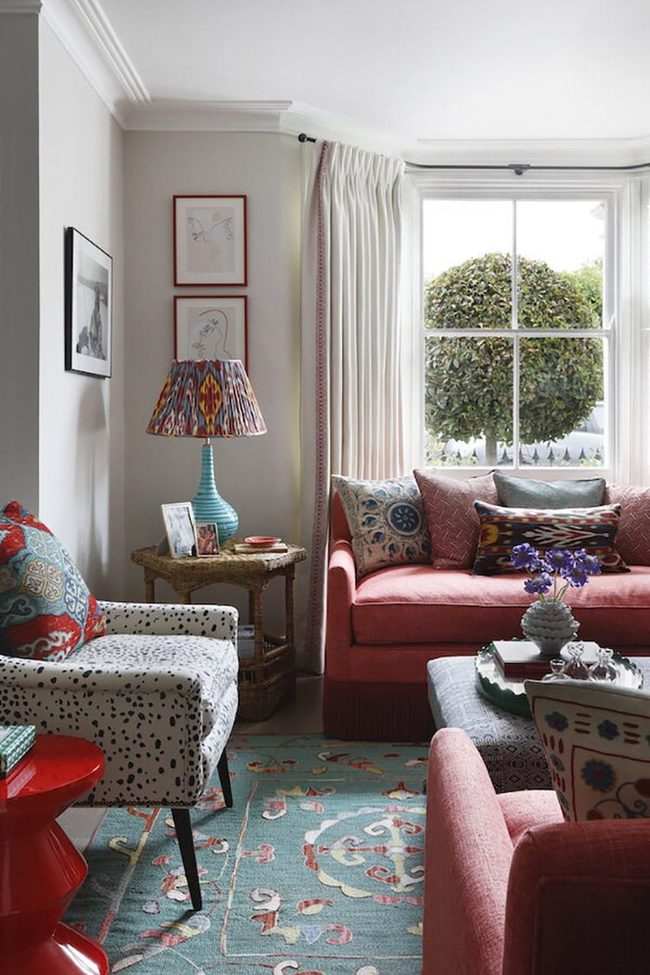
If you want your living room to feel put-together and harmonious, committing to a specific color palette is one of the best decisions you can make.
Studio Peake demonstrated this beautifully by selecting a combination of faded red, bright blue, and white for a cozy, traditional space.
Bold hues like these don't have to feel overwhelming-they simply need a plan behind them.
You can use one color as your main backdrop and let the others appear through furniture, artwork, and accessories.
This approach keeps things balanced and prevents your room from feeling chaotic or mismatched.
We've seen how much difference a thoughtful color selection makes in bringing spaces to life.
Starting with colors you love and building everything else around them removes much of the guesswork from decorating and helps you stay confident in your choices throughout the process.
Dark Walls, Living Wood, Cascading Green
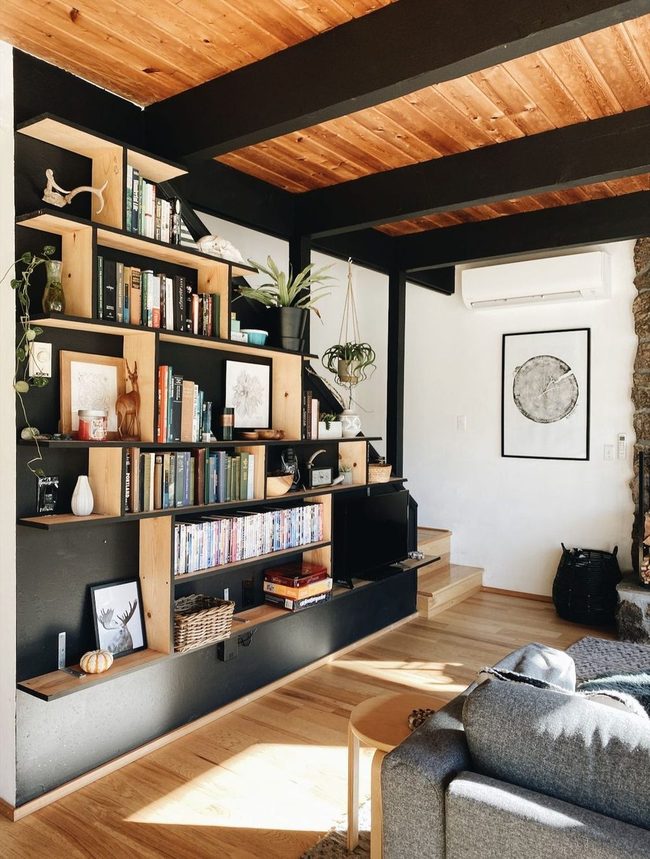
Dark walls paired with wood elements and hanging greenery come together to form a genuinely cozy retreat, and designers at Arbor & Co know this formula well.
Sarah shares that their approach for this particular space was to keep things moody and relaxed, which is why they left the natural stone on the fireplace untouched and visible.
Built-in bookshelves line the stairway wall, transforming an awkward architectural feature into something practical and appealing.
Greenery cascades from above, softening the darker tones throughout the room.
Wood accents warm up the space and give it substance without feeling heavy.
Michael Thompson
Senior Content Editor
Expertise
Content Strategy Development, Editorial Team Leadership, Home Décor Trends & Style Curation, Digital Storytelling for Interior Design, Quality Assurance in Publishing
Education
University of Missouri, Columbia
University of Texas at Austin
Michael Thompson is the senior content editor at Decorrio, bringing over 12 years of experience in journalism and home décor writing. With a journalism degree from the University of Missouri and a master’s in English from UT Austin, he blends storytelling with expert design insights.
At Decorrio, Michael curates inspiring content that helps readers transform their spaces with style and ease. He’s passionate about home organization, DIY projects, and quality design ideas that make everyday living more enjoyable.
Outside of work, Michael enjoys exploring Austin’s culture, tackling home improvement projects, and mentoring aspiring writers.