
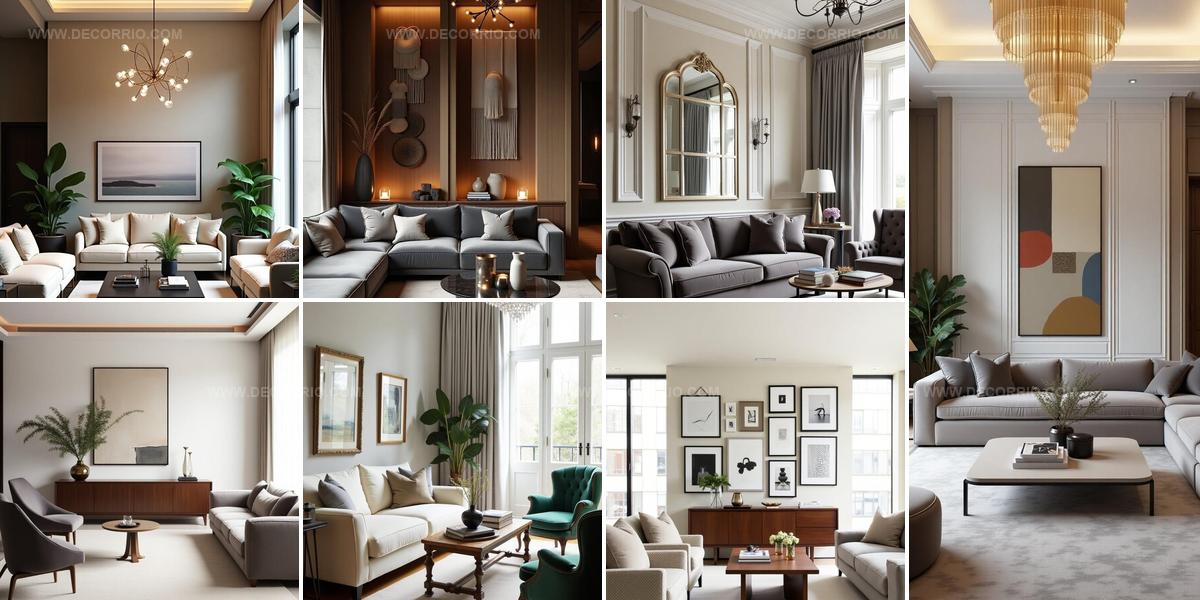
13 Clever Ways to Refresh Your Living Room Decor Ideas

Living room decor can dramatically change how a space feels and functions for everyone who spends time there.
When choosing new ways to refresh such an important area, the options available range from subtle accent updates to bold statement pieces.
What works perfectly in one home may feel completely wrong in another, which is why understanding basic principles matters more than following strict rules.
Color schemes, furniture arrangements, and personal touches all play essential roles in developing a cohesive look.
The beauty lies in finding what resonates with you while maintaining functionality for daily life.
Small adjustments often make surprising differences without requiring major investments or renovations.
White Plaster Wall Trim Accents
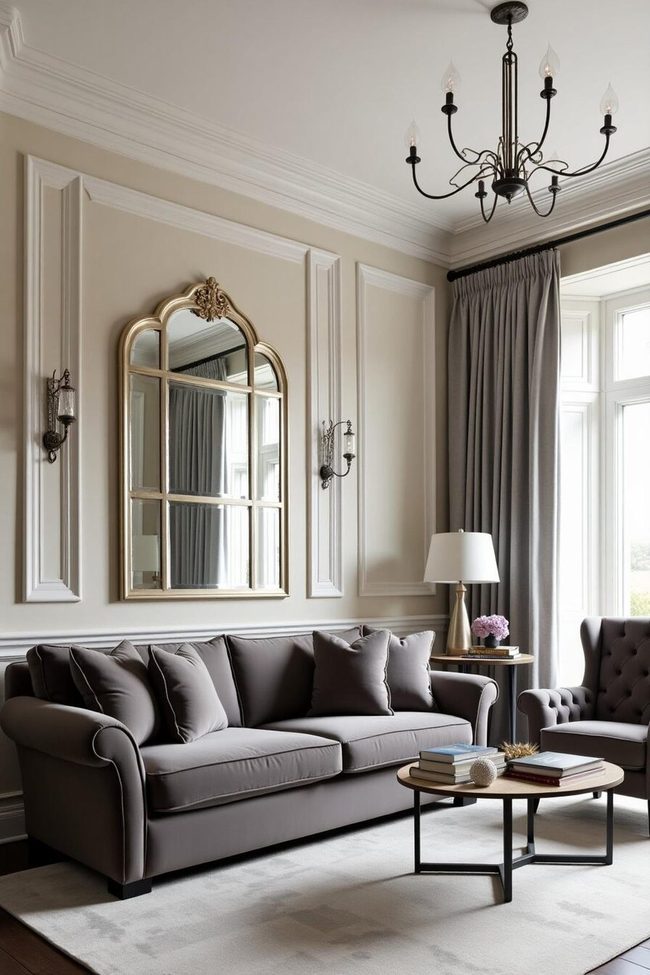
Moldings stand as one of design's most powerful tools for creating sophistication, transforming basic walls and ceilings into surfaces rich with depth and character that speak of refinement and history.
Even modern homes benefit from well-chosen moldings, whether you select simple picture rails or build layered combinations of crown molding, chair rails, and panel accents.
What makes moldings remarkable is how they elevate any space regardless of your furnishing budget, a bare room with quality millwork feels more sophisticated than one crammed with expensive furniture but plain walls.
To get proportions right, follow classical design principles that suggest specific measurements between baseboard height, chair rail placement, and crown scale so everything looks naturally balanced.
If you rent and can't install permanently, removable adhesive moldings or decorative panel systems offer similar effects without structural changes.
Paint plays a huge role in how moldings read, matching wall and molding color creates gentle depth through shadows, while contrasting them produces bold definition.
Beyond traditional crown molding, you can explore coffered ceilings, applied panels, or ceiling medallions that become standout features drawing attention upward.
Moldings historically served real purposes, chair rails prevented furniture marks, picture moldings held artwork without nail holes, and baseboards covered floor-to-wall gaps, so including them blends beauty with function.
Empty Space Defines Luxury Living
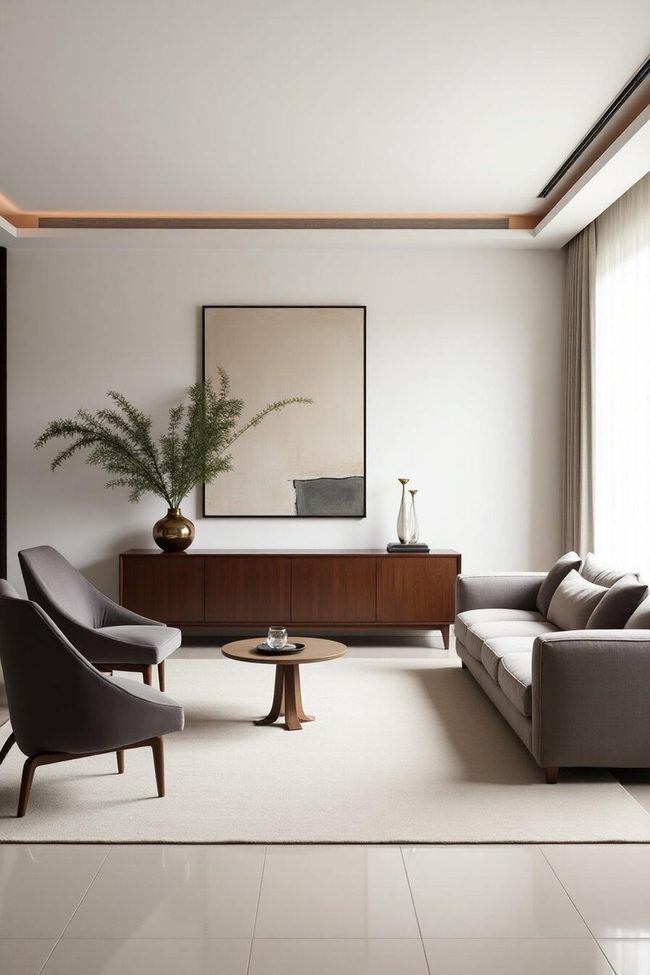
What separates truly refined living rooms from ordinary ones is often what's missing rather than what fills the space, deliberate emptiness that lets your eyes pause and settle.
Removing items from surfaces and corners shifts a room from feeling stuffed to feeling deliberate, and this shift happens faster than you'd expect.
Clear pathways through your space matter both practically and visually; they allow you to move freely and they build that sense of breathing room that reads as luxury.
Japanese design traditions teach us through "ma," the meaningful space between objects, that emptiness itself holds beauty and purpose.
Start by subtracting what you have now, take away a side table, move that plant elsewhere, or remove a few decorative pieces and notice how much more refined things look instantly.
Walls benefit from the same restraint as floors; leaving some bare rather than covering every inch lets the art you do display receive proper attention.
Light needs room to work too; empty areas let sunlight cast shadows that shift throughout the day and become their own design elements.
Furniture scaled to your actual room size with space around it feels abundant even in smaller areas, while oversized pieces crammed together just feel cramped.
From any seat, your sight lines should stay relatively clear so the room reads as spacious no matter what the square footage actually is.
Shelves can be partially empty and one simple surface among busier ones builds visual rhythm and relief.
Layered Objects Shape Visual Movement
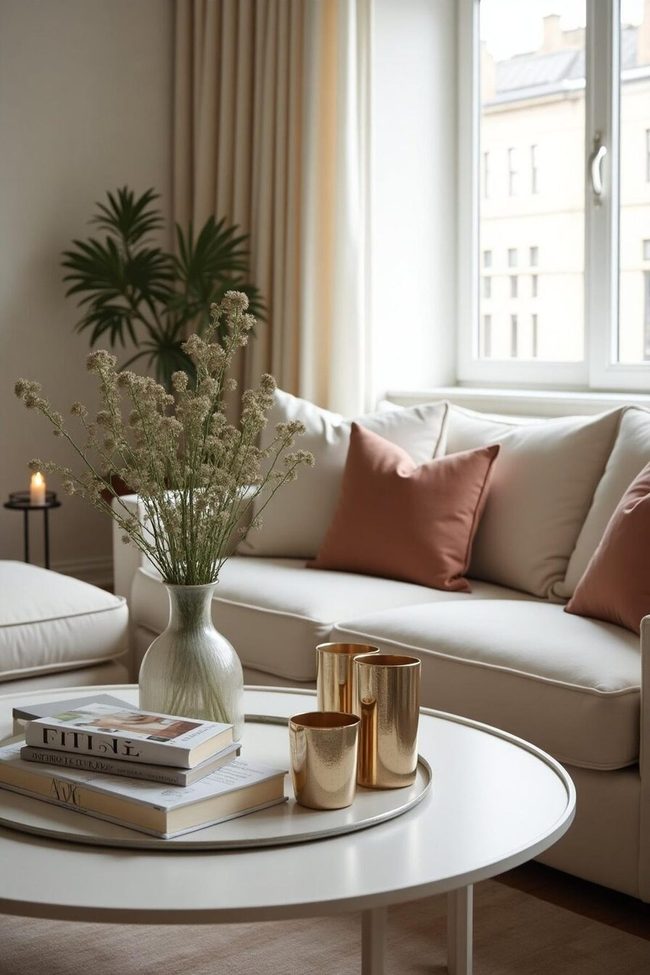
Coffee table sits front and center in your living room, begging for an arrangement that balances looks with practicality.
Stack design books next to a lower decorative box to set up different heights and guide the eye across the surface.
Odd numbers work better than pairs when you're grouping objects together and naturally feel more dynamic.
Mix in things people actually want to touch and use, a book that gets read, a game that gets played, an interesting object worth picking up.
Personal pieces matter most: a souvenir from a trip you loved, something passed down in your family, or a handmade item from someone close to you adds genuine character that store-bought decor simply cannot match.
Leave some empty space on the table so everything doesn't feel crammed or stressful.
Switch out what's on display with the seasons and add natural elements like branches in spring, shells in summer, or pine cones in winter next to your permanent pieces.
Keep cups and coasters in mind when you're styling, make sure nothing wobbles and there's always room for an actual coffee mug.
If your table has a lower shelf, make the two levels look different by using the top for curated items and the bottom for larger books or baskets.
A tray helps organize smaller objects while making everything feel purposefully grouped rather than scattered.
Chandelier Creates Instant Focal Point
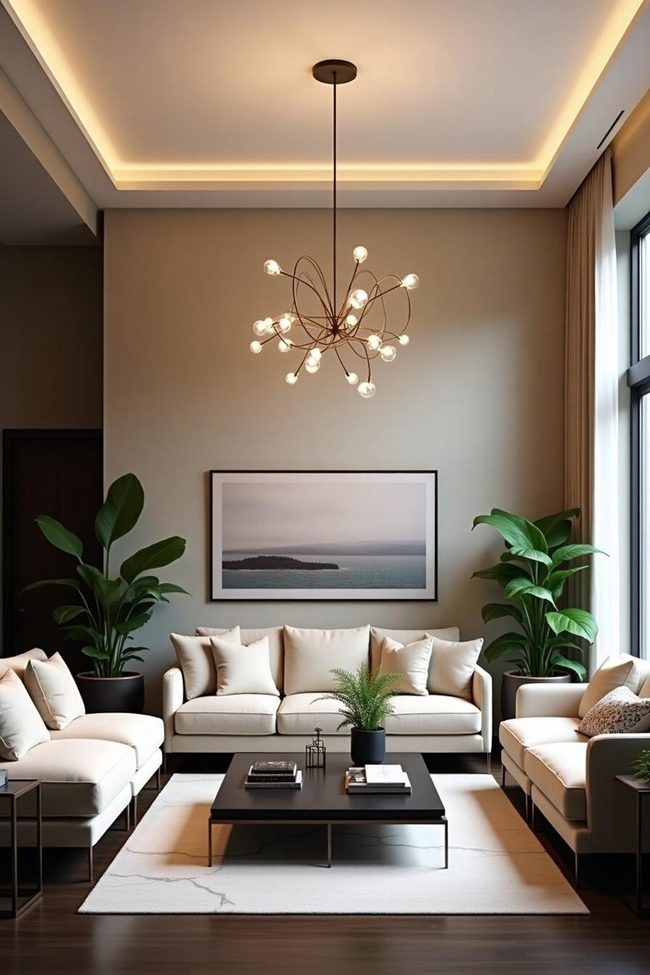
Lighting fixtures that command attention offer the fastest way to transform the living room from ordinary into something remarkable, and a dramatic chandelier or uniquely designed pendant serves as functional art that instantly draws eyes upward and establishes visual interest throughout the space.
Mixed metals, geometric shapes, and organic forms in these pieces reflect the personal style while delivering the perfect illumination for different moods and activities.
One of the best aspects of statement lighting is that it changes the entire room without replacing any furniture, swapping out a basic ceiling fixture for something with character can completely redefine how the space feels.
Adjustable heights and dimmable features help you maximize both function and ambiance as the day progresses.
Modern fixtures often come with user-friendly mounting systems, though hiring an electrician for a few hours ensures everything is safely installed if you prefer professional help.
Light patterns and shadows cast by an interesting fixture add depth to the walls and ceiling that standard lighting cannot match.
Consider the room's scale when choosing the piece, larger spaces handle more dramatic options while smaller rooms benefit from something striking but balanced.
Mixing different lighting styles throughout the space works well when you keep a common element like finish, shape, or design era running through them.
Many people find these statement pieces spark interaction with visitors, and you can enjoy sharing the story behind the selection.
Regular dusting and occasional cleaning keeps the fixture looking sharp and maintains its impact for years to come.
Reflective Surfaces Expand Room Perception
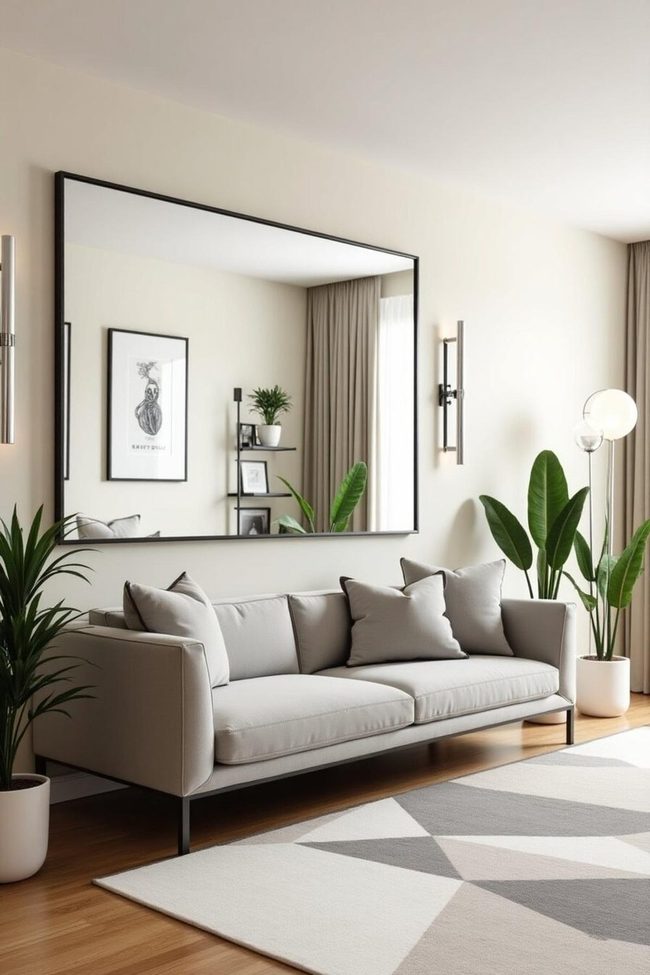
Oversized mirrors leaning casually against your living room wall shape instant drama and timeless elegance that reworks how a space feels.
Positioning a mirror to reflect a window doubles your natural light and tricks the eye into seeing an extra view that isn't really there.
When you arrange several smaller mirrors in deliberate patterns rather than hanging just one large piece, you build a custom art installation that bounces light from multiple angles throughout the room.
Circular mirrors soften hard corners and angular walls, while unexpected shapes like arches or organic forms add personality to plain surfaces.
Your frame choice matters just as much as the mirror itself, ornate gilded frames bring traditional warmth, and smooth metal or minimal wood frames feel more modern and current.
Mirrored furniture like side tables or cabinet fronts scattered at different heights shape depth that spreads across the room instead of concentrating at one spot.
Strategically positioning mirrors at the right height and angle can fix proportional problems; a horizontal mirror widens narrow rooms, and a vertical one draws eyes upward in spaces with low ceilings.
Antiqued or smoked mirror finishes add mystery and texture while still reflecting light and expanding space in ways clear mirrors cannot match.
Beyond pure aesthetics, mirrors make rooms feel more energetic and open, which is especially helpful in dim or cramped living areas.
Furniture With Hidden Compartments Storage
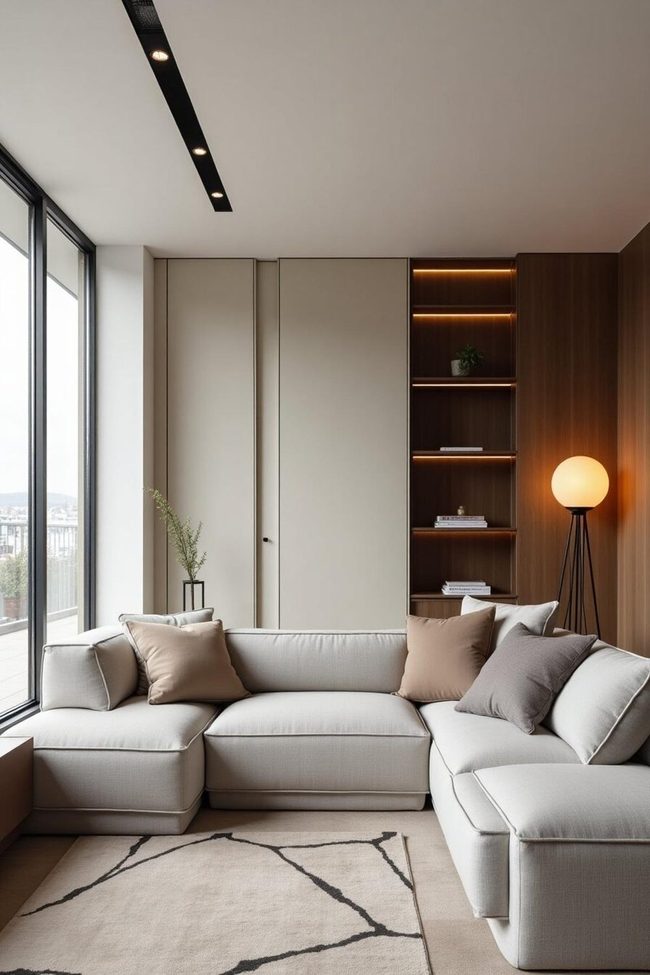
When you walk into a well-designed living room, what catches your eye is beauty and style, not everyday clutter hiding in plain sight.
Furniture that serves double duty makes this possible, ottomans with removable tops, coffee tables with hidden compartments, and side tables with discreet drawers let you store what you need without the mess showing.
Built-in solutions offer the cleanest look if your space allows them, with bookshelves flanking a fireplace, window seats with lift-up storage, or custom media walls that eliminate extra furniture while maximizing what you can stash away.
Even in rental spaces where permanent changes aren't an option, smart furniture placement works wonders, positioning a sofa slightly away from the wall creates a narrow shelf space behind it, or a decorative screen can hide storage bins from view.
Under sofas and chairs lies storage potential most people overlook, and shallow wheeled containers keep rarely-used items completely hidden from anyone sitting in your space.
Tall cabinets with closed lower sections and open shelves above draw the eye upward while letting you hide efficient items and display your best pieces at the same time.
Decorative baskets and boxes that match your room's style serve double duty as both storage and design elements, and sticking with consistent materials or colors makes them feel rather than random.
Mixed Frame Photography Wall
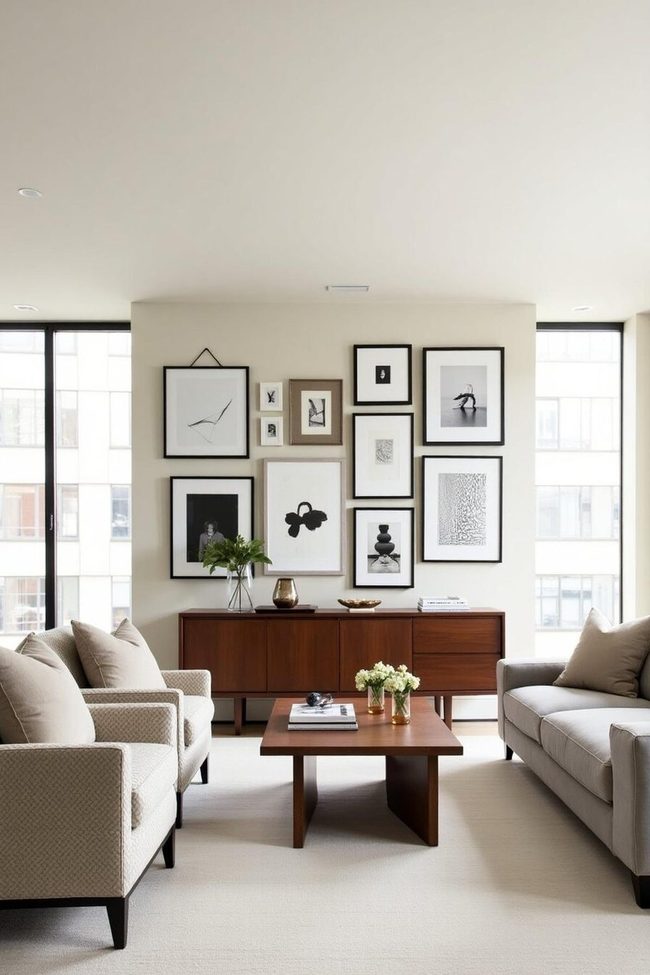
That wall covered with different frames, photographs, paintings, and small objects mixed together creates something that looks like a personal museum telling your story, and you can make this work by keeping one unifying element like matching frame colors or a shared theme across all the pieces.
Before you start drilling holes, arrange everything on the floor and snap a photo from above so you can test different layouts without any commitment.
Space matters quite a bit here because pieces jammed too close together feel tense while pieces spread too far apart look disconnected and random.
Adding unexpected touches like small wall sconces, floating shelves for three-dimensional items, or even a mounted plant breaks up the flatness and keeps things interesting.
Leaving some empty space on the wall actually helps more than you'd think because it stops the whole thing from feeling crowded and lets your favorite pieces stand out better.
Think about how your gallery tells a story as someone walks by, maybe it flows from old family photos into pictures of your current life and what you're working toward.
Lighting makes a real difference here, so consider picture lights above the frames or a nearby lamp with an adjustable head to make everything look better.
Don't worry about making everything symmetrical because lopsided arrangements often feel more natural and genuine, though they still need some basic balance underneath.
Your gallery wall can change as time goes on, so leave room to add new pieces as your life unfolds and your taste develops.
Green Foliage Living Room Focal Point
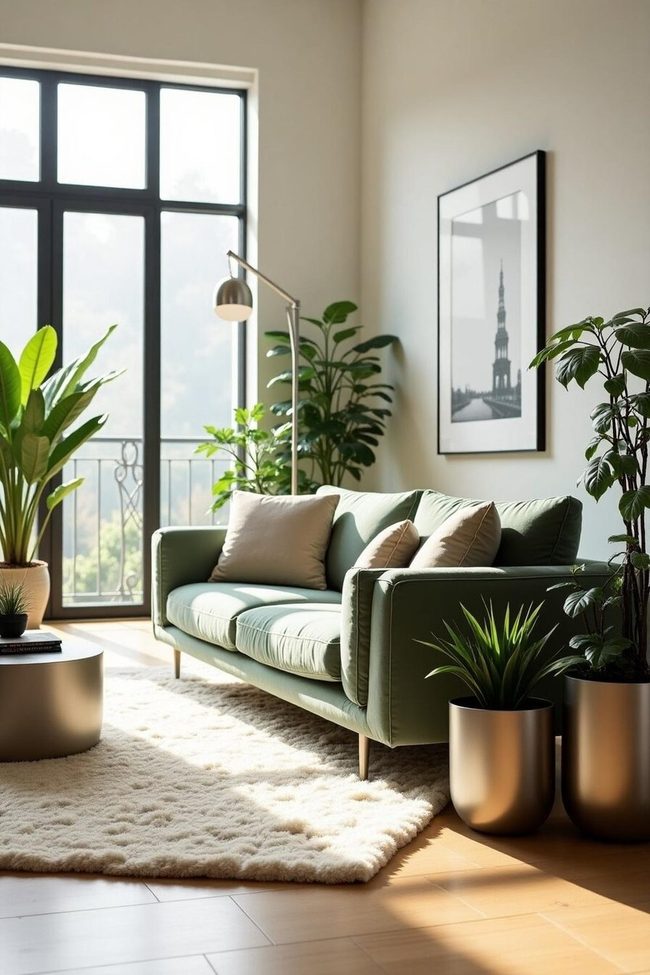
Indoor plants bring life and organic beauty to any living space, and nothing a room quite like selecting varieties with striking architectural shapes like a towering fiddle leaf fig, a sculptural bird of paradise, or cascading pothos that function as living art.
Light plays a remarkable role in how plants enhance your home, the way sunlight filters through a monstera's perforated leaves or how palm fronds cast delicate shadow patterns across your walls creates visual interest that furniture alone cannot achieve.
Your choice of containers matters just as much as the plants themselves, so invest in handcrafted ceramic vessels, vintage brass planters, or minimalist pots that elevate greenery from simple houseplants into genuine design statements.
Strategic placement allows plants to naturally divide rooms or frame architectural features without needing extra furniture, and a tall specimen can beautifully anchor a doorway while trailing varieties draw the eye upward along shelving.
Different plant species offer varied greens that complement nearly any color scheme, introducing a layered, natural depth that feels both calming and visually interesting at the same time.
Varied Materials Layer Sensory Interest
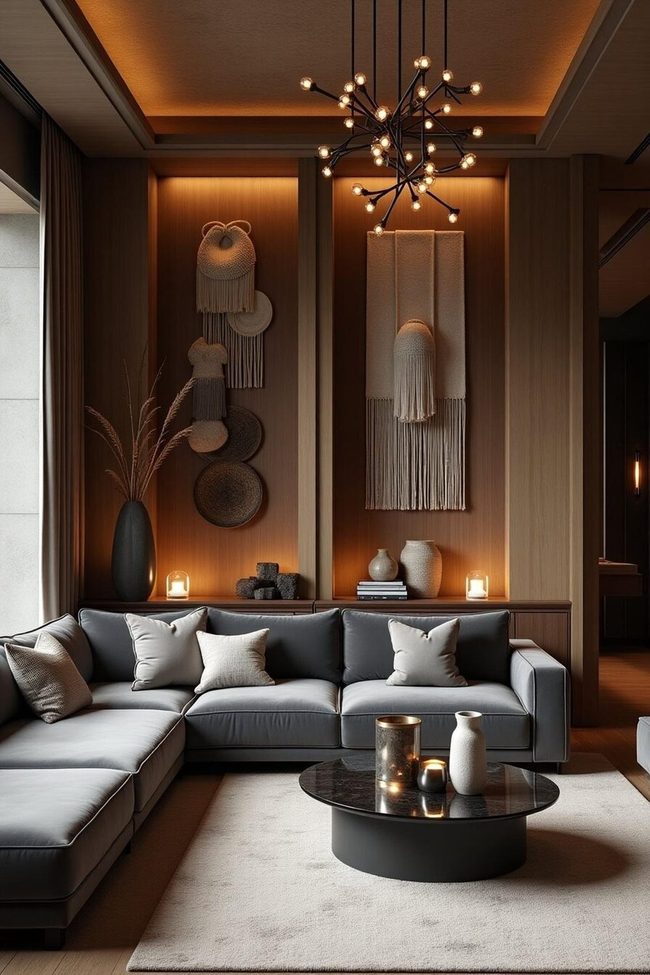
Mixing different textures throughout your living room updates the space into a place where your senses come alive, and rough materials next to smooth ones make in all one stand out more than it would alone.
Start by walking through your room and noticing which surfaces feel good to touch and which ones push you away, then add new textures that make the whole experience richer and more interesting.
Gentle materials like velvet and chenille feel welcoming and comfortable, while leather or polished wood surfaces feel more formal and put-together.
Pairing a bumpy bouclé chair next to a sleek marble table lets in all material show off what makes it special, and this kind of contrast keeps your eye moving around the room.
Natural materials like solid wood grain, handwoven fabrics, or stone with real veining have a complexity that man-made options just cannot match, and this depth means you won't get tired of looking at them.
Texture shows up in two ways: what your hands feel and what your eyes see, so even things you rarely touch, like grasscloth walls or fluted wood trim, add visual interest to your space.
Light hits different surfaces in different ways too, and matte finishes give lightweight reflections while glossy ones bounce light around more dramatically, letting you control how energetic different areas feel.
Seating Angles Add Intimate Connection
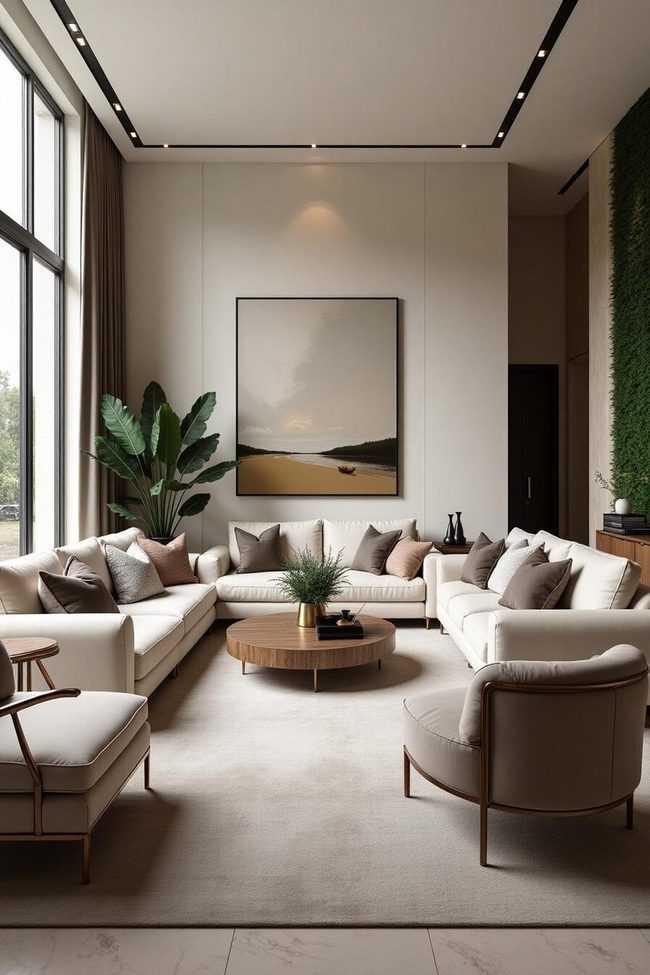
Seating arranged in an inward-facing entertaining pit shapes immediate intimacy and fundamentally changes how your space feels and functions compared to furniture oriented toward television viewing.
Position your key pieces no more than eight feet apart so people can talk comfortably without straining their voices or hearing.
Flexible elements like ottomans and lightweight chairs let you expand your circle when hosting larger groups without permanently eating up floor space.
Furniture positioned at slight angles rather than harsh 90-degree corners shapes a more welcoming flow that encourages relaxed interaction.
A properly-sized rug that anchors the entertaining area and extends under at least the front legs of all seating pieces defines your zone and ties everything visually together.
Eachseat should have easy access to a nearby table surface for drinks and books so people don't have to rin all awkwardly or balance things precariously.
Lighting designed at eye level through table lamps or sconces beats overhead fixtures that cast unflattering shadows during face-to-face talk.
Natural sightlines toward windows or architectural features like fireplaces spark entertaining topics and connect the room to its surroundings.
For rooms needing both entertaining and television, swivel chairs or lightweight pieces that reposition easily give you flexibility between activities.
Different seating options shape natural hierarchy and let you offer a statement chair for a host position while keeping guest seating equally comfortable.
Five-Color Palette With Accent Strategy
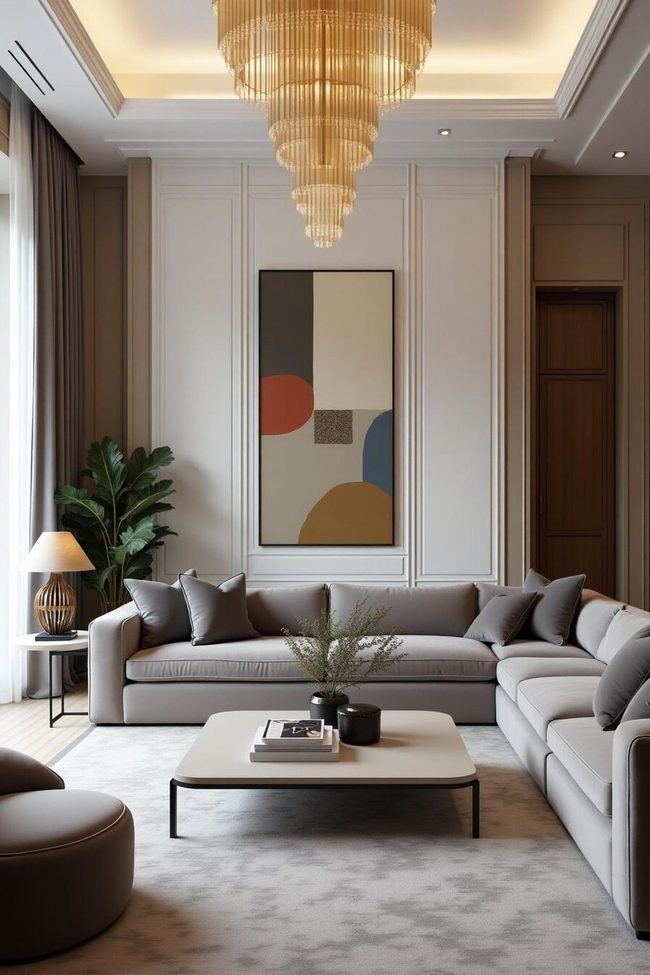
Start by selecting a color palette of three to five related hues that share certain qualities while offering enough variation to keep your space from feeling boring, and remember that cooler tones tend to recede and build calm while warmer hues advance and energize different areas.
Natural light dramatically shifts how colors appear, a shade that looks gentle in morning light might become flat or overwhelming by afternoon, so test your colors at different times before committing to walls or large furniture pieces.
Two blues with different undertones, one warmer with green notes and another cooler with purple undertones, will clash despite seeming similar when you look at them alone, so pay attention to the temperature alongside the hue itself.
You can follow the 60-30-10 rule as a framework: approximately 60% of your visual field devoted to a dominant color like walls and large furniture, 30% to a secondary color, and 10% to accent colors that add interest and punctuation throughout the room.
Choosing the right white, beige, or gray matters more than you might think, understanding their underlying tones and how they interact with both natural and artificial light in your specific space makes all the difference in how everything comes together.
Metallic finishes like brass, silver, bronze, or copper act as sophisticated neutrals and add dimension without competing with your color strategy while reflecting light to enhance the overall look.
Aged Natural Timber Meets Contemporary Furniture
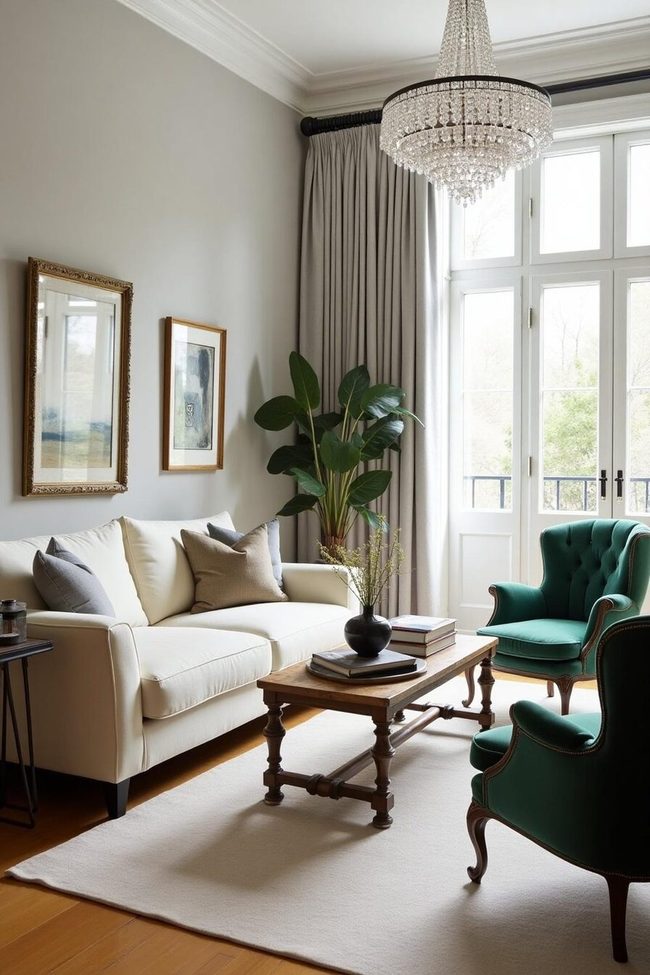
Mixing vintage pieces with modern furniture builds living rooms that feel collected and lived-in rather than sterile and mass-produced, and the real beauty comes from the social between old and new when you pair something like a smooth contemporary coffee table with a weathered antique chair that lets every piece highlight what makes the other special.
Start by choosing an anchor piece, maybe a modern sofa or vintage credenza, that grounds the room's character and gives you direction for what comes next.
Look for chances to repurpose old pieces in surprising ways, such as using an antique trunk as a coffee table, turning a Victorian plant stand into a bar cart, or putting a midcentury magazine rack in the bathroom for storage.
Aged wood, worn upholstery, and handcrafted imperfections bring depth that new pieces simply cannot match, even when they're beautiful.
Balance matters a lot because too many vintage items can feel like a museum while too few can make those pieces look awkward instead of chosen on purpose.
Your home's architecture should guide your decisions, a Victorian house might welcome contemporary pieces beautifully, while a modern apartment gains warmth from a few well-placed vintage finds.
Pull accent colors from your vintage rug into modern throw pillows and you may build visual links across different furniture styles.
Wool And Silk Layered Depth
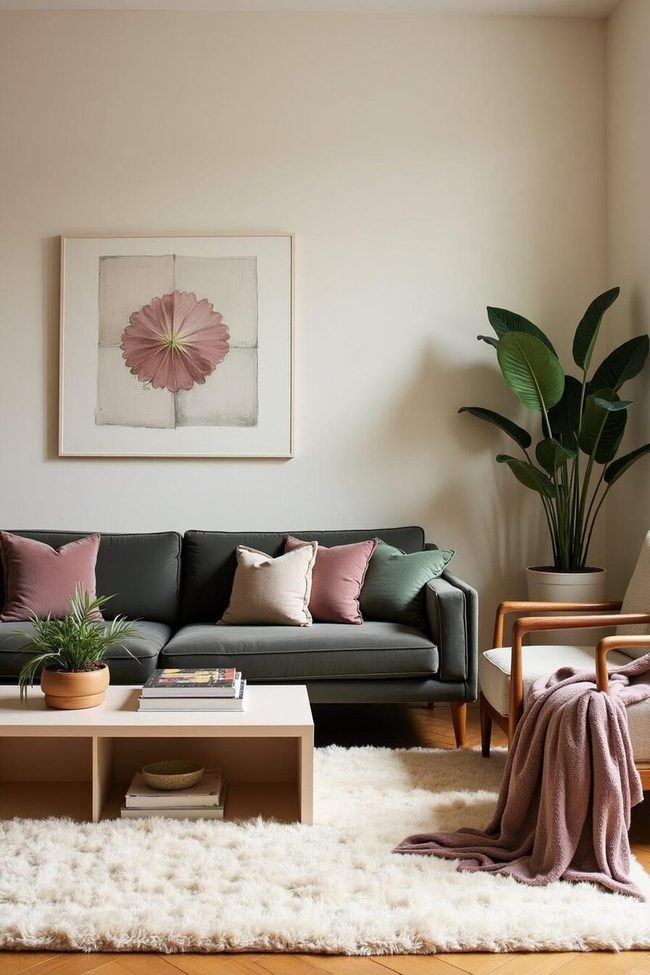
Layered textiles bring together visual richness and comfort in ways that transform any room you occupy, and stacking different fabrics and patterns creates depth that pulls your eye around the space with genuine appeal.
Start with a foundation rug in natural fibers like wool or silk to anchor your seating area, since these materials hold up well over time and feel inherently luxurious underfoot.
Mixing high and low textures matters most, pair a sumptuous velvet pillow with casual linen to build contrast that feels intentional without looking random.
Throw pillows in varying sizes and patterns work best when you stick to a color story that matches your overall design scheme and prevents the space from feeling scattered.
Your windows benefit from layered treatment too, where sheer panels combined with heavier drapes let you control light while adding weight and interest to your walls.
Rotating heavier fabrics during cold months and switching to lighter linens when it warms up keeps your space feeling fresh across seasons.
Pay close attention to pattern scale when you mix textiles, a large-scale floral paired with medium geometric and small-scale texture creates harmony without overwhelming the eye.
Don't skip that throw blanket draped over a sofa corner or folded on an ottoman, since it adds both adaptable to different needs warmth and a polished finishing touch that shows you care about how things look.
Isabella Martinez
Founder & Lead Design Enthusiast
Expertise
Seasonal Home Décor, Interior Styling, Space Planning, DIY Home Projects, Sustainable Design Solutions
Education
Savannah College of Art and Design (SCAD)
Pratt Institute, School of Design
Isabella Martinez is the founder of Decorrio, where she shares her love for seasonal home décor and creative design. With a background in interior design from SCAD and a master’s from Pratt Institute, she specializes in stylish, functional, and sustainable spaces.
With over 10 years of experience, Isabella helps homeowners bring warmth and personality into their homes. She loves DIY projects, festive decorating, and collaborating with local artisans to create unique designs.
When she’s not designing, Isabella enjoys exploring Austin’s arts scene, crafting, and hosting gatherings filled with seasonal charm.