
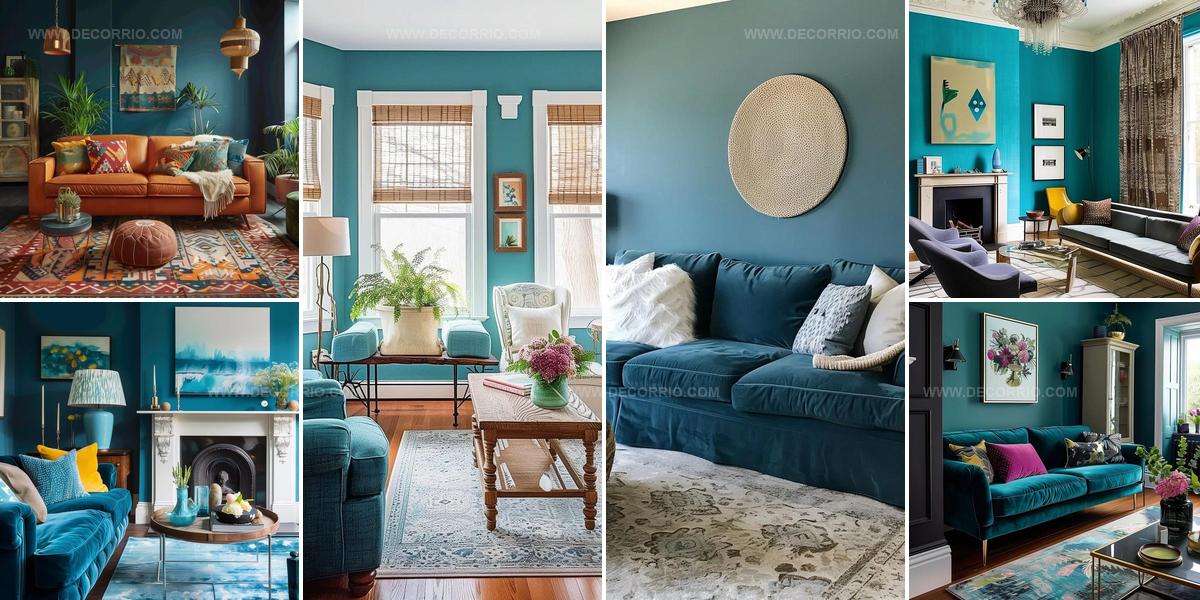
7 Teal Living Room Ideas That Feel Fresh and Elegant
Teal living room ideas bring a fresh perspective when you want spaces that feel both calm and energetic at once.
This captivating color works beautifully in homes of all styles, from modern apartments to traditional houses.
Decorating with such a distinctive shade opens up creative opportunities that many overlook.
The balance between blue and green creates environments where relaxation meets sophistication naturally.
When used thoughtfully, teal becomes more than just paint on walls - it shapes the entire mood of a space.
People often struggle with bold colors, but this particular hue proves surprisingly versatile in practice.
Browse through what follows and find inspiration that helps make rooms as stunning as any design magazine features.
Teal With Warm Orange Accents
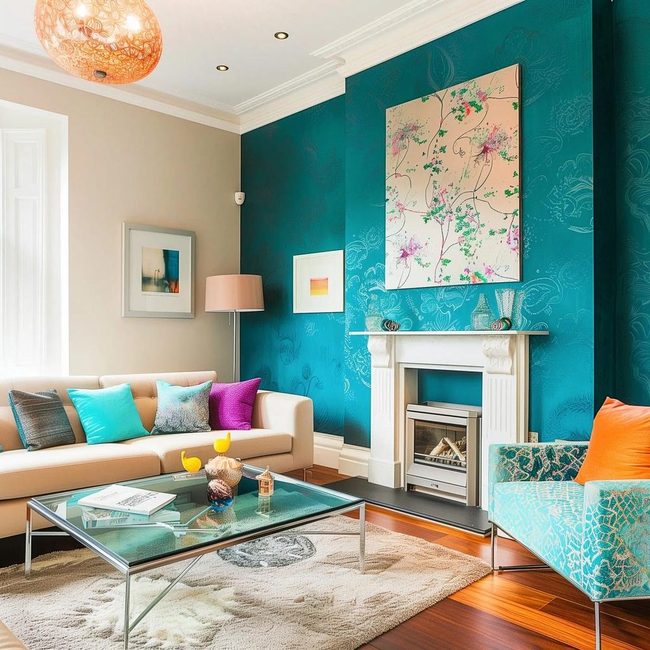
Teal pairs beautifully with warm, fiery orange to a striking visual contrast that feels energetic and bold.
If you're not quite ready for such a dramatic pairing, teal works wonderfully alongside warm neutrals like beige and cream, which soften its intensity without losing appeal.
Metallics such as gold and copper complement teal nicely and add a touch of shimmer to your space.
You might also consider mixing teal with other jewel tones like emerald and sapphire for a rich, layered look that feels sophisticated.
The reason teal partners so well with these colors comes down to basic color theory and how these hues interact with one another.
Playing with different color combinations lets you customize how bold or understated your space feels.
Whether you go for drama or restraint, teal's flexibility means you can make it work with whatever other colors you love.
Teal Accent Pieces For Every Room
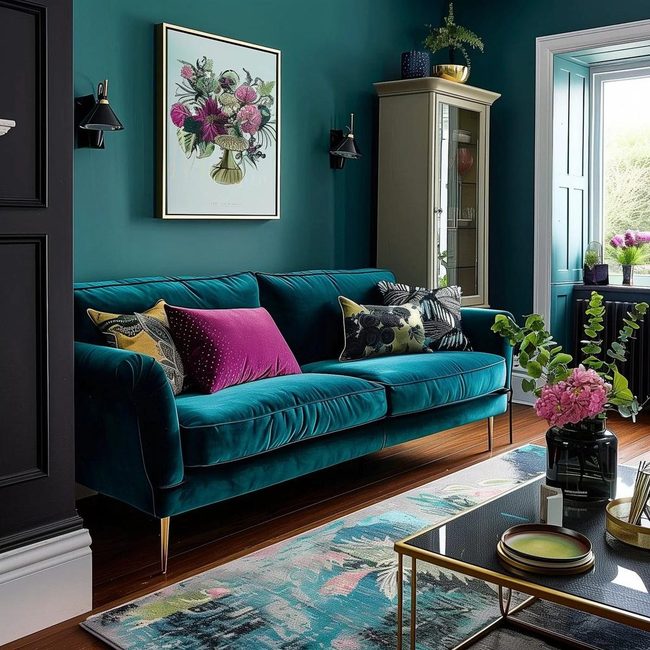
If you're hesitant about buying a large teal piece, smaller accents offer an easy way to bring this striking color into your home without overwhelming your space.
A teal throw pillow draped over your sofa, a framed artwork on your wall, or a small ceramic vase on your shelf can introduce personality and color in moments.
Before selecting your teal pieces, consider what colors already surround you in the room and how this new shade will sit alongside them.
You could want these accents to harmonize with your existing palette rather than clash or demand too much attention.
Mixing teal with neutral backgrounds often works well, while pairing it with warm grain tones can feel balanced and natural.
Once you understand your room's current color story, finding the right teal accents becomes straightforward.
Starting small lets you test whether you enjoy the color enough to add more later, and this gradual approach takes the pressure out of decorating decisions.
Teal Accents With Neutral Balance
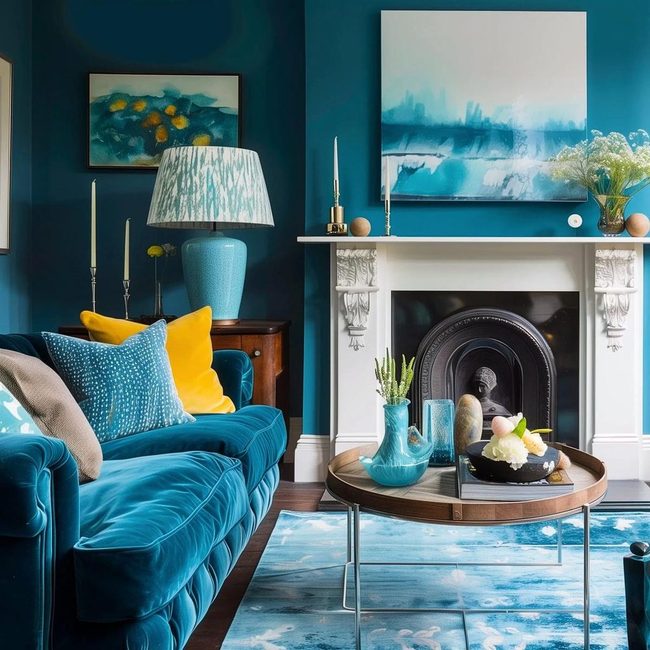
When you're decorating with teal, one of the smartest approaches is to use it sparingly across your room rather than overwhelming the space with it everywhere.
Instead of painting all your walls in this bold shade, consider just one accent wall in teal or bring the color in through smaller pieces like throw pillows and curtains that you can easily swap out later.
Balancing teal with plenty of neutral tones such as white, gray, or beige helps keep your main lounge feeling open and fresh, even when you add that striking pop of color.
Lighting plays an important role too, good lamps and natural light will brighten your space and prevent it from feeling dark or heavy.
You want your teal main lounge to feel balanced and comfortable, not overwhelming.
A few well-placed light fixtures and some lighter furnishings go a long way in achieving that relaxed, airy feeling you're probably going for.
Teal Throw Blanket With Copper Accents
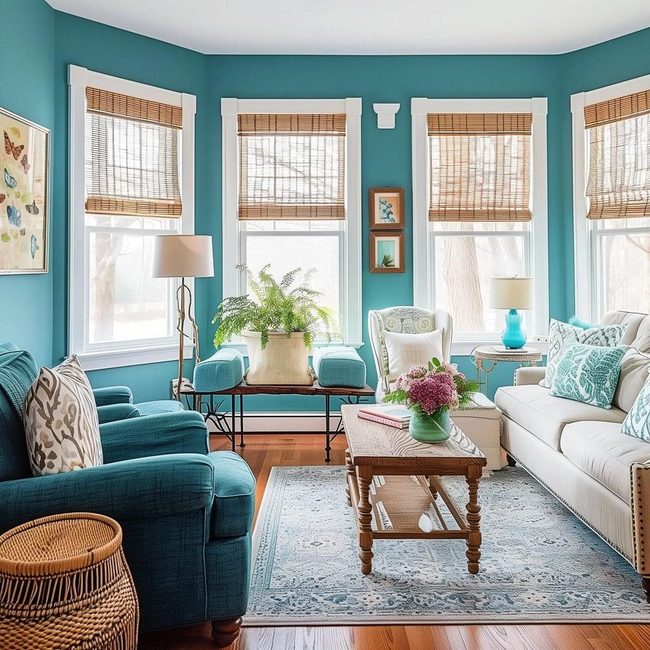
Layering different textures and materials helps teal shine in your space, so consider a chunky knit throw blanket in teal draped over your couch for warmth and comfort, while a polished teal vase on your bookshelf brings in modern style.
You can also play with multiple teal shades in the same room and mix them with other accent colors to keep things interesting.
Deep, saturated teal pairs beautifully with warm metallics like gold or copper for a luxurious feel, and lighter teal works equally well next to cream and beige tones for a softer overall look.
Blending these elements together means you're not locked into one approach, and the flexibility lets you adjust your palette as your taste evolves.
Don't worry about making everything match perfectly because variation is what keeps a room from feeling flat and one-dimensional.
Your space becomes more interesting when you allow different textures and shades to exist side by side.
Teal Paint Brushes Canvas Supplies
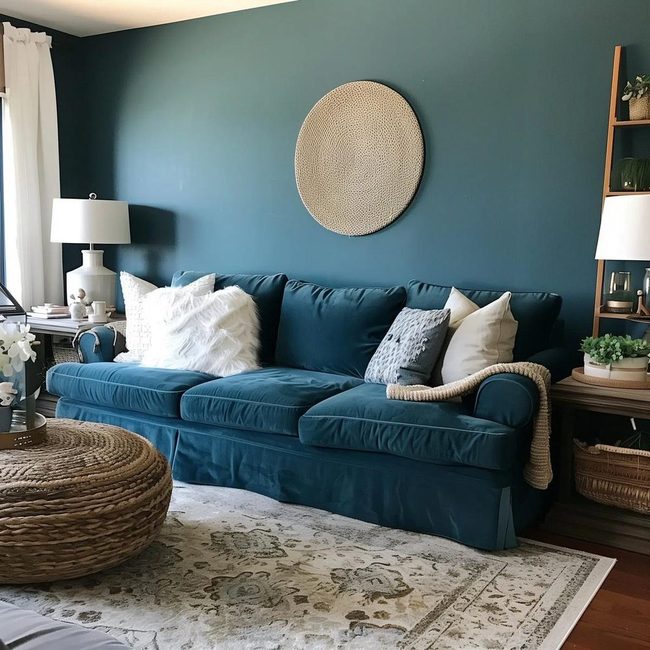
Before starting your teal DIY project, you can want to gather everything you need so you're not scrambling halfway through.
For painting furniture, stock up on sandpaper to prep the surface, primer to help the paint stick properly, quality paint brushes in a few sizes, and your chosen teal paint shade.
If you're going the art route instead, you can need a canvas or similar surface to work on, acrylic paints in multiple teal tones along with colors that pair well with teal, brushes suited for acrylics, and any fun extras like glitter or sequins if you want to add texture and shimmer to your piece.
Having your supplies ready before you begin means you can focus on the creative work without stopping to hunt down what you forgot.
Both projects benefit from taking time to pick quality tools since cheap brushes shed bristles and low-grade paint doesn't cover as smoothly.
Getting organized upfront makes the whole process faster and way more enjoyable.
Teal Rattan Coastal Spaces
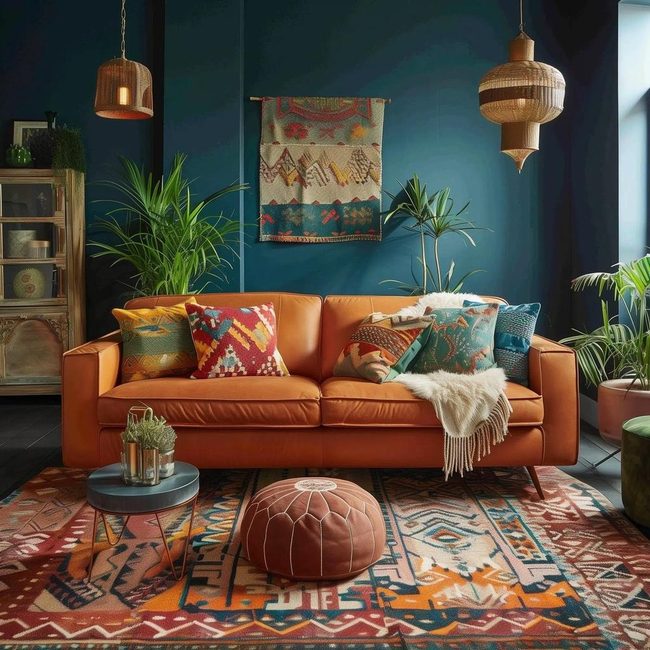
If your style leans toward bohemian or coastal design, teal becomes your go-to color choice.
Go with lighter, more subdued teal shades and combine them with natural materials such as rattan, woven textures, and leafy plants throughout your room.
Teal and white patterned throw pillows bring that relaxed beach feeling right into your space, and sea glass art in teal tones works just as well.
The pairing of these elements and natural materials creates an atmosphere that feels both grounded and airy.
You can layer these pieces without worrying about things feeling too busy or overdone.
Plants add life and movement to the space, while woven textures give you that handcrafted, organic quality.
Together, these choices build a room that reflects a laid-back approach to design and makes your space feel like a peaceful coastal retreat.
Teal’S Shifting Color Spectrum
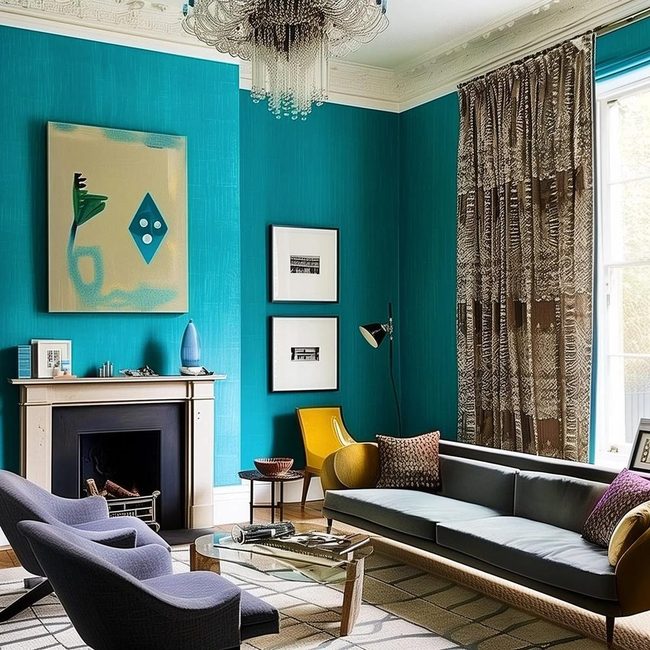
Teal comes in many different shades, and eachone has its own personality on your walls or furniture.
Classic turquoise is the most recognizable option, offering that balanced blue-green tone that works with almost any style.
Cyan leans more toward blue and brings a refined, modern energy to a room.
Aquamarine sits on the greener side and feels more relaxed and natural, almost like something you'd find by the ocean.
What makes teal really interesting is how it shifts throughout the day based on your lighting.
In well-lit sunlight, it can look crisp and cool.
Under warm bulbs, it softens and becomes more muted.
Under cool lighting, it deepens and feels more dramatic.
This means you should test your chosen shade in your actual space before committing, as the same color can look completely different in the morning versus evening.
Michael Thompson
Senior Content Editor
Expertise
Content Strategy Development, Editorial Team Leadership, Home Décor Trends & Style Curation, Digital Storytelling for Interior Design, Quality Assurance in Publishing
Education
University of Missouri, Columbia
University of Texas at Austin
Michael Thompson is the senior content editor at Decorrio, bringing over 12 years of experience in journalism and home décor writing. With a journalism degree from the University of Missouri and a master’s in English from UT Austin, he blends storytelling with expert design insights.
At Decorrio, Michael curates inspiring content that helps readers transform their spaces with style and ease. He’s passionate about home organization, DIY projects, and quality design ideas that make everyday living more enjoyable.
Outside of work, Michael enjoys exploring Austin’s culture, tackling home improvement projects, and mentoring aspiring writers.