
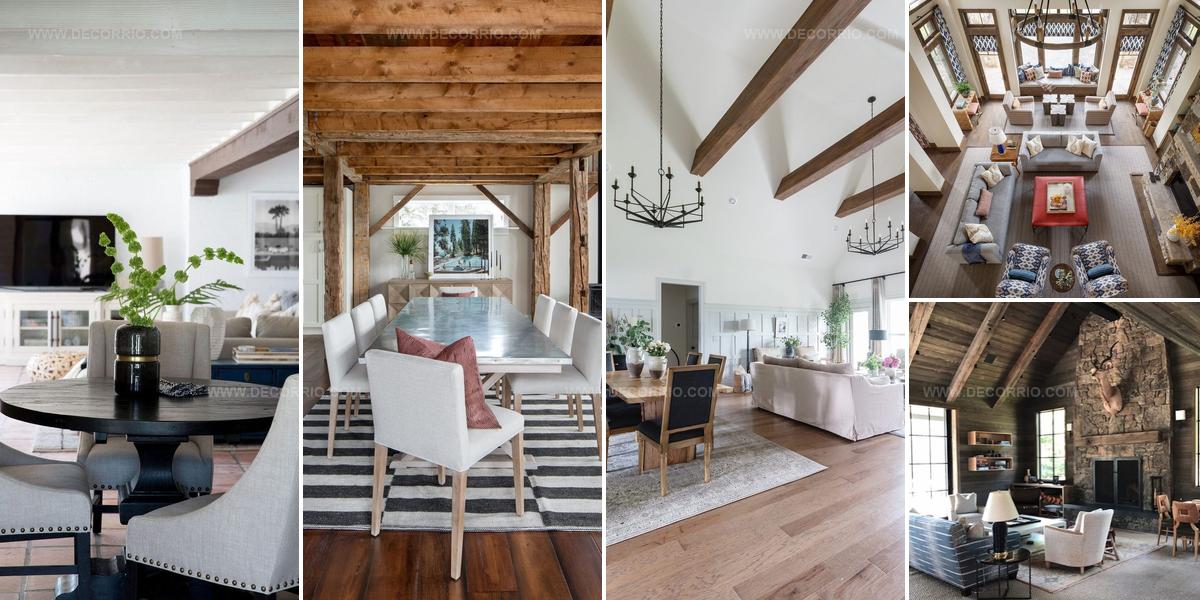
20 Great Room Ideas That Make a Bold Statement
A stunning great room serves as the heart of modern homes, where families gather and memories unfold naturally.
This expansive space blends multiple functions into one cohesive area that feels both grand and inviting.
The challenge lies in designing a room that balances openness with warmth while maintaining distinct zones for different activities.
Smart furniture placement, thoughtful lighting choices, and carefully selected colors can make even modest spaces feel luxurious and well-proportioned.
Whether renovating an existing area or planning new construction, the principles remain consistent across different home styles and budgets.
The best designs reflect how families actually live rather than following rigid decorating rules that feel impractical.
Fireplace Divides Open Spaces
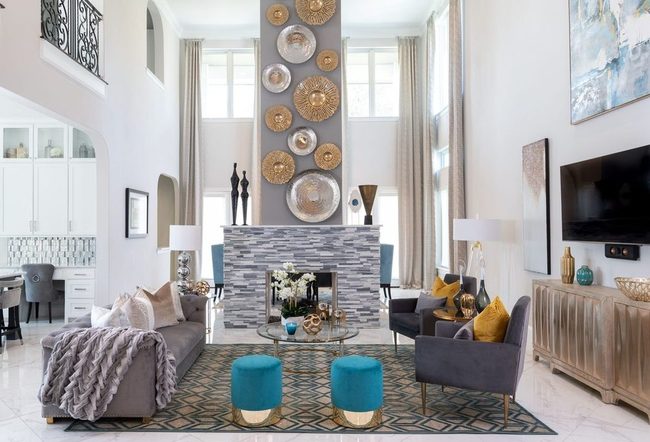
Fireplaces work well as natural dividers that split one large room into distinct zones, and designer Monica Wilcox demonstrates this beautifully in her space by using the hearth as a visual boundary.
If a fireplace isn't an option in your room, you can easily achieve similar results with a room divider or bookshelf positioned strategically throughout the area.
Breaking up an open floor plan prevents the space from feeling too sparse and helps you define different purposes for each section.
Maybe you want a relaxation zone near the fireplace and a separate spot for socializing elsewhere.
Room dividers come in many styles and materials, so picking one that matches your decor is simple.
Bookshelves do double duty as barriers and storage, giving you extra display space while still separating your areas.
Using these methods makes your large room feel more intentional and organized without requiring major renovations.
Black White Brass Sophistication
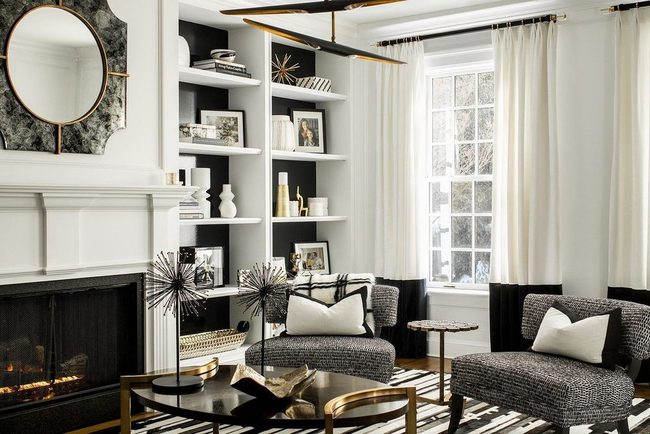
Karen B Wolf designed a great room where black and white clash together in bold, dramatic ways that never go out of style.
Bold contrasts between dark and light surfaces immediately catch attention and give the room serious sophistication.
To prevent the space from feeling harsh or clinical, she layered in patterned elements and brass touches that warm everything up and add personality.
You can use this same strategy in your own home by pairing dark walls or furniture with crisp white trim and accents.
Brass hardware, metal fixtures, and warm metallics help soften the starkness of extreme contrast.
Patterned rugs, textured fabrics, or wallpapered sections break up the stark black-and-white scheme.
Small gold or brass decorative items scattered throughout prevent the room from looking too cold and minimal.
Mixing in natural wood tones or warm metals alongside your high-contrast palette keeps the space from feeling sterile and uninviting.
Patterned Pillows On Neutral Canvas
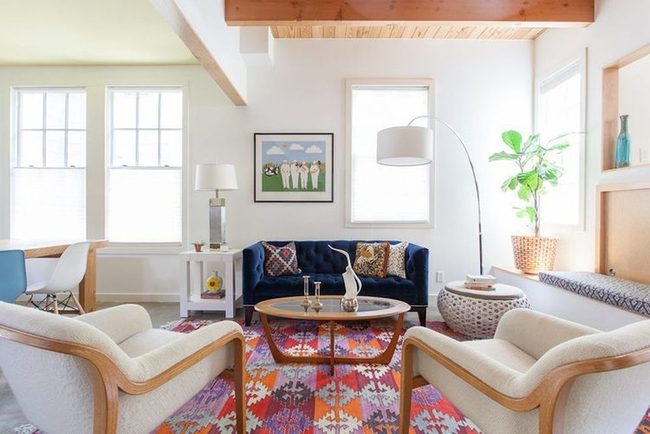
If you want to show off a bolder personality in your home, mixing patterns can be a fun way to do it, and designer Erin Williamson proves this works beautifully in her space where a vintage Turkish kilim sits alongside bright throw pillows that pop with energy.
Keeping your walls white and your main furniture pieces neutral prevents the room from feeling overdone or tacky.
Multiple patterns actually balance each other out when you anchor them to a calm background.
You don't need to worry about clashing styles because the neutral base lets each pattern breathe without competing for attention.
This approach gives you the freedom to layer different textures and designs without the space feeling chaotic.
Whether you prefer geometric shapes, traditional motifs, or colorful prints, starting with a quiet foundation makes all the difference.
We find that this strategy lets you play with what you genuinely love without second-guessing yourself.
Layered Rugs Ground The Room
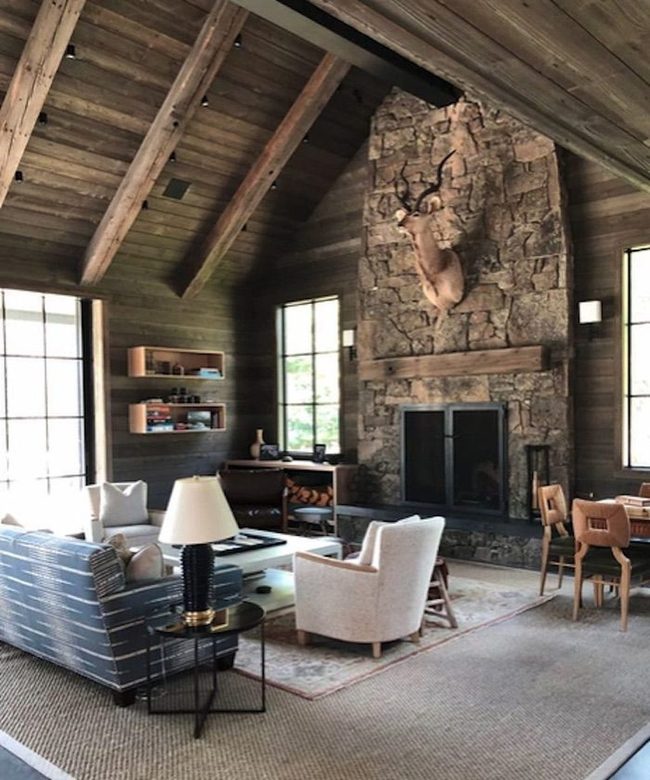
Rugs can do so much more when you stack them on top of each other, and Leah O'Connell shows us how well this works in her space.
One large rug spreads across most of the floor and anchors the entire room, while a smaller rug layered on top adds depth and makes everything feel more connected to the ground.
This two-rug approach keeps the space from feeling too bare and gives you more texture to work with.
Stacking rugs lets you mix different patterns and colors without things looking messy or chaotic.
You can experiment with contrasting textures or go for a tonal look where the rugs complement each other nicely.
It's a simple trick that changes how a room feels and makes the space look more put together.
When done right, layered rugs become a key part of your room's overall look and function.
Multiple Seating Zones Defined
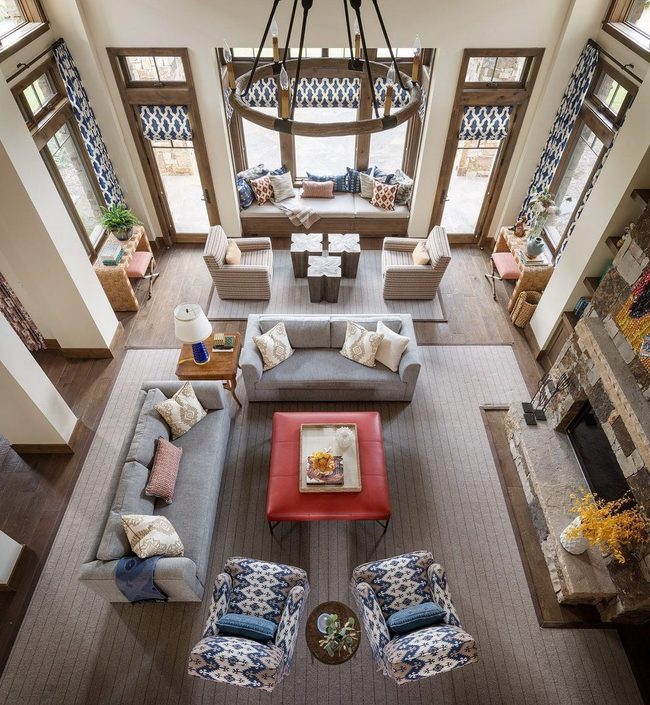
You can host a lively game night with everyone gathered together, or someone can settle into a quiet corner for a more private chat without feeling isolated from the rest of the room.
Layering in different pieces rather than pushing one big sofa against the wall lets you divide the space into useful areas that serve different purposes.
Each arrangement works well because it keeps the room from feeling crowded while still giving plenty of spots to sit down.
If you have a smaller great room, you don't need to copy this exact setup, but the idea of mixing various seating options still applies and makes your space feel more livable.
Adding a couple of accent chairs or a second sofa opens up possibilities that a single seating arrangement just can't match.
When family members can find their own comfortable spots, everyone ends up happier and more likely to actually spend time in the room together.
Floating Shelves Display Firewood Books
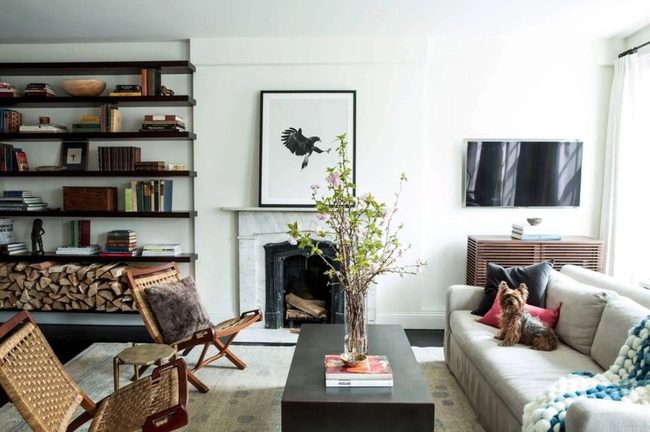
Floating shelves mounted along the wall bring both style and purpose to any great room, and they work best when you display a mix of items like books and firewood stacked neatly across them.
Beyond just looking good, storage solutions like these shelves actually solve the everyday problem of finding places for your belongings.
Designer Katie Martinez understood that a well-designed room needs to do more than sit there looking pretty-it has to function in real life too.
When you arrange books and chopped firewood together on these shelves, the space gains warmth and personality all at once.
Books add intellectual charm while firewood brings in natural texture and a down-to-earth quality.
Storage doesn't have to feel like an afterthought or something you hide away in closets.
By choosing shelves that match your style, you get the best of both worlds-a room that looks great and actually serves your needs day to day.
Layered Pendant Light Heights
Lighting choices can completely change how a room feels, and we've all experienced how the right fixtures make all the difference in a space.
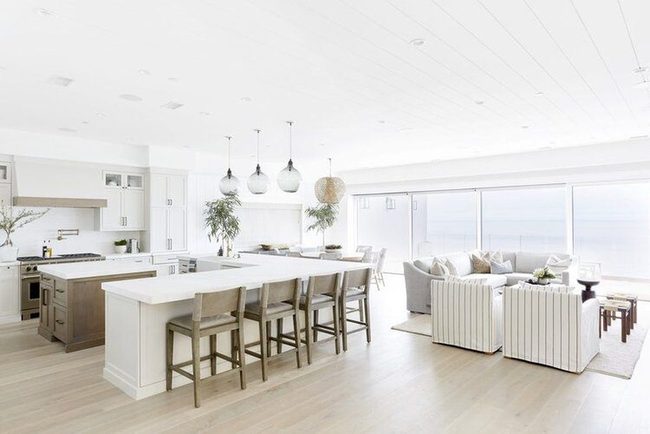
When you look at examples like the work from Pure Salt Interiors, you immediately notice how varying pendant lights do more than just brighten the area.
Multiple hanging fixtures at different heights draw your gaze upward and make the ceiling seem taller than it actually is.
Beyond that visual effect, these pendants also break up what could otherwise feel like one large, empty space.
The varied designs and placement keep the room from feeling monotonous.
If you're working with a large open area, mixing different pendant styles and heights is one of the smartest moves you can make.
It solves the practical problem of lighting while also shaping how people experience the room itself.
We think this approach shows how something functional can also be beautiful and useful at the same time.
Chartreuse Coffee Table Statement Piece
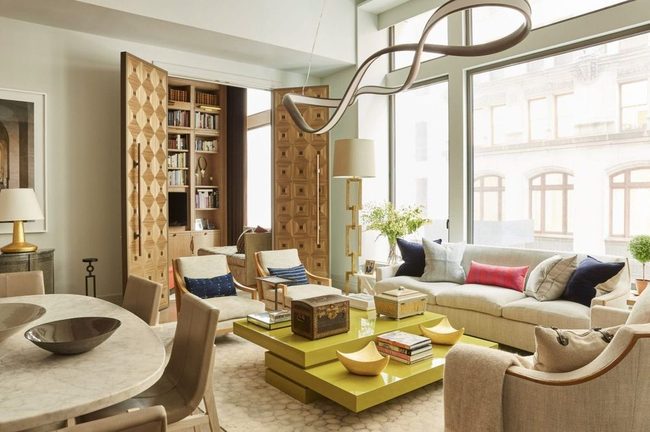
One simple way to refresh your space without spending a fortune on a full renovation is to introduce a bold splash of color, as designer Alexander Doherty demonstrates in this New York great room.
A chartreuse coffee table does wonders for a neutral room, instantly bringing energy and personality to the space.
You don't need to overhaul everything to make a real difference.
Sometimes that one standout piece is all it takes to transform how a room feels.
If you're drawn to this sunny shade, there are lots of ways to work it into your home.
Whether you go bold with furniture or keep it lighter with accessories, color can completely shift the mood of what you already have.
I think many people underestimate how much impact one well-placed item can have.
It's an easy fix that gives your space a fresh look without the hassle.
Shelves Full Of Personal Stories
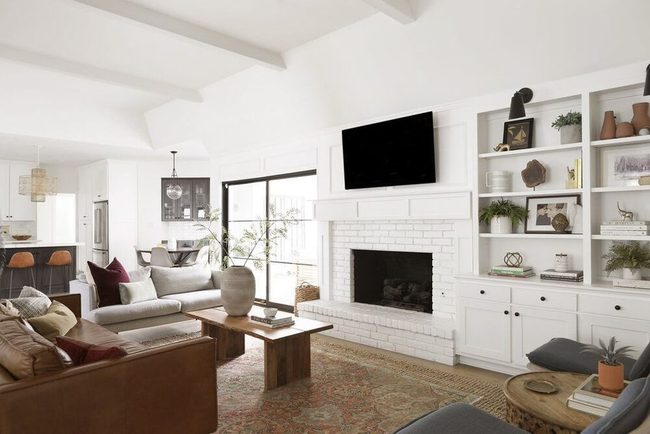
Since you spend most of your waking hours in the great room, why not fill it with things that actually mean something to you?
Sarah Fultz loaded her built-in shelves with framed photos, books, and treasured family pieces that tell her story.
These personal touches transform blank shelves into a space that feels like home.
When you surround yourself with objects you love, the room becomes more than just furniture and walls.
We all respond to spaces that reflect who we are.
Mixing in books alongside photos and keepsakes creates layers that guests naturally want to explore.
Your great room should be a place where your personality shines through every shelf and corner.
Mirrored Sofas Frame Calm Interiors
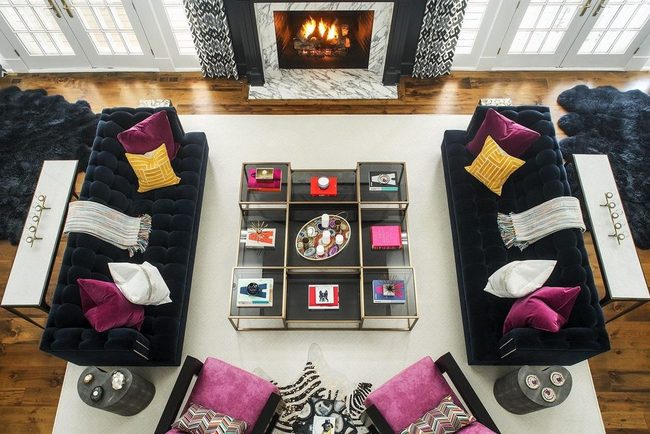
Bold symmetry acts as the foundation of this great room design, where matching sofas and console tables line either side of the space to create a calm, organized feel.
Coordinating blankets drape across the seating and bright pillows scattered throughout add personality without breaking the balanced arrangement.
Books stack on the coffee table, giving the orderly layout a fun twist that keeps things from feeling too stiff or formal.
You can use this approach in your own space by thinking about what pieces work in pairs and how you want to balance them visually.
Starting with two matching sofas or chairs on opposite sides anchors the room and makes it feel intentional.
Layering in colorful accessories and practical elements like a book-filled table prevents symmetry from becoming boring.
This kind of balanced design feels restful to look at and helps the room flow naturally without demanding too much attention.
Whether you choose perfect matching pieces or just mirror the general idea, symmetry gives any space a grounded quality that guests notice right away.
Angled Sectional Space Division
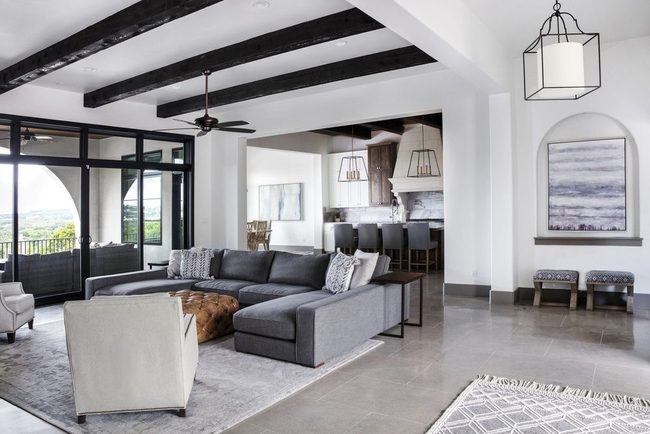
If bookshelves and room dividers don't suit your style, a sectional sofa offers another way to carve out distinct zones in your space.
We see this approach work beautifully in a relaxed great room designed by Etch Design Group, where the seating arrangement itself becomes the boundary between areas.
Positioning a large sectional at an angle helps define where one room function ends and another begins.
You don't need permanent walls or heavy furniture to accomplish this effect.
Just by arranging your seating in a thoughtful way, you establish visual separation and make the room feel more organized.
It's a simple solution that also gives you extra seating and comfort at the same time.
Living Room Conversation Centered Design
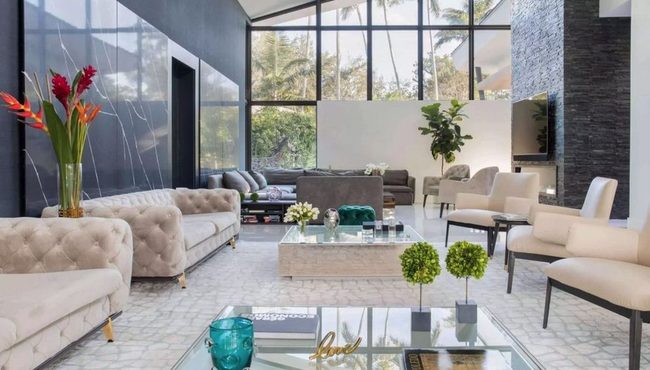
Moving your television to the side of the great room instead of centering it opens up space for real conversations and connections with the people you care about.
Rather than letting your screen dominate the room, positioning it off to one side frees up the rest of the area for furniture arrangements that encourage people to face each other and actually talk.
This shift in layout shows how much room you suddenly have when you stop treating the TV as the main attraction in your space.
You might be surprised at how this simple change makes the room feel larger and more social overall.
Maite Granda's approach demonstrates how effective this strategy can be when you want a gathering space that prioritizes human interaction over screen time.
Pushing the television aside doesn't mean hiding it away-it just means giving your room back its potential for togetherness.
When you rethink where that screen lives, you unlock a whole different way to use and enjoy your great room.
Angled Seating Transforms Sprawling Spaces
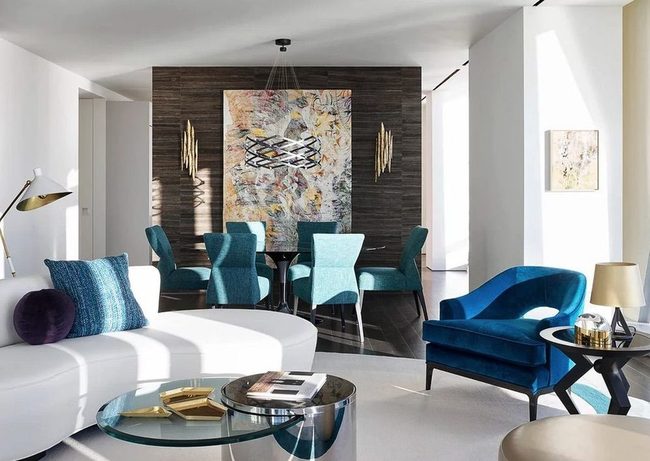
When you have a big great room that feels too sprawling, try shifting your furniture around to bring more warmth to the space-and in this San Francisco penthouse, designer Kendall Wilkinson did exactly that by positioning the sofas and armchairs at angles toward one another.
Setting furniture at diagonal lines instead of straight against walls makes the seating area feel enclosed and personal, almost like you've carved out your own special spot within the larger room.
You don't need any fancy tricks or expensive changes to achieve this; just moving what you already own can completely shift how the space feels.
Angling the pieces lets people sit comfortably close to each other without forcing them to shout across a wide gap.
Our eyes naturally follow these angled lines, which makes the grouped seating seem intentional and purposeful rather than scattered around.
Such a simple switch shows that sometimes the best design solutions come from rearranging what's already there instead of buying new things.
If your great room tends to feel cold or too formal, this angle approach gives you an easy way to make it feel more gathered and intimate without much effort at all.
Pool Table Great Room Centerpiece
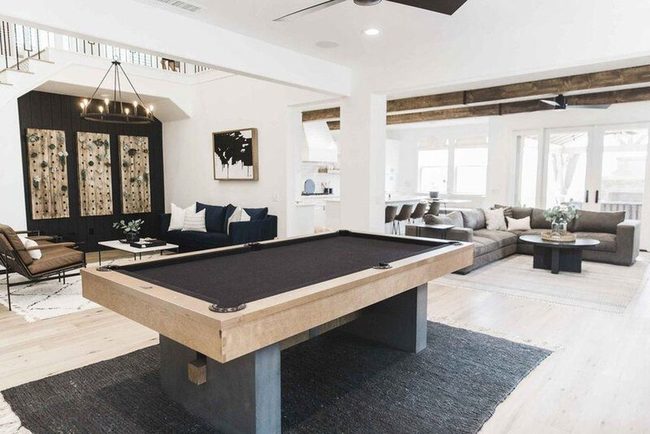
Beyond just being a functional space where your household gathers, a great room deserves to have some personality and joy built right into it.
Designer Rebecca Rollins showed us one fantastic way to do this by placing a quality pool table in the middle of an open living area.
Adding something like this means your space stops being only about watching TV or sitting around and becomes a place where people actually want to spend time together.
You don't need to treat your great room as purely serious or formal.
Games and recreation give the room a real sense of purpose beyond the everyday routines.
When you include entertainment options like this, suddenly the space feels more alive and fun The pool table becomes both a striking centerpiece and a practical reason for people to gather and enjoy themselves in the space.
Dining Table Fills Empty Space
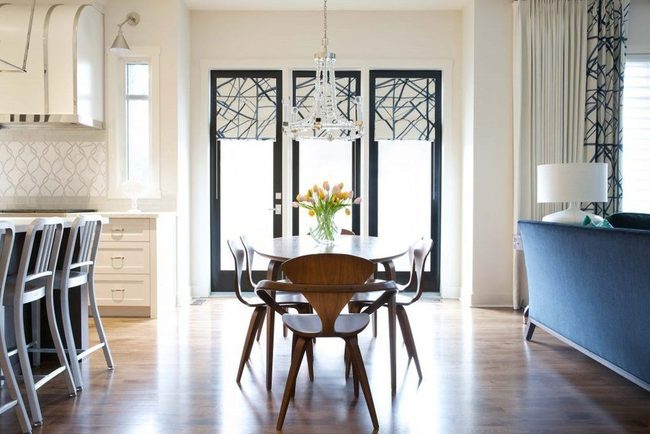
Open rooms with lots of empty space can feel disconnected and unwelcoming, so filling those voids makes a real difference in how the space functions.
One smart solution we see work well is placing a dining table with chairs in that unused area, which transforms an awkward gap into a practical gathering spot.
Even if your home already has a formal dining room elsewhere, adding seating in your great room gives the space purpose and warmth.
Designer Reena Sotropa did exactly this for her clients, and the result was a room that felt both larger and more livable at the same time.
You'll find that families actually use these secondary dining spots more often than the formal versions since they're right where everyone naturally congregates.
Whether it's for quick meals, work calls, or kids tackling homework, these spaces become the heart of daily life.
By using your full square footage instead of leaving sections bare, you double down on functionality and make guests feel like there's always somewhere to settle in and belong.
Deep Blue Statement Wall
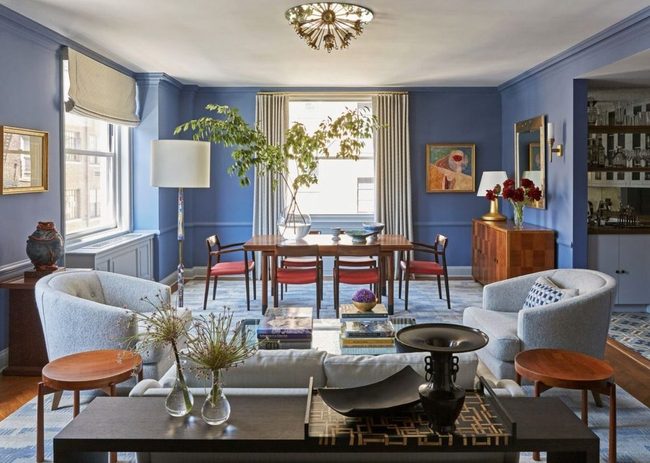
If you want your great room to stop people in their tracks, bold wall color does the job better than almost anything else.
Most open-concept spaces default to white for safety, but stepping away from neutral walls opens up real possibilities.
Deep blue, like the shade in this Doherty design, shifts the whole mood of a room and makes you feel something different the moment you walk in.
You don't need to commit to an intense color everywhere, and you can always test it out on one wall first.
Paint is one of the easiest updates to change later if you want to switch things up.
Exploring beyond the typical palette gives your space personality that feels distinctly yours.
Whether you go moody or bright, a strong wall color becomes the first thing anyone notices when they enter the room.
Mixed Budget Art Wall With Sconces
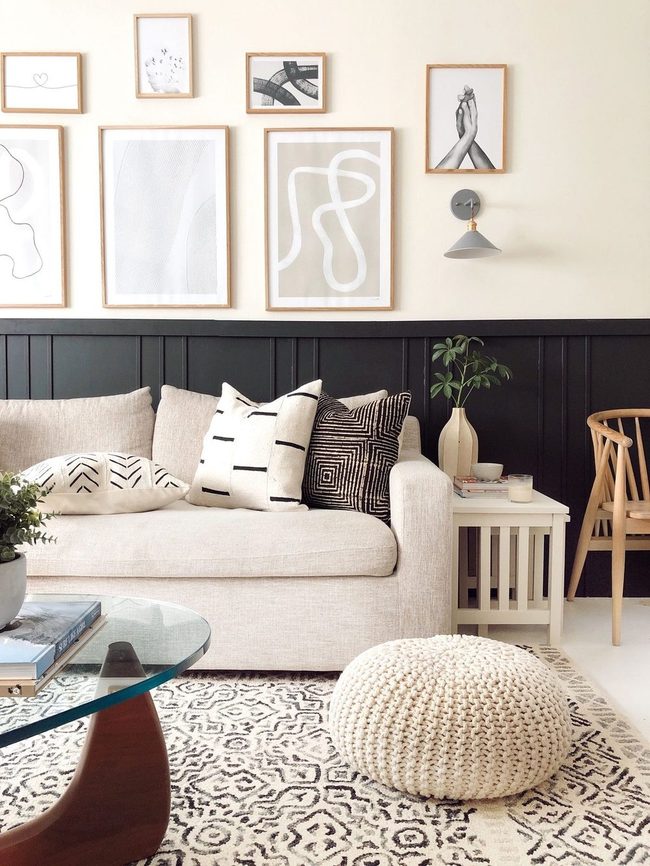
Bold gallery walls in your great room make an instant visual statement since this is likely where you and your household spend the most time together.
You can build one without breaking the bank by mixing budget-friendly art pieces across your walls.
Sconces on either side add lighting and frame the entire arrangement beautifully.
Designer Kristin Dion shares how she turned her plain white space into a room perfect for movies and games by arranging affordable artwork in this way.
She found simple sconces on Amazon for just forty dollars each.
Two of these fixtures flanking your gallery wall complete the look and provide functional light when you need it.
Your great room becomes warmer and more personal with this approach.
It's a smart way to spend your decorating budget where it matters most.
Two-Rug Living Space Division
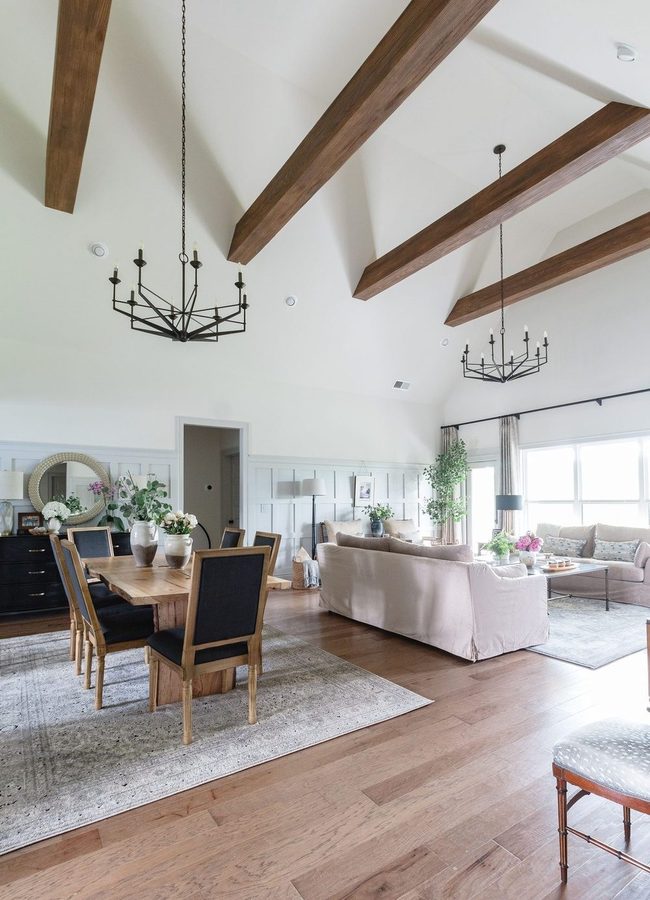
To divide up your great room into distinct zones, you can use style choices that make each section feel separate and purposeful.
Leslie from Deeply Southern Home did this by laying down two rugs that visually split the space into a dining area and a living area.
Two modern chandeliers hang above each section and help anchor those divisions while adding a sleek touch overhead.
Rugs work well because they ground furniture and give your eye a clear stopping point.
Hanging fixtures like chandeliers do double duty by lighting the room and marking where one space ends and another begins.
When you layer these elements together, the room feels organized without needing walls.
Both pieces also bring contemporary style to the overall design.
Using rugs and overhead lighting is one of the easiest ways to make a large space feel intentional and balanced.
Neutral Tones Meet Layered Texture
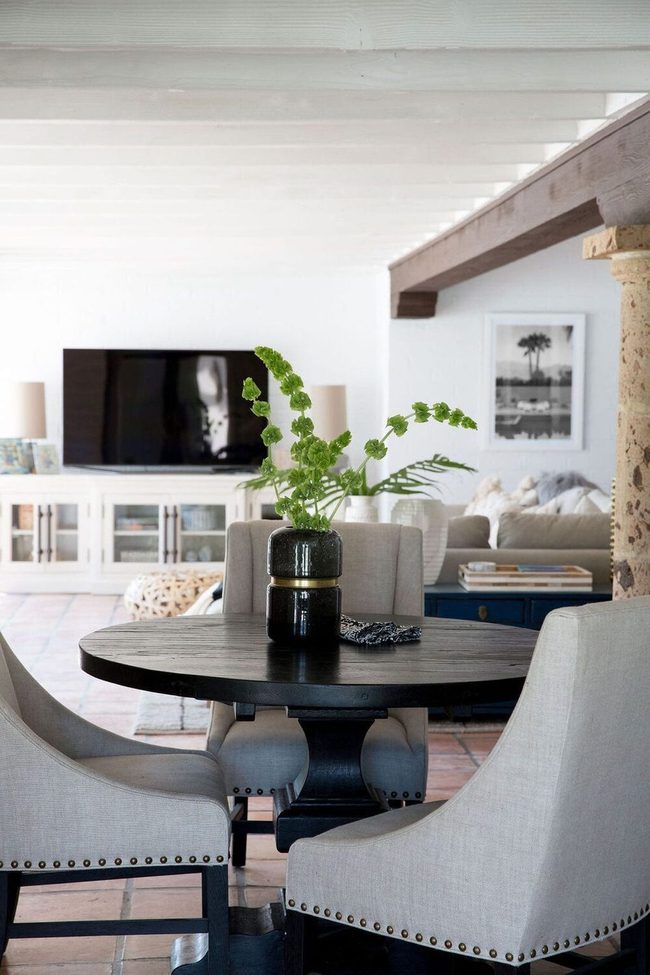
If you want to boost the coziness of your great room, playing with different textures is one of the best moves you can make.
Designer Jenn Pablo mixed soft fabrics with rough wood and woven rattan in a single space, and the combination creates real visual interest.
By keeping everything in neutral tones, she avoided making things feel too loud or overwhelming.
You get a room that feels warm and welcoming without screaming for attention.
Mixing materials like this gives your space layers that make it more enjoyable to be in.
The rougher elements balance out the softer ones, and together they feel natural instead of forced.
When you blend these kinds of contrasts with a simple color scheme, the textures themselves become the stars of the show.
It's a smart way to make a room feel lived-in and appealing all at once.
1800S Vermont Heritage Meets Modern
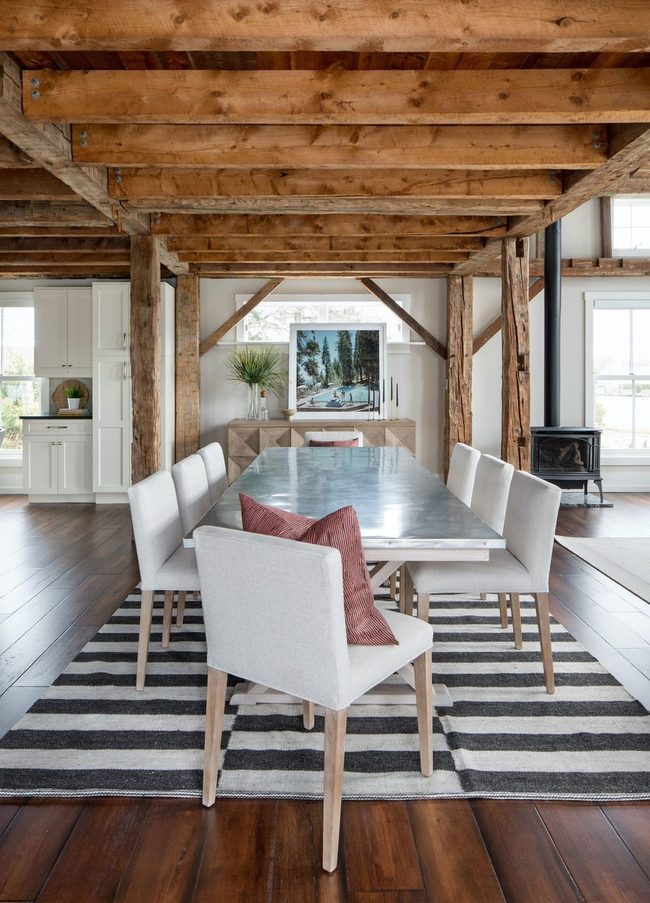
When you have a great room that serves so many purposes, don't let it become a blank canvas without character-instead, honor the building's heritage by weaving its story throughout the space.
Designer Christina Kim worked on a project where an 1800s Vermont home was merged with modern construction, and she kept the property's historical significance at the forefront of every decision.
Even though the renovation itself was handled separately, the team made sure to preserve what made the original structure special and didn't strip away its authentic past.
By respecting where the house came from, you can design a room that feels both grounded in time and suited to how people live today.
Historical elements don't have to clash with contemporary comfort-they can sit alongside modern living in ways that feel natural.
When you acknowledge a home's age and origins, you give the space depth that new buildings can't easily achieve.
This approach means your great room becomes more than just functional; it becomes a place where history and everyday life actually belong together.
Taking time to understand and preserve these roots transforms how people experience the room on a daily basis.
Isabella Martinez
Founder & Lead Design Enthusiast
Expertise
Seasonal Home Décor, Interior Styling, Space Planning, DIY Home Projects, Sustainable Design Solutions
Education
Savannah College of Art and Design (SCAD)
Pratt Institute, School of Design
Isabella Martinez is the founder of Decorrio, where she shares her love for seasonal home décor and creative design. With a background in interior design from SCAD and a master’s from Pratt Institute, she specializes in stylish, functional, and sustainable spaces.
With over 10 years of experience, Isabella helps homeowners bring warmth and personality into their homes. She loves DIY projects, festive decorating, and collaborating with local artisans to create unique designs.
When she’s not designing, Isabella enjoys exploring Austin’s arts scene, crafting, and hosting gatherings filled with seasonal charm.